Five hundred years after Carlo Borromeo locked it from the city, a Renaissance cloister in the Quadrilatero reopens — with vaulted ceilings, Wagyu ragù, and terrazzo floors by way of Caccia Dominioni
Beefbar Milano: a restaurant inside a deconsecrated chapel in the Quadrilatero
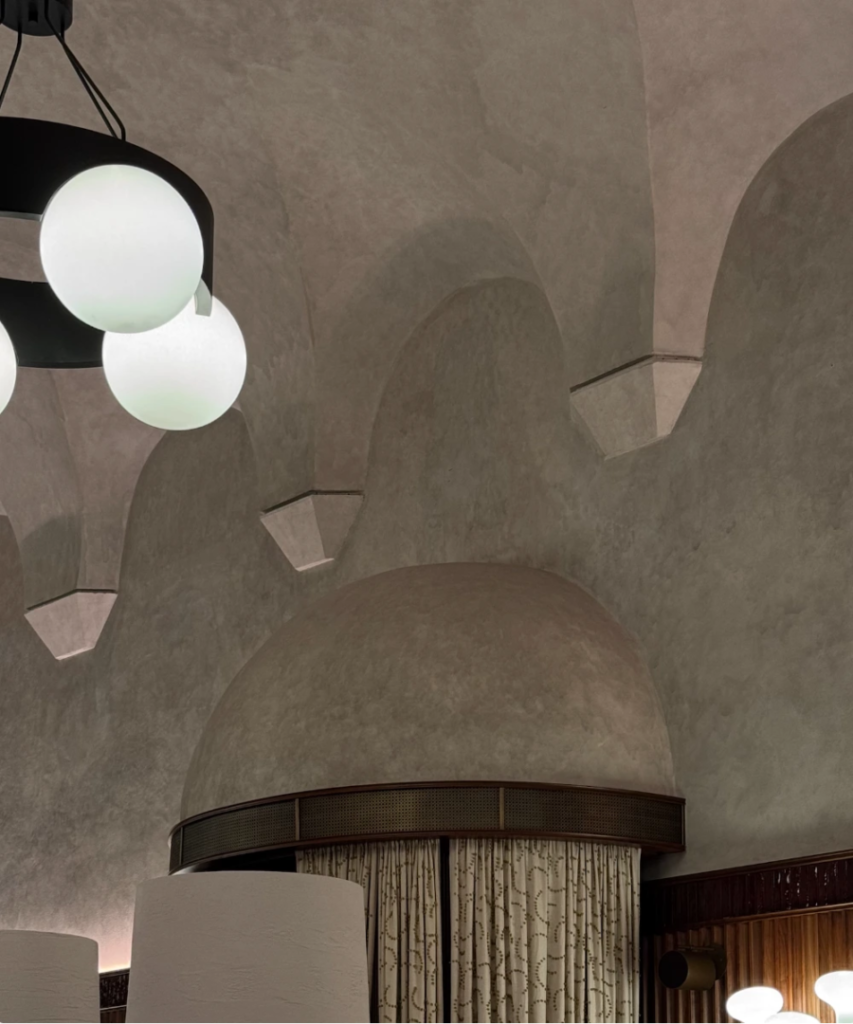
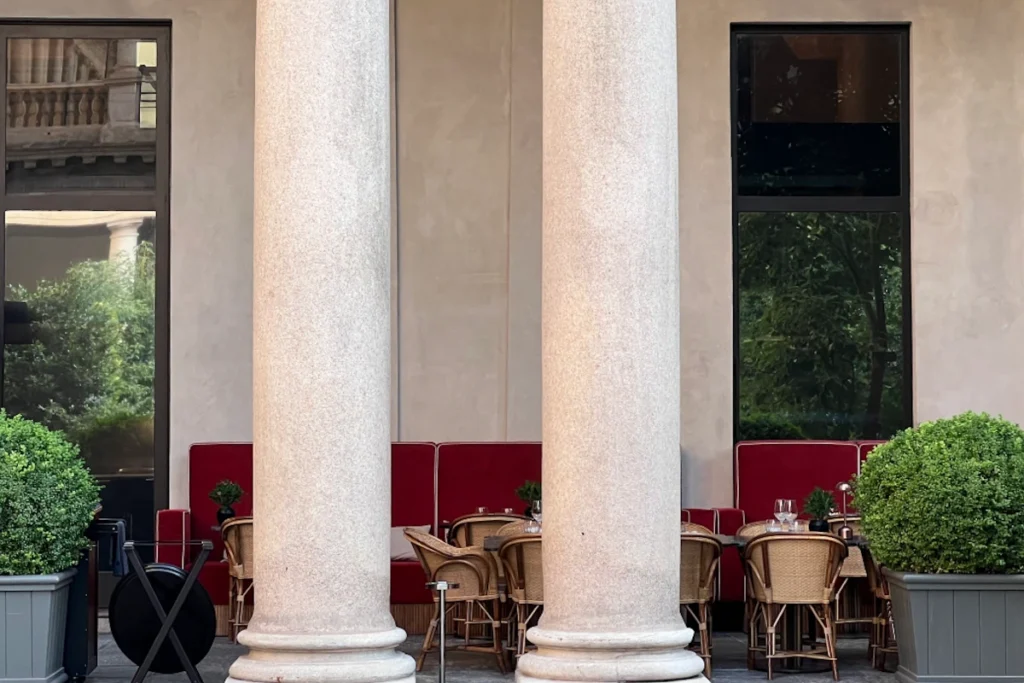
In the center of Milan, between Corso Venezia and Via Sant’Andrea, a cloister that had been sealed from the city for more than five hundred years has reopened. The former Archiepiscopal Seminary — long a silent enclave in the heart of the Quadrilatero della Moda — is now part of Portrait Milano, a project by Lungarno Collection that weaves together hospitality, fashion, and gastronomy around a newly public square. Within this setting, Beefbar Milano occupies the seminary’s former chapel. The vaulted ceilings remain. So do the proportions. What has changed is everything that happens inside.
The man behind Beefbar is Riccardo Giraudi, who built his reputation through a dual background in fine dining and the international meat trade. As CEO of Giraudi Group — the world’s largest importer of certified Kobe beef — he has spent years redefining what a steakhouse can be: not a genre fixture, but a cosmopolitan format that absorbs and reflects the culture of each city it enters. In Milan, that ambition finds one of its most resonant expressions.
From ecclesiastical seminary to Milan’s dining and design stage
The building’s history is long and, until recently, largely invisible to the city outside its walls. Founded in 1564 by Archbishop Carlo Borromeo at the height of the Counter-Reformation, the Archiepiscopal Seminary functioned for centuries as one of Lombardy’s most influential theological institutions. Generations of priests and scholars moved through its classrooms and corridors. The Renaissance cloister embodied a deliberate withdrawal from the rhythms of urban life; the chapel, with its vaulted ceilings, stood at the spiritual center of the complex.
By the twentieth century, the seminary’s role had diminished and the building had largely fallen silent, its cloister locked behind high gates. The redevelopment by Portrait Milano reversed that condition. Hotel, boutiques, restaurants, and bars now occupy what was once inaccessible, and what had been a void in the Quadrilatero has become a publicly accessible square. Beefbar’s placement within the chapel is the most charged gesture in this transformation — a space that once organized daily life around prayer now organizes it around the table, without erasing the memory of what it was.
Raw materials and Milanese design heritage inside a deconsecrated chapel
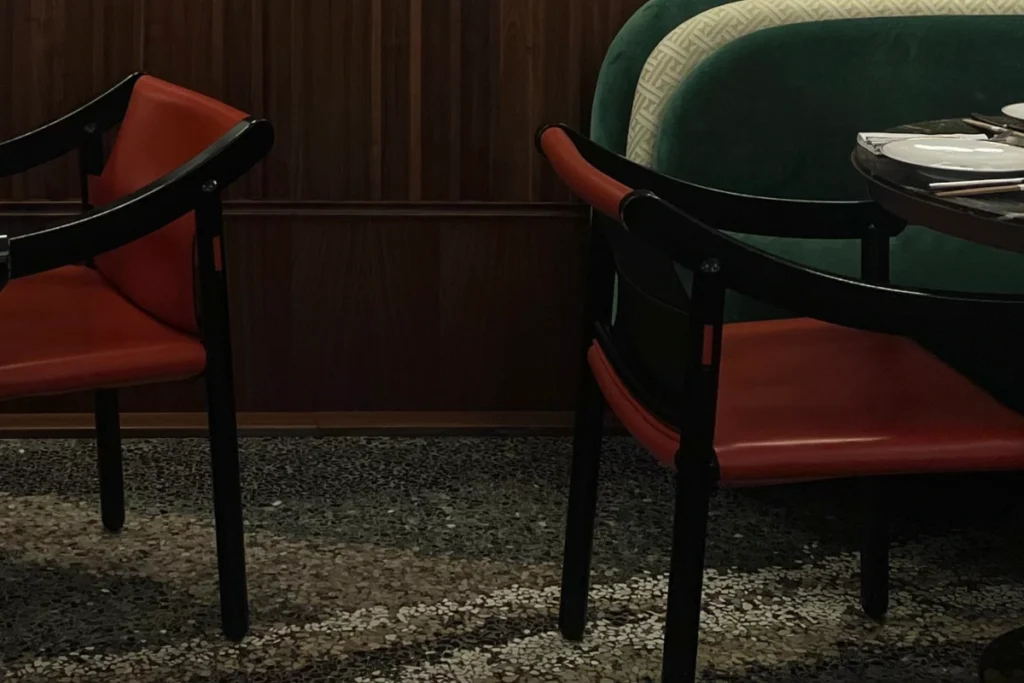
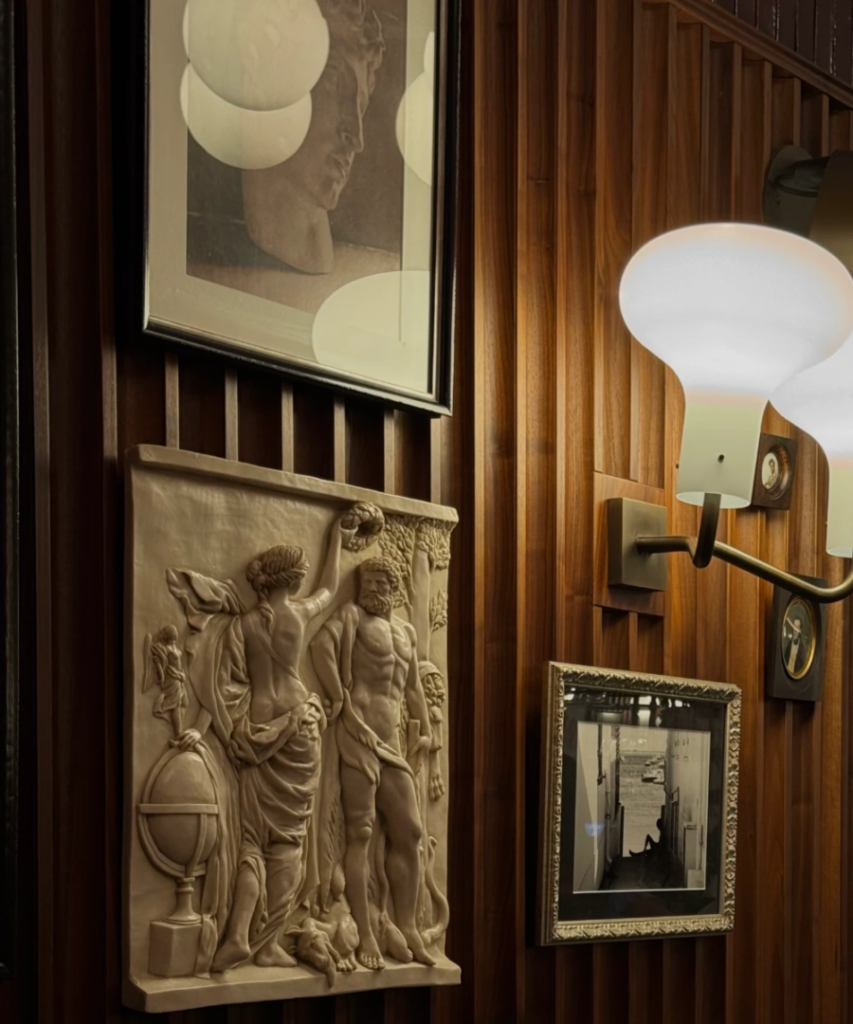
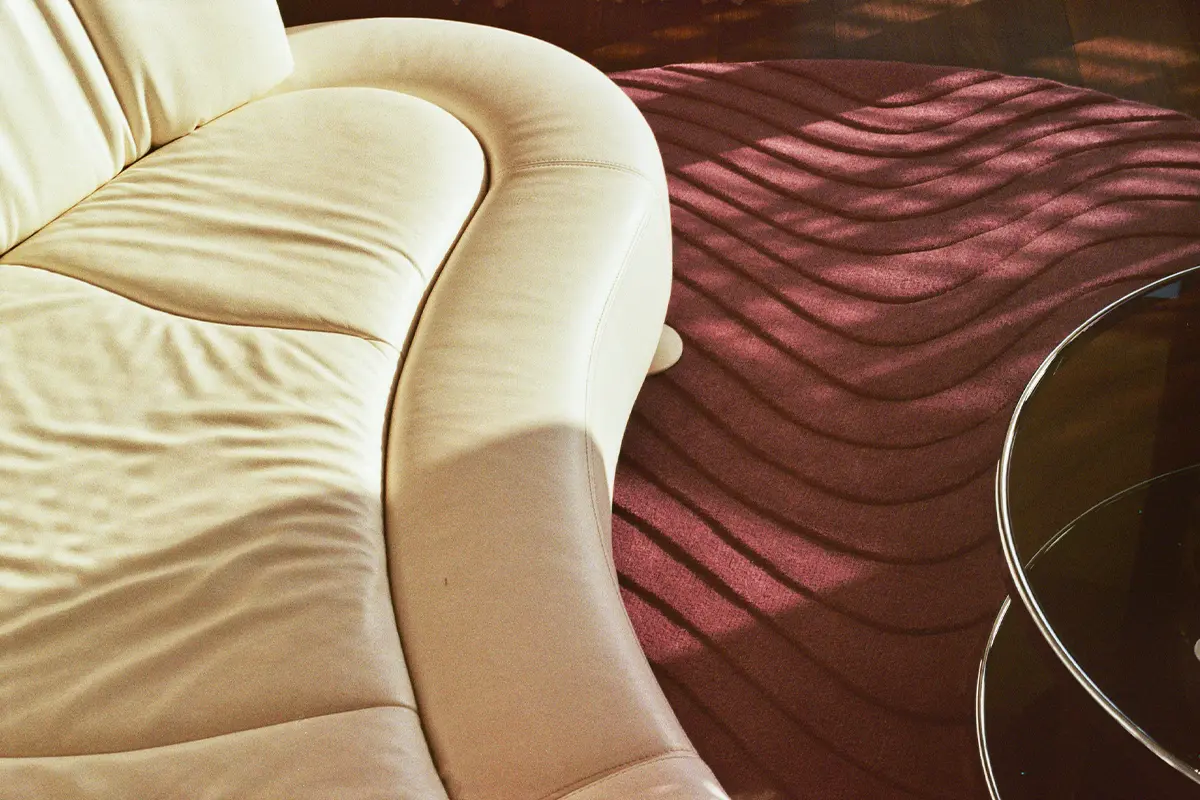
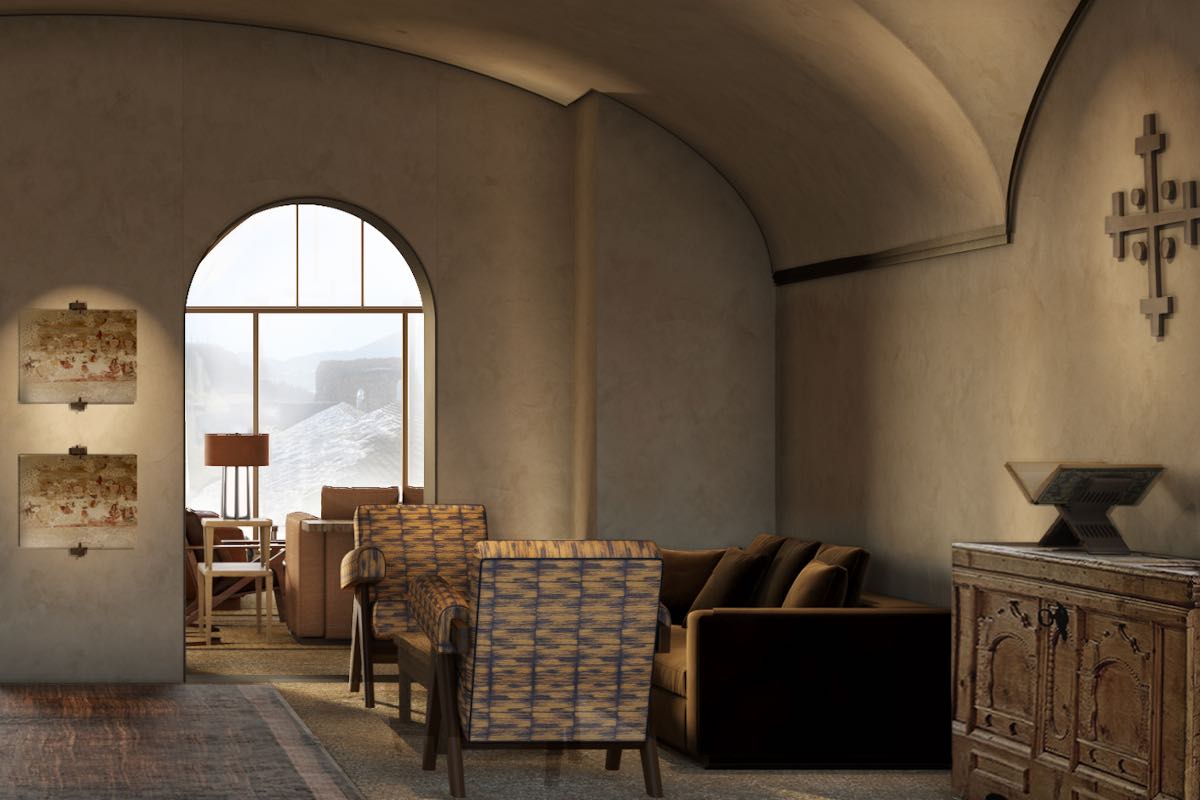
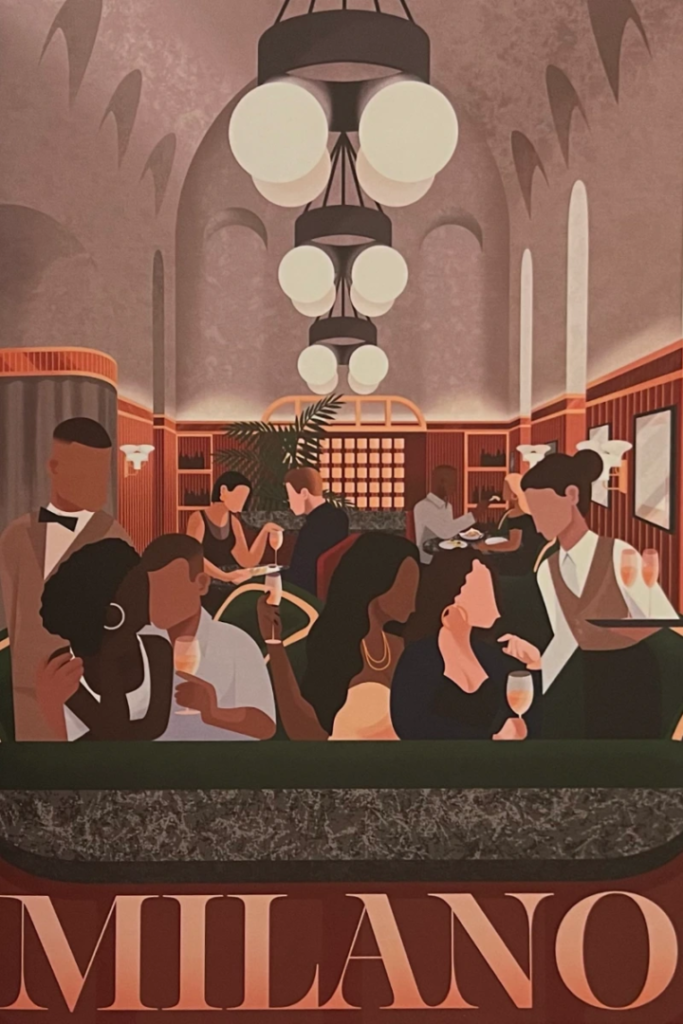
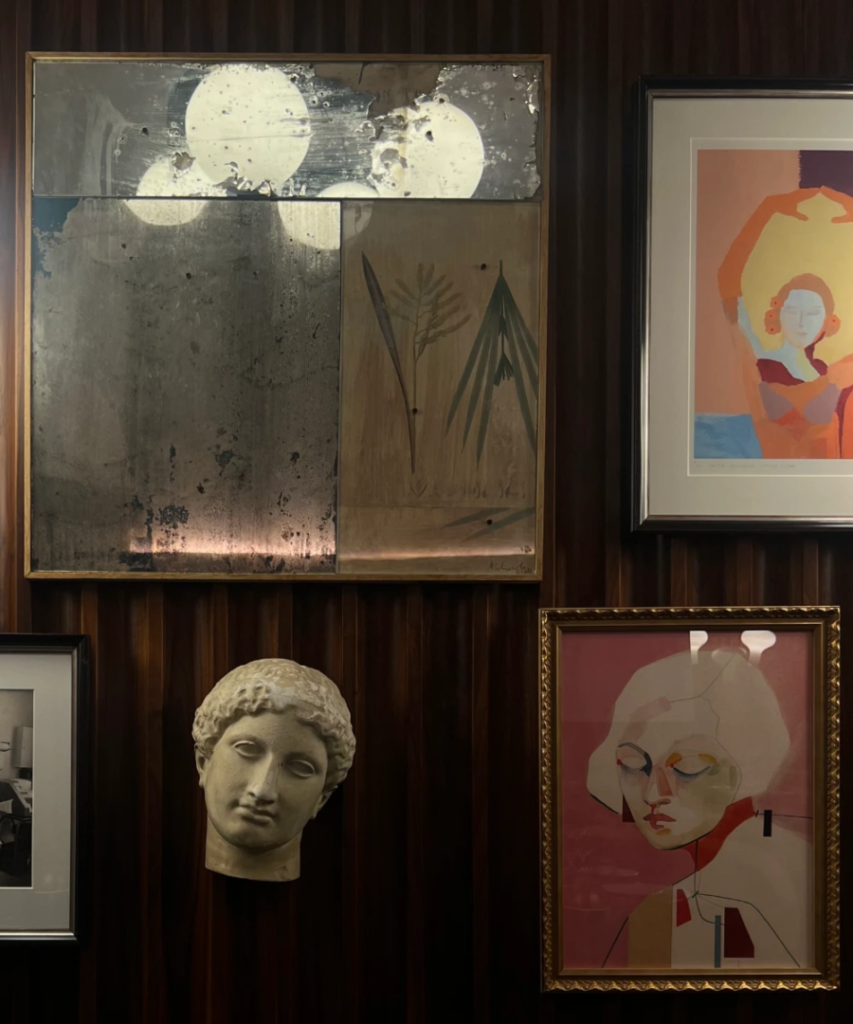
The interiors were designed by Humbert & Poyet, the Monte Carlo-based studio, and they work carefully within the tension between what the space was and what it has become. The vaulted ceilings are untouched. Against them, the designers have laid a material language drawn from Milan’s own design history: a terrazzo floor with wave-like motifs in green, black, white, and burgundy — a tribute to Luigi Caccia Dominioni — whose graphic rhythm moves through the space like a continuous surface. Verde Alpi marble tables and walnut wainscoting recall the atmosphere of Milan’s historic cafés, where wood and stone have always been chosen for their capacity to convey both intimacy and permanence.
Chairs by Vico Magistretti and wall lamps by Osvaldo Borsani anchor the room in Italy’s twentieth-century design canon. Bronze and frosted glass lighting by Humbert & Poyet rises to meet the vaults. Nothing is decorative in the superficial sense: stone, terrazzo, and hardwood are structural presences, selected to age well and deepen in character over time. It is a distinctly Milanese conviction — that an interior should be built to last, and that its patina is part of the design.
The menu: Italian classics, global proteins, cosmopolitan technique
The kitchen, directed by Executive Chef Thierry Paludetto, operates within the same logic of productive tension that defines the space itself. Italian classics are reinterpreted through imported meats: a Kobe beef carbonara, a smoked beef amatriciana, pappardelle with Wagyu ragù. Elsewhere on the menu, a croque sando with smoked ribeye ham or a veal cordon bleu with truffle cream places comfort food in dialogue with luxury proteins. Technique travels freely — robata-style charcoal grilling, wok cooking, tempura frying — pulling the culinary repertoire well beyond any single tradition.
The wine list pulls in the opposite direction, drawing primarily from Italian estates, major houses alongside small producers, with a glass-enclosed cellar visible from the dining room as a quiet declaration of intent. The contrast between what arrives on the plate and what fills the glasses captures a tension that runs through much of contemporary fine dining: global supply chains sitting alongside a commitment to local provenance. The restaurant emphasizes traceability and waste reduction, but the ecological cost of beef traveling from Japan or Australia is real, and the architecture is where sustainability speaks most clearly.
Beefbar: an expanding network
Under Giraudi’s direction, Beefbar has grown into a group spanning Europe, the Middle East, Asia, and the Americas. In 2025, the brand was named World’s Best Steakhouse Network for the third consecutive year and topped the World’s 101 Best Steak Restaurants ranking in the multi-outlet category. Giraudi received the Identità Nuove Sfide 2025 award from Identità Golose, recognition of his work at the intersection of entrepreneurship, culinary innovation, and luxury sourcing. The opening of Beefbar St. Moritz in December 2024 extended the network further, each new location continuing the practice of translating a consistent identity into a locally specific form.
Adaptive reuse as sustainability: the architectural argument
The strongest sustainability argument at Beefbar Milano is structural. Reusing the seminary’s chapel rather than building from scratch preserves the embodied energy locked into centuries of construction and avoids the environmental cost of demolition and renewal. Humbert & Poyet reinforced this logic through material choices — marble, terrazzo, walnut, bronze — selected not for trend but for longevity, materials that resist the replacement cycle defining more fragile interiors.
This is consistent with how Milan has approached its built heritage more broadly. Former factories in Tortona, railway yards in Porta Romana, religious complexes across the city have been brought back into use as cultural and commercial spaces, each transformation extending a building’s life while introducing new meaning. In Milan, sustainability has always been as much a cultural practice as an ecological one — a city that preserves through transformation, and finds continuity not in static preservation but in the willingness to let old walls hold new life.