From Engadine icon to contemporary hideaway, Grace La Margna is an architectural jewel on Lake St. Moritz, balancing historic character, modern art, spa rituals and gourmet flavours
On the shores of Lake St. Moritz – Grace La Margna
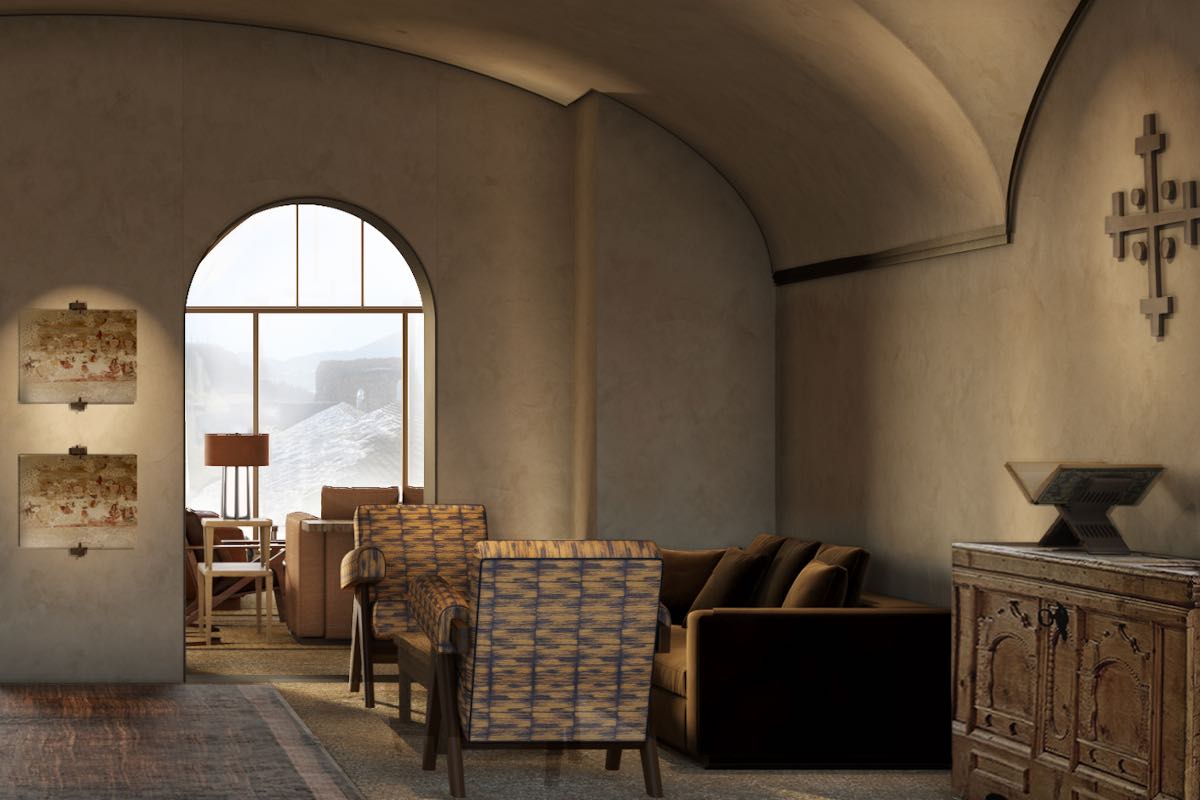
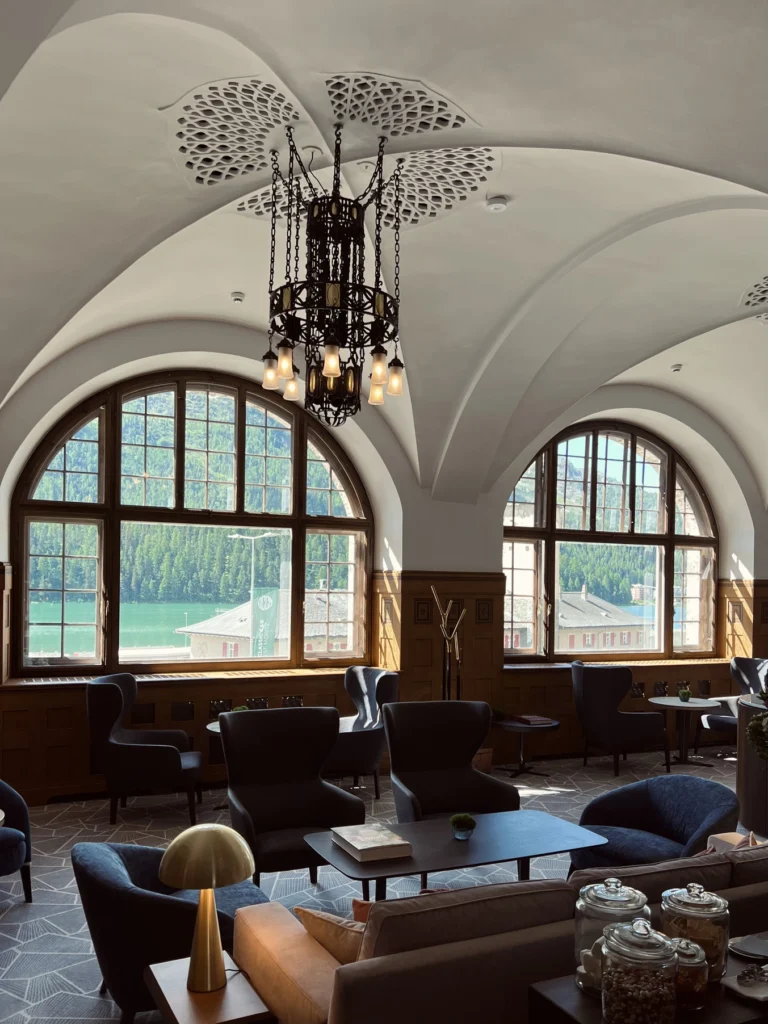
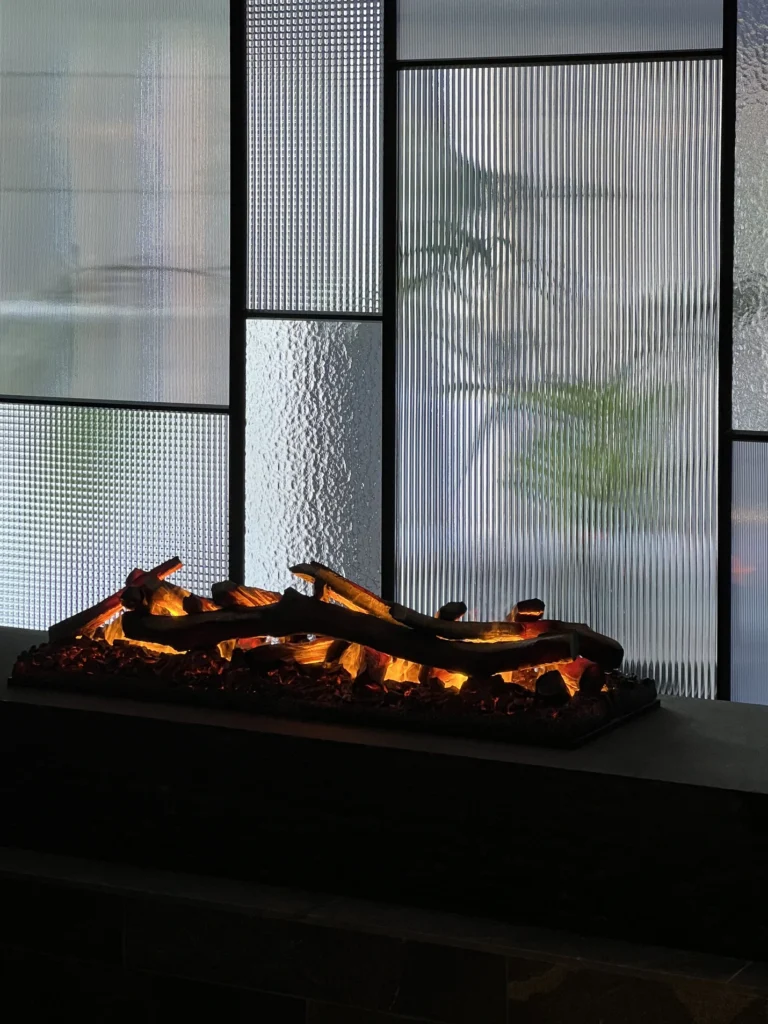
Light pours in through the large windows, bathing the high-backed armchairs. It rests on sofas and low tables before meeting the granite columns that set the rhythm of the lounge. The plants are thriving beside the wooden bookcase. At the far end of the room, a large fireplace is the true protagonist – and it knows it. Summer and winter, it keeps watch over the guests of Grace La Margna.
Outside lies Lake St. Moritz. In January, it becomes the backdrop for polo matches, while in February it hosts horse races on its frozen surface – the White Turf – which since 1907 has drawn tourists in search of champagne and high-stakes bets. On this lake skijoring was invented: thoroughbred horses race without riders in the saddle, instead towing skiers behind them. The first competition was held in 1906, on the road from St. Moritz to Champfer.
When spring comes and the white gives way to green, the lake is taken over by sails and canoes. Skis are replaced by hiking boots. Along the shores, leisurely walkers and keen hikers recharge in the sun and disappear into the woods.
Architecture in St. Moritz: Nicolaus Hartmann, the Engadine house, and the Hotel La Margna project
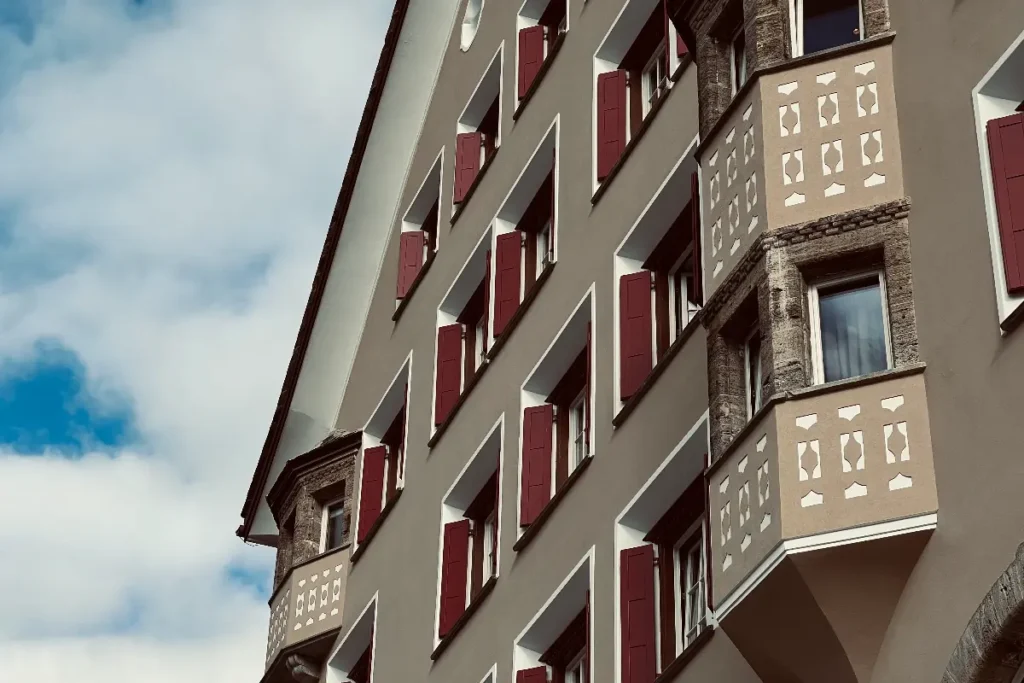
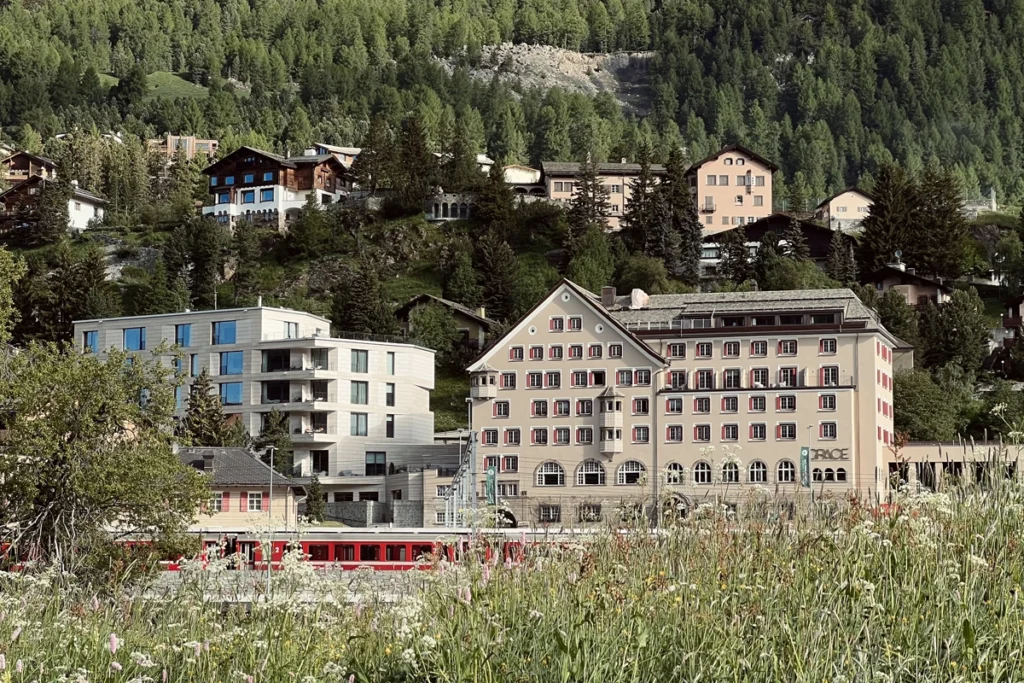
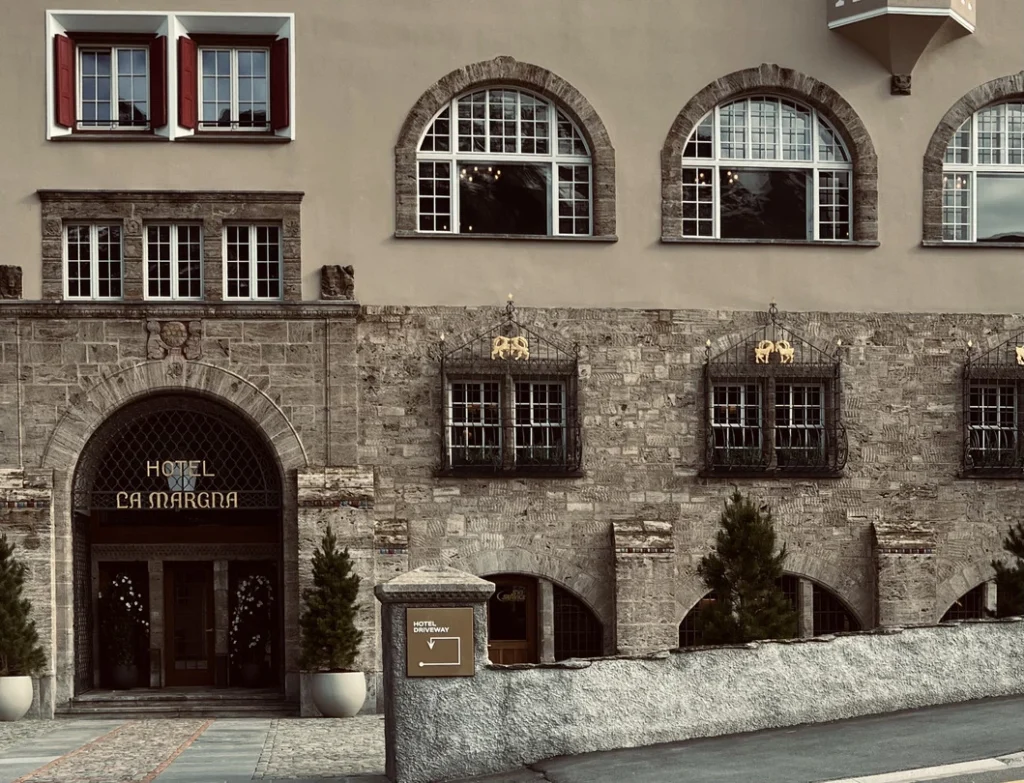
The year 1906 is also when Hotel La Margna was built, designed by Nicolaus Hartmann – whose “Engadine house” style shaped the architectural culture of the region for almost a century, throughout the economic boom of the tourist resorts.
After training as an architect between 1896 and 1900 at the École d’Industrie in Lausanne, Hartmann studied at the Technical University of Stuttgart until 1903, when his father passed away. That same year, he took over his father’s architecture practice in St. Moritz.
Hartmann rejected neoclassicism and historicism, widely adopted during the tourism-driven construction boom in Graubünden. He also considered Art Nouveau outdated. His mentor, Professor Theodor Fischer, a German architect who embodied the transitional moment between the last echoes of Historicism and the dawn of modernity, thought along similar lines. In this uncertain but lively climate, Hartmann championed a return to local traditional forms.
He became a member of the young Swiss Association for the Protection of Local Heritage in 1905, and co-founded its Graubünden section – a commitment he upheld throughout his life.
In the hotel buildings he was commissioned to design, Hartmann softened the scale of his structures by breaking down their massing. He worked on arches, gables and roof lines, aiming to give them the appearance of patrician residences. With Hotel La Margna, he redefined the style of the Engadine house and projected it into modernity.
St. Moritz – the station opened in 1904, just steps from Grace La Margna
Hotel La Margna is located on Via Serlas, a short walk from the railway station, which opened in 1904. The first station building, due to the harsh climate and the high cost of timber at the time, was constructed in rendered quarry stone. It consisted of a tripartite structure: two taller end buildings connected by a lower central volume. The building was replaced by the current station in 1927.
Today, from the windows of La Margna, you can read the time from the large clock on the station tower and admire the image depicting Saint Maurice.
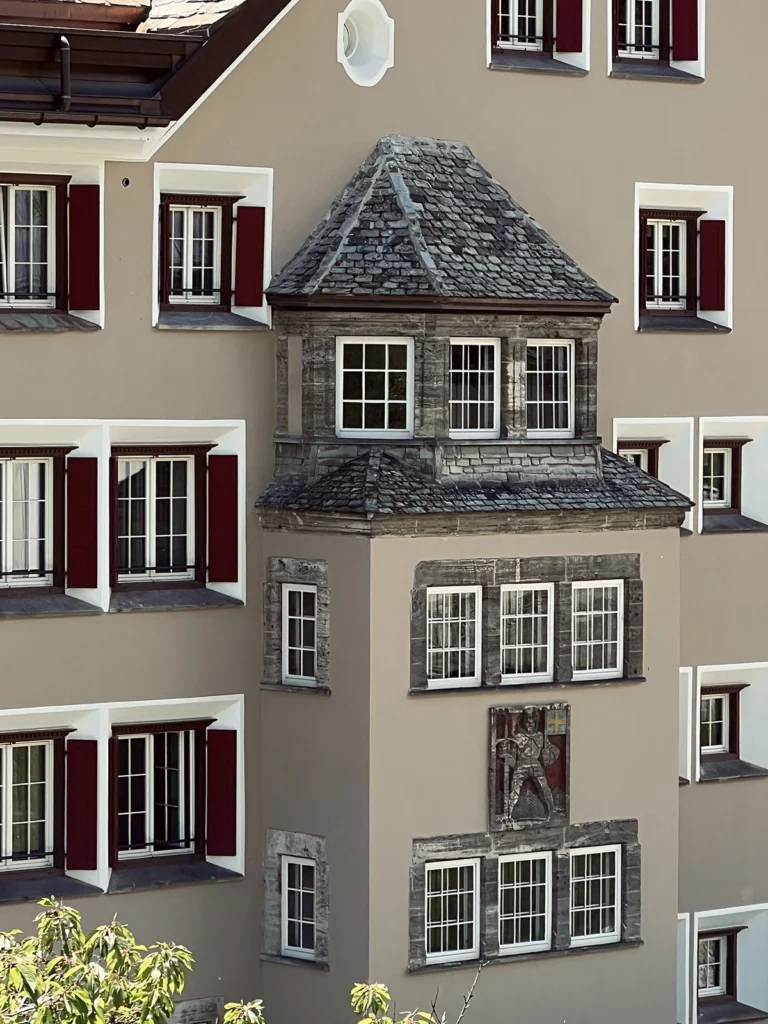
Grace La Margna: design and déco, the façade and interiors
Thanks to historic and architectural heritage protections, the structure of Hotel La Margna has survived intact to this day. Design lovers can indulge in a unique architectural pastime, inside and out: a scavenger hunt for decorations.
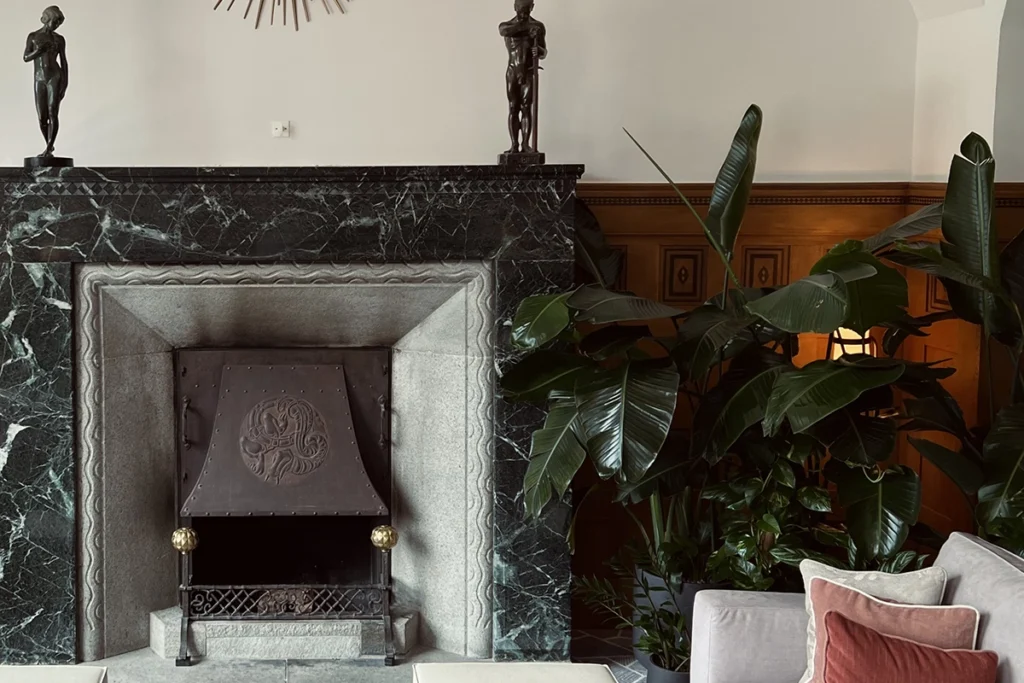
It begins in the main lounge. What immediately captures the eye is the large original marble fireplace, dating back to the construction of the building. Crowning it are two statues, a man and a woman; at the centre, a stylised dragon motif. As journalist Carmen Baumann has noted in trying to trace the meaning of this decoration, while in a distant past the dragon was an apotropaic symbol used to ward off evil (often painted or carved on house façades), by the early twentieth century it had become above all a stylistic flourish.
There is also a local reference: the nickname for the inhabitants of St. Moritz is ils draguns (“the dragons” in Romansh).
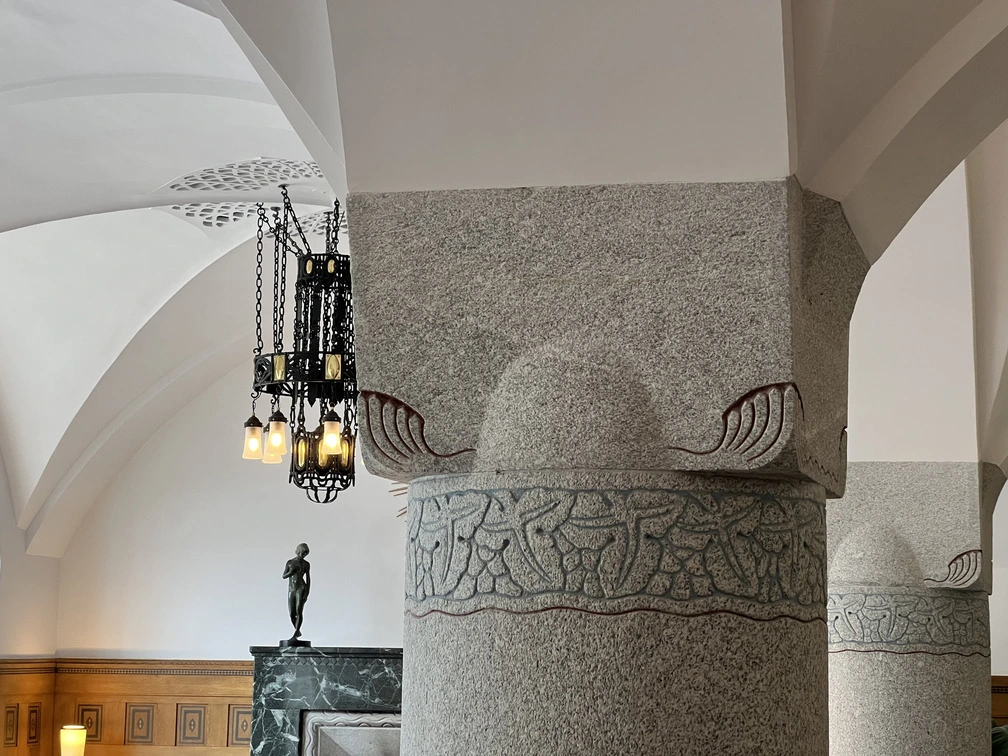
The granite columns in the lounge feature red and blue ornaments created using the “sgraffito” technique: patterns and designs carved into wet plaster. Their effect is achieved not only through colour, but also through an intricate play of light and shadow. In the local tradition, such graffiti often reveal something about the residents of the house. Here, they point back to Nicolaus Hartmann’s own aesthetic codes: red and blue are his distinctive signature.
Animals appear impressed into the walls – a spider, a fly and a snake wrapped around a column. Finally, there is a double tribute to Saint Maurice, the patron saint of St. Moritz: he is depicted in the staircase of the Margna wing and again on the north façade of the building.
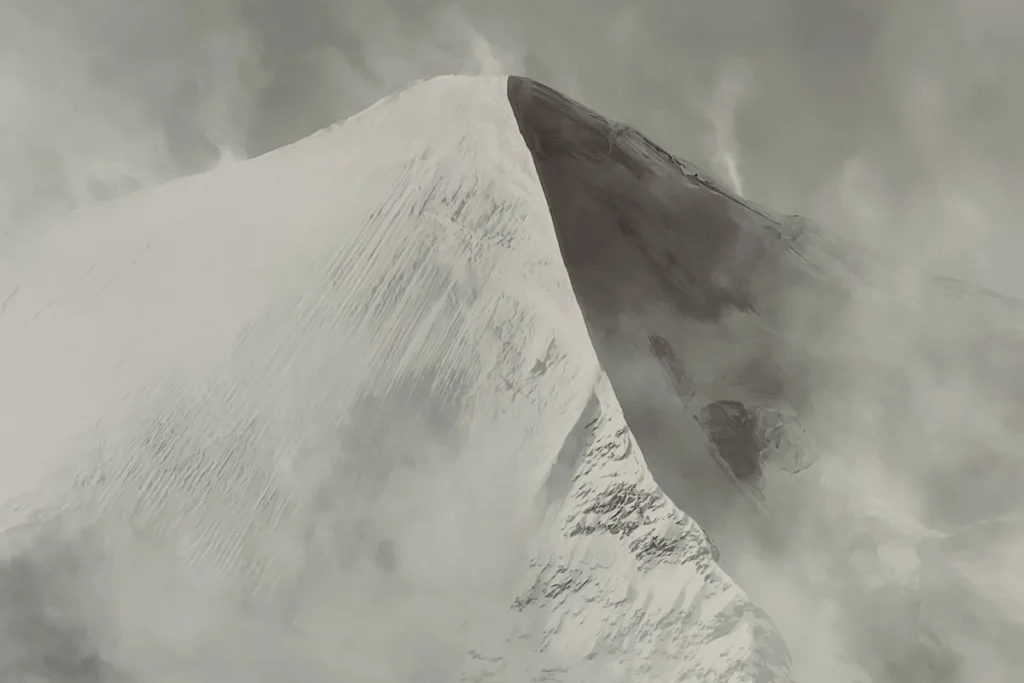
The new wing of Grace La Margna, the Wunderkammer, and the Spa
For most of the twentieth century, the hotel belonged to the Schweizer-Pitsch family. In 2020 it was acquired by Grace Hotels, who brought it back to its former glory, appointing Divercity Architects to lead the refurbishment and the addition of a new wing.
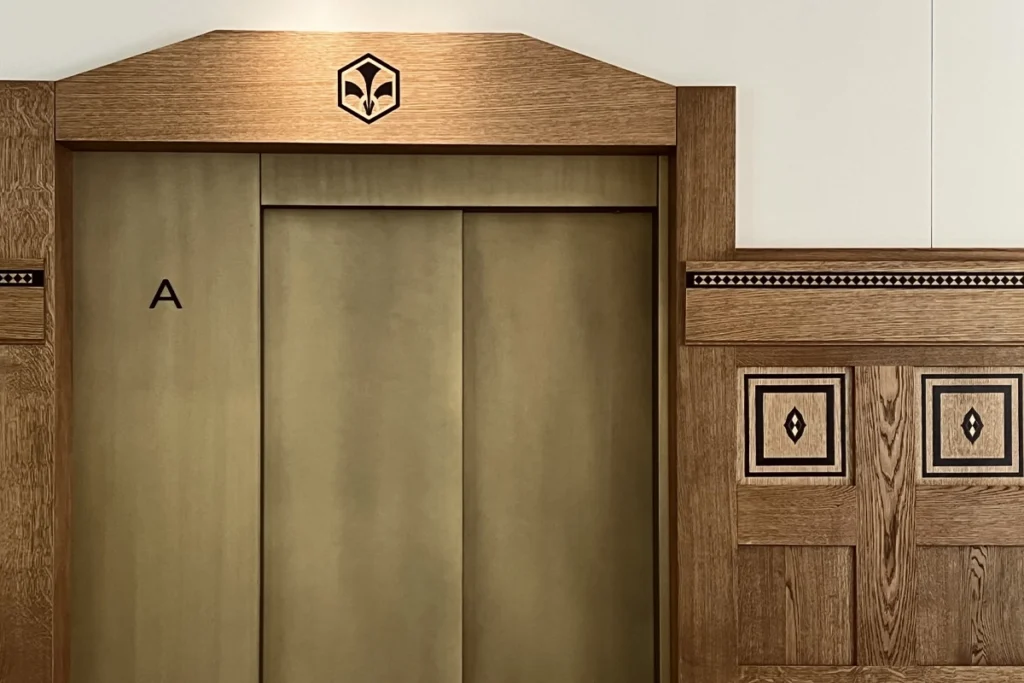
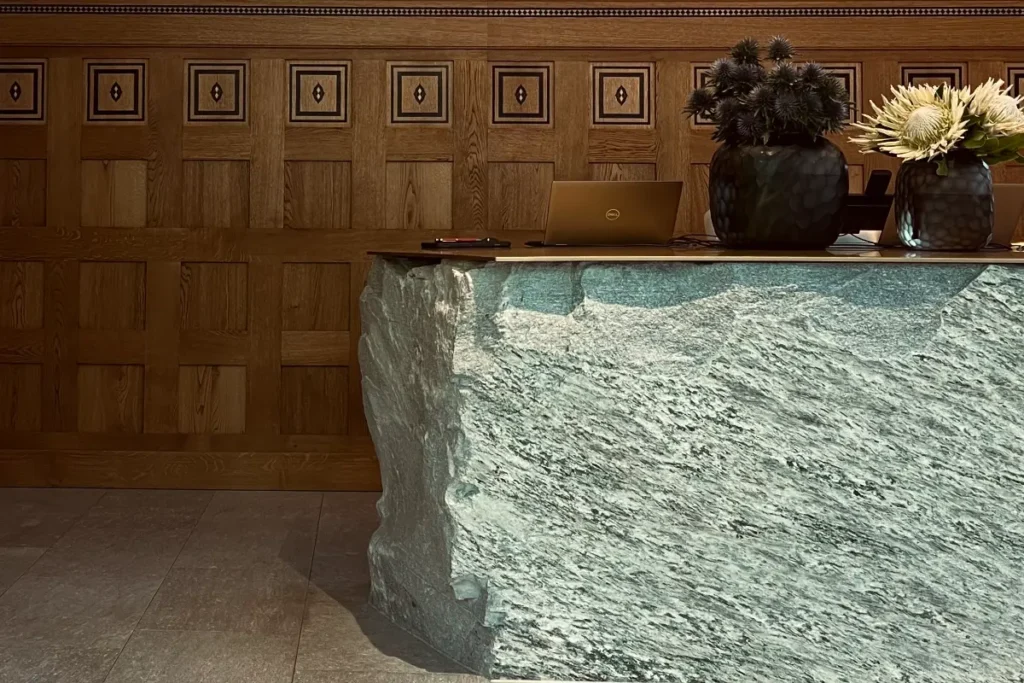
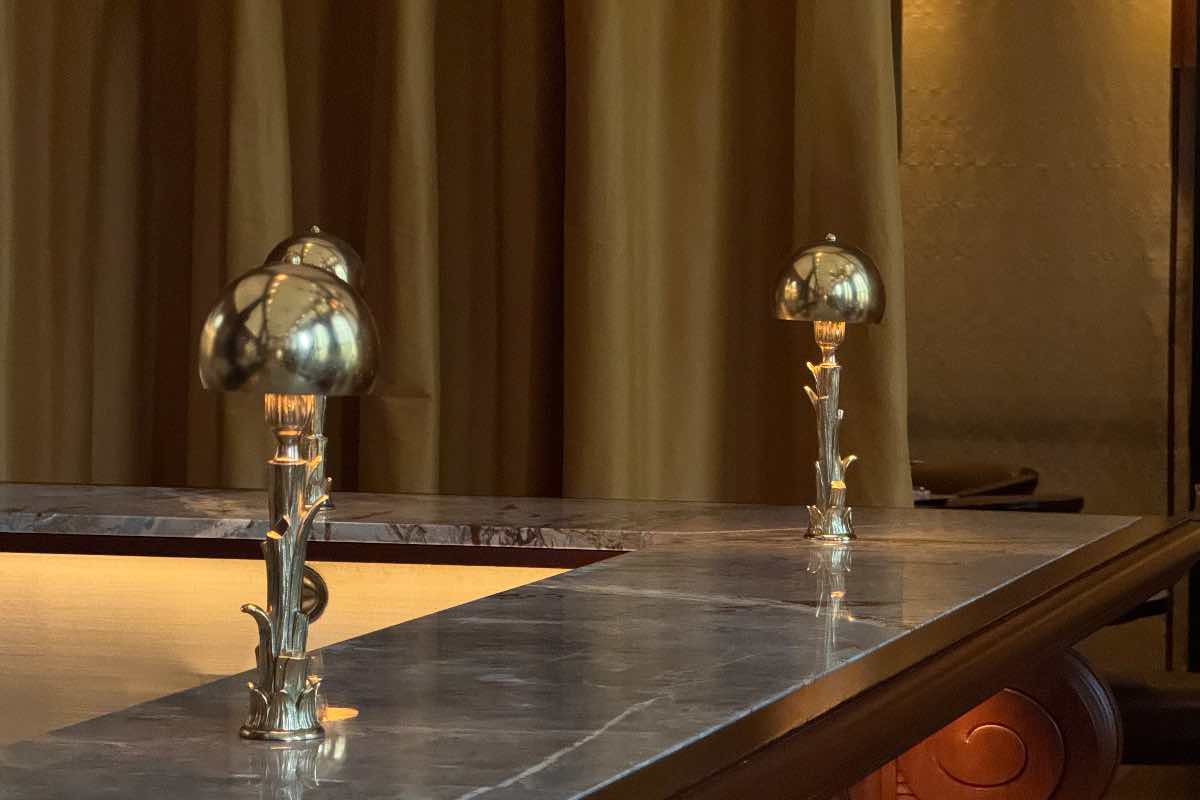
For the new building, beige Moleanos limestone was chosen, echoing the colour and materiality of the original façade. A winter terrace serves as a bridge linking the two structures. At the heart of the hotel’s common areas, the lobby unfolds as a sculptural granite monolith with a brass countertop. The patterns impressed on the wooden wall panels recall the designs of Koloman Moser.
Elevating the interiors of Grace La Margna is a diffuse installation of artworks in all the hotel’s spaces – a kind of contemporary Wunderkammer in a town that itself is a reference point for art and design (the 2024 edition of Nomad St. Moritz, the itinerant fair of art and collectible design, featured 25 international galleries and 9 special projects). Works by Jürg Kaufmann, Federico Sette, Deodato Arte, Evelyne Brader-Frank, Adam Attew and Christopher Mark Garside are on display.
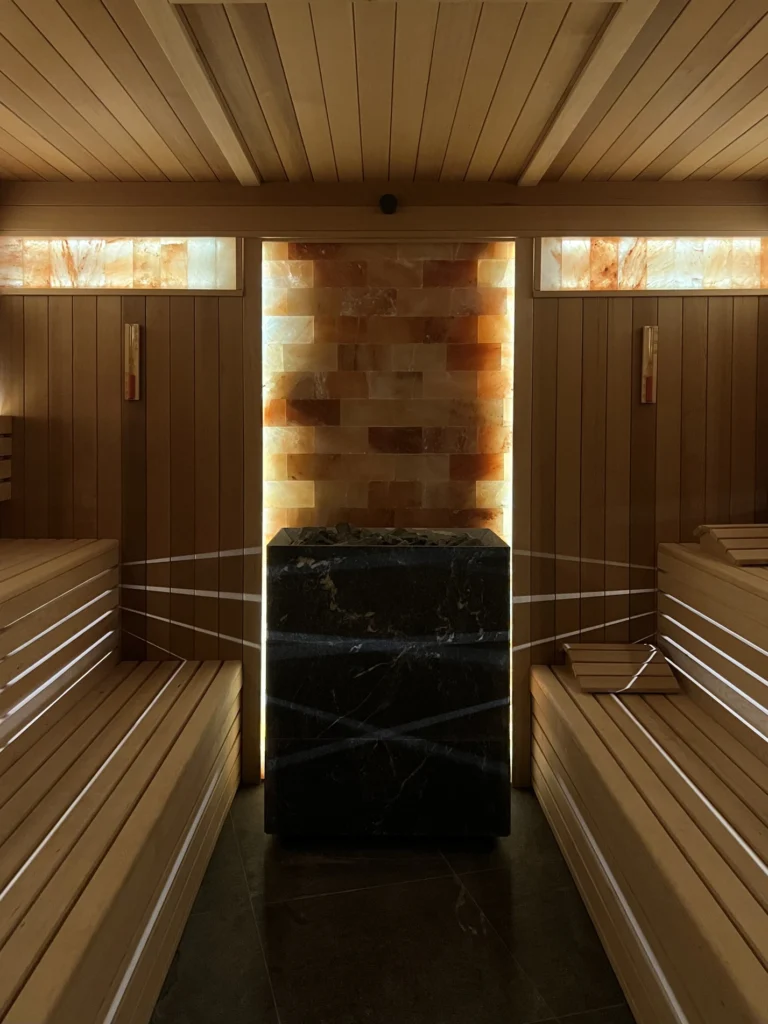
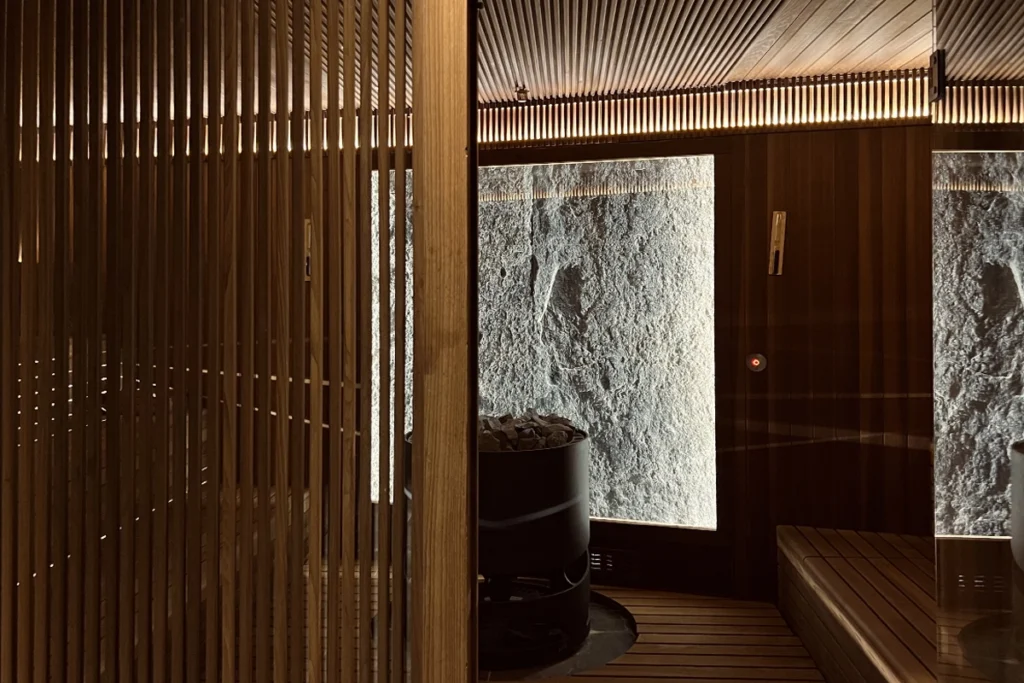
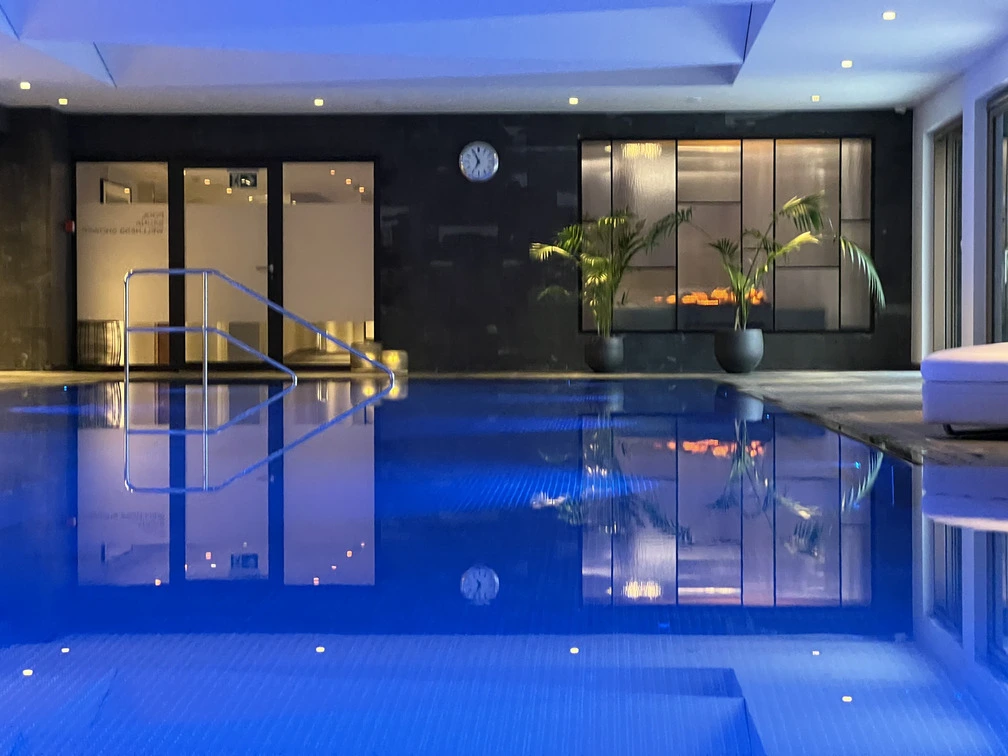
An entire floor – 700 square metres – is dedicated to the Spa. The pool is 20 metres long, heated to 28°C – but you can swim endlessly thanks to a counter-current system. The whirlpool occupies a separate basin, kept at 34°C, with loungers and massage seats for complete relaxation in warm water. The Finnish sauna – 90°C with 20% humidity – combines wood and stone in a way that enchants and soothes.
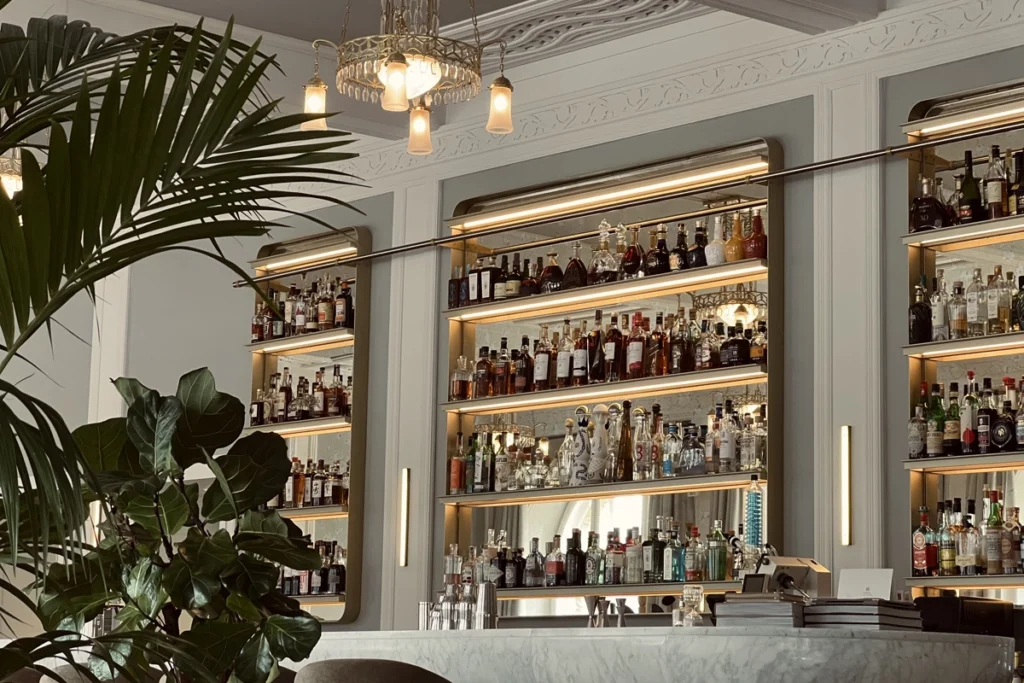
N/5 – The Bar: cocktails and tarot
With N/5 – The Bar, the design treasure hunt turns into a tarot game. The art of mixology, under bar manager Mirco Giumelli, meets the art of cartomancy. Guests are handed a deck of cards – each Major Arcana is paired with a specific drink.
Dining at Grace La Margna: The View, TheMaxMoritz and Beefbar
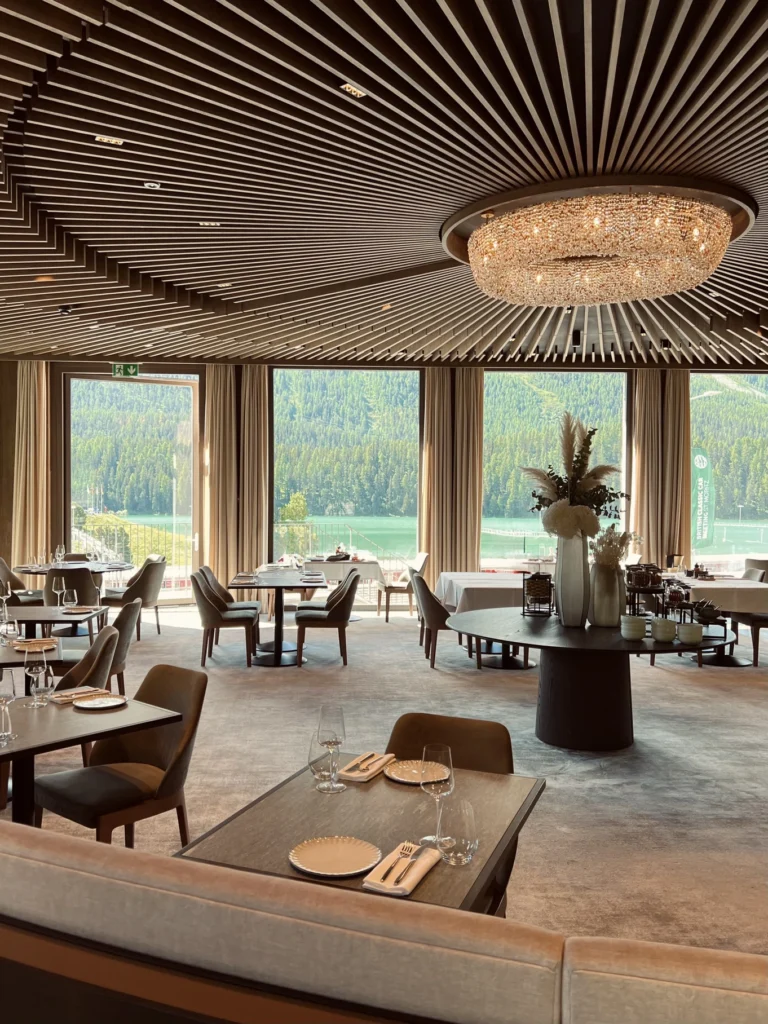
Executive Chef Andrea Bonini oversees the hotel’s culinary offering: the Mediterranean all-day fine dining restaurant The View, the brasserie, TheMaxMoritz – which serves classics of Swiss cuisine – and Beefbar, the cosmopolitan concept dedicated to prime cuts and contemporary meat dishes.
Rooms, suites and the Grace attitude
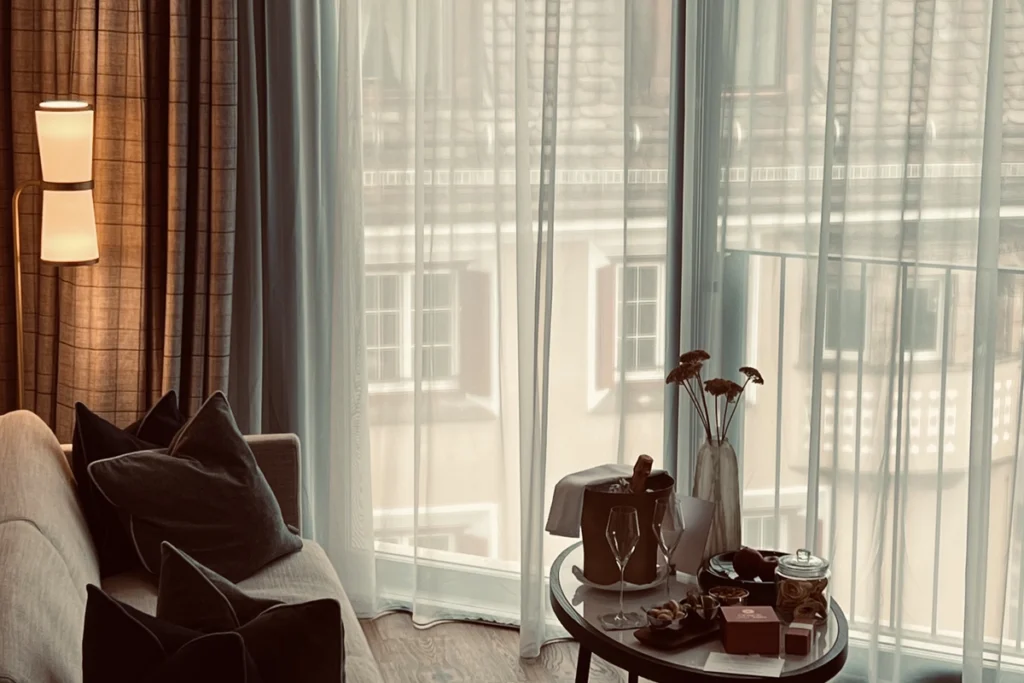
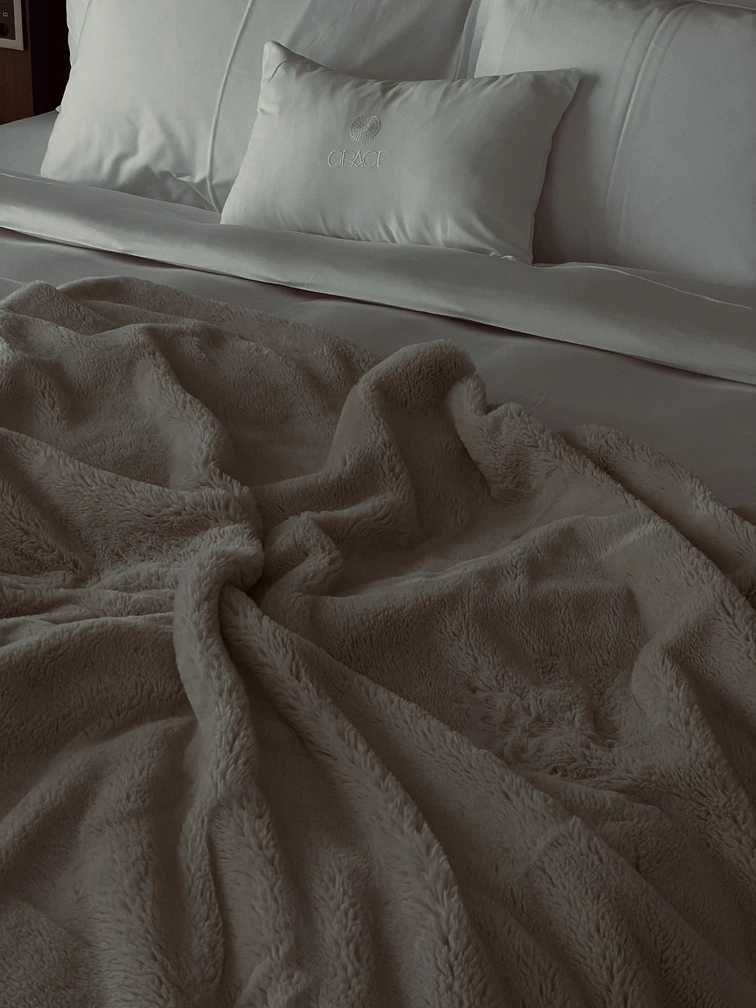
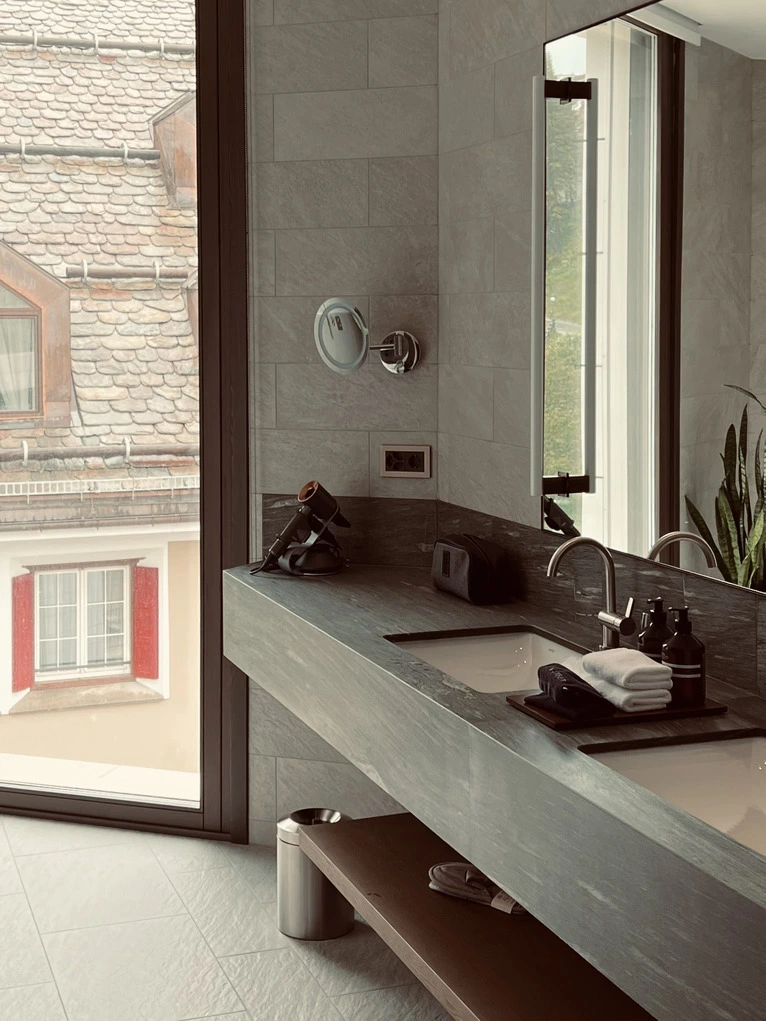
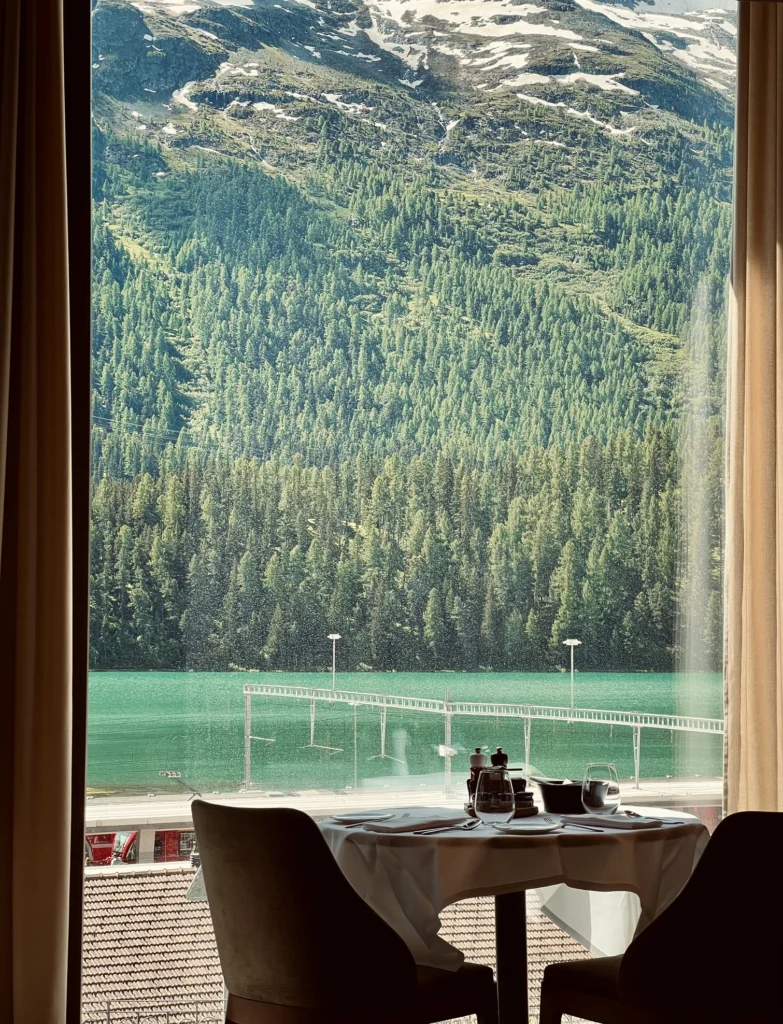
With 74 rooms and suites divided between the historic La Margna Wing and the contemporary Grace Wing, the hotel translates its architectural dialogue between past and present into the interiors as well. Many rooms open onto sweeping views of Lake St. Moritz and the surrounding peaks, while details such as original Art Nouveau elements, warm woods and clean-lined furnishings underscore a discreet, design-led idea of luxury.