Where golden interiors meet green rooftops: reimagining industrial heritage as contemporary luxury in the heart of Paris
Industrial architecture and urban memory: the Poste du Louvre between logistics and reuse
The former Poste du Louvre is a product of French industrial modernity. Commissioned in 1878 and completed in phases in the early twentieth century, the building was designed by Julien Guadet, a student of Henri Labrouste. Its architecture follows principles of rational construction: symmetrical façades, cast-iron structures, modular systems.
For more than a century, the complex functioned as a central postal sorting hub, processing up to eighteen thousand packages per day at peak activity. Brick walls, iron frames, and repetitive structural bays made the building a reference model for industrial rationalism in Paris.
After its closure in 1999, the structure remained vacant for nearly two decades. Redevelopment began in 2012 under the supervision of Sogaris and the Paris municipality, with the aim of preserving the site’s logistical identity while integrating it into a mixed-use urban framework. Approved in 2015, the program introduced offices, public services, retail spaces, and hospitality. Madame Rêve opened in 2021 within this transformation.
The renovation retained core industrial elements—steel frames, exposed beams, freight elevators—treated as operative structures rather than historic decoration. Architectural interventions by Dominique Perrault and Franklin Azzi preserved the building’s industrial grammar while adapting it to contemporary functions.
Interior design and material palette: French craftsmanship, golden tones, and 1970s aesthetic in Laurent Taïeb’s vision
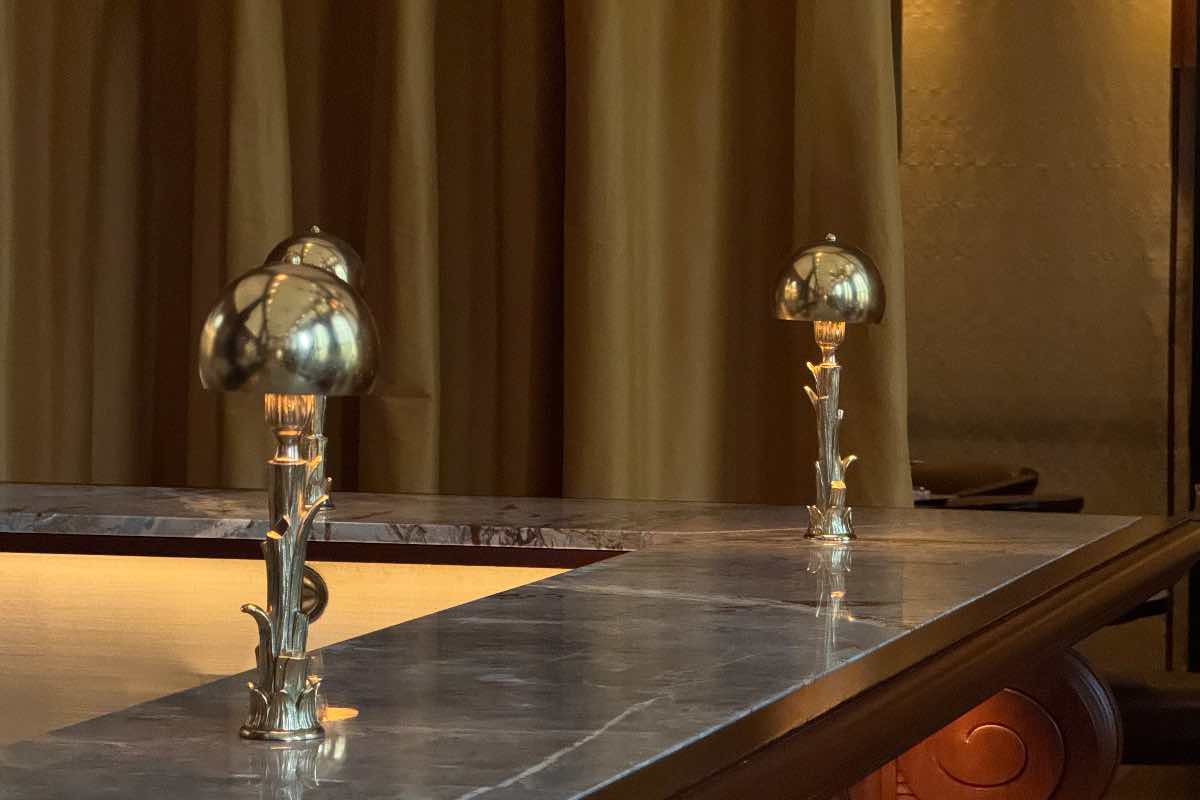
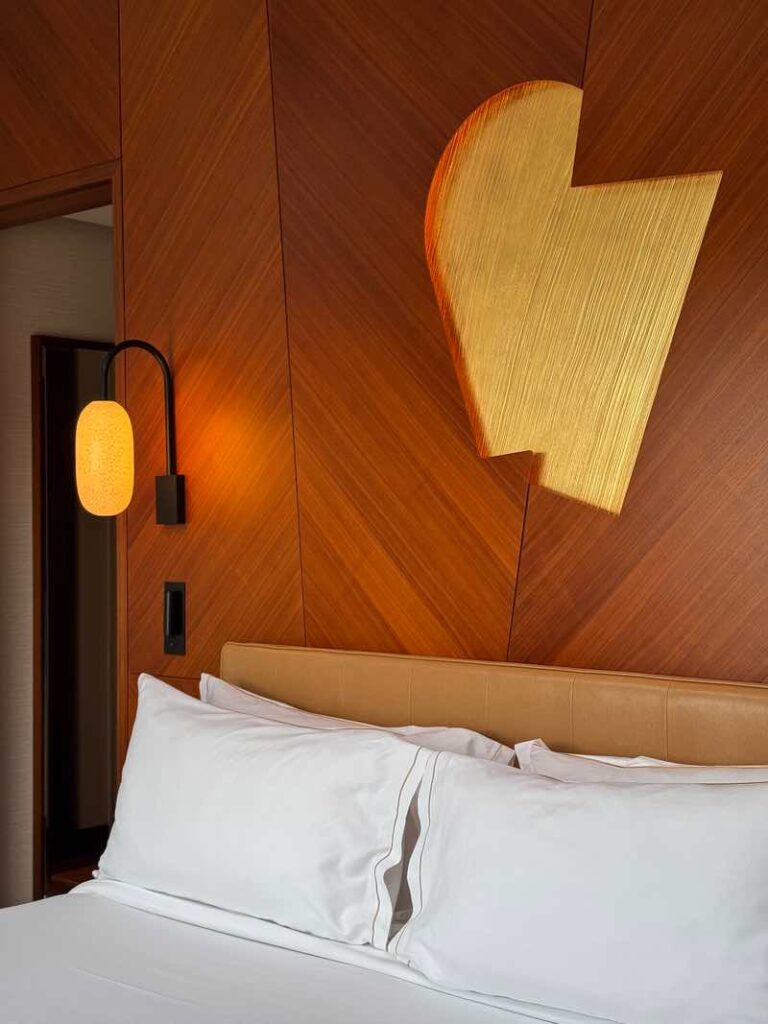
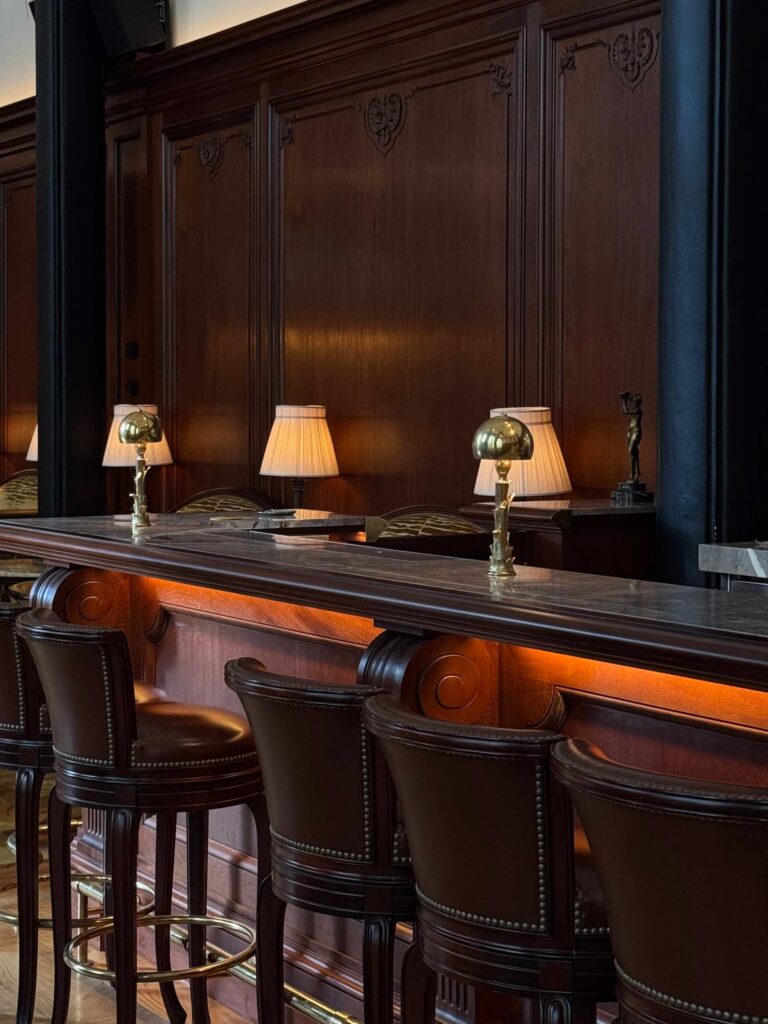
The interiors of Hôtel Madame Rêve embody a sophisticated blend of French heritage and contemporary luxury, masterminded by visionary hotelier and art director Laurent Taïeb. Drawing inspiration from the motto of late French designer Andrée Putman—”life must be golden”—the hotel features a warm, enveloping color palette dominated by golds, bronzes, honeys, and mustards set against rich woods and marbles. The design celebrates unparalleled French craftsmanship through the use of noble materials including walnut woodwork, velvet furnishings, custom-made zellige mosaics, and precious woods. Taïeb worked with approximately 30 artisans to create the luxurious fittings and fixtures, incorporating bronze Bisazza tiles and gold-flecked lights in the bathrooms. The overall aesthetic evokes a 1970s atmosphere while maintaining a modernist sensibility, creating intimate urban cocoons within the historic 19th-century Louvre Post Office building.
Contemporary art integration and postal heritage: murals, frescoes, and thematic details by French artists
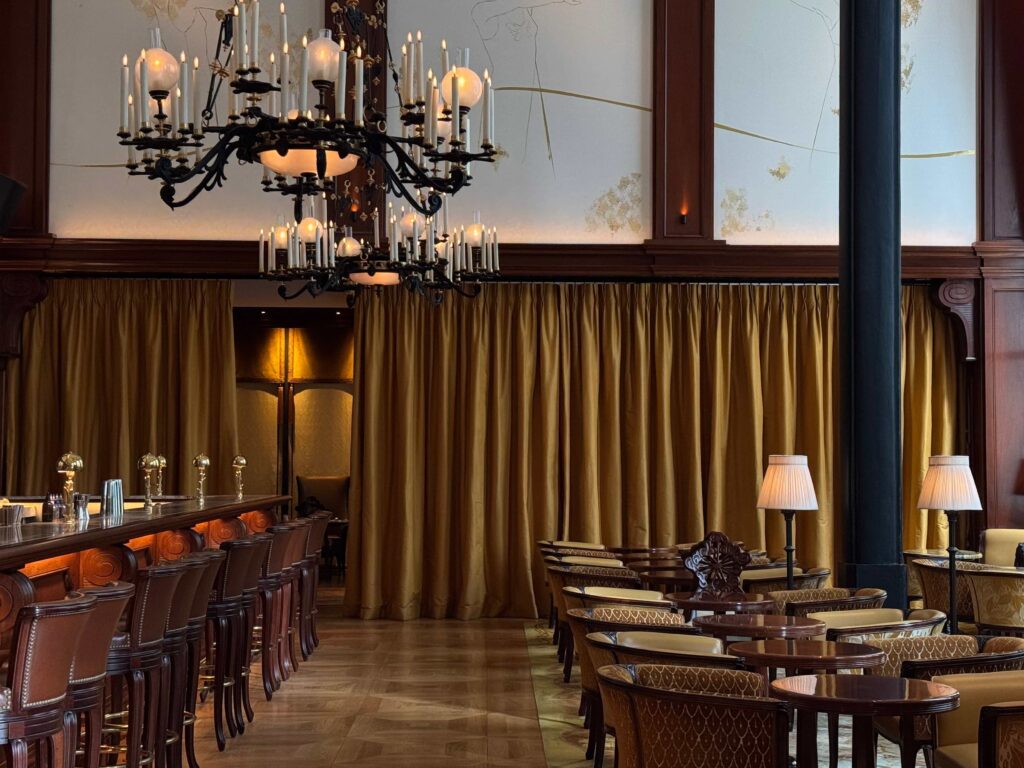
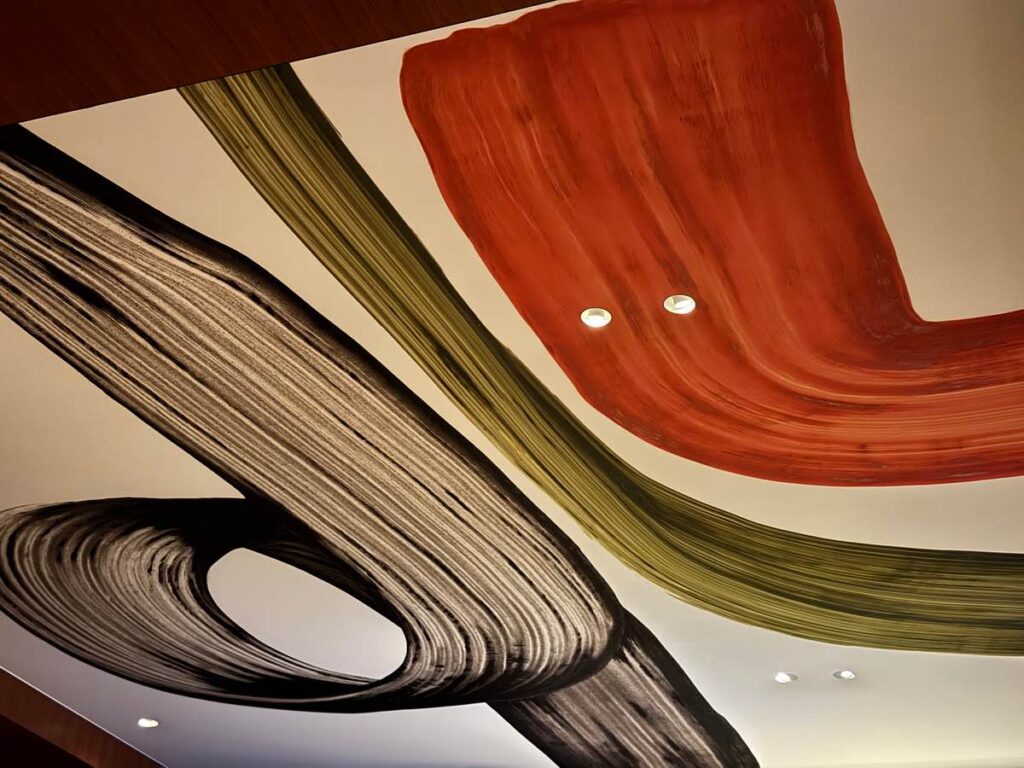
A defining feature of Madame Rêve’s interiors is the extensive collaboration with French artists, transforming the hotel into a living gallery. Artist Olivier Masmonteil created a striking mural in the grand café, where chandeliers inspired by the Vienna Secession movement hang from eight-meter-high ceilings. French typographer Jacques Villeglé designed an immense fresco in the entrance hall, while María José Benvenuto completed ceiling frescoes in La Plume restaurant.
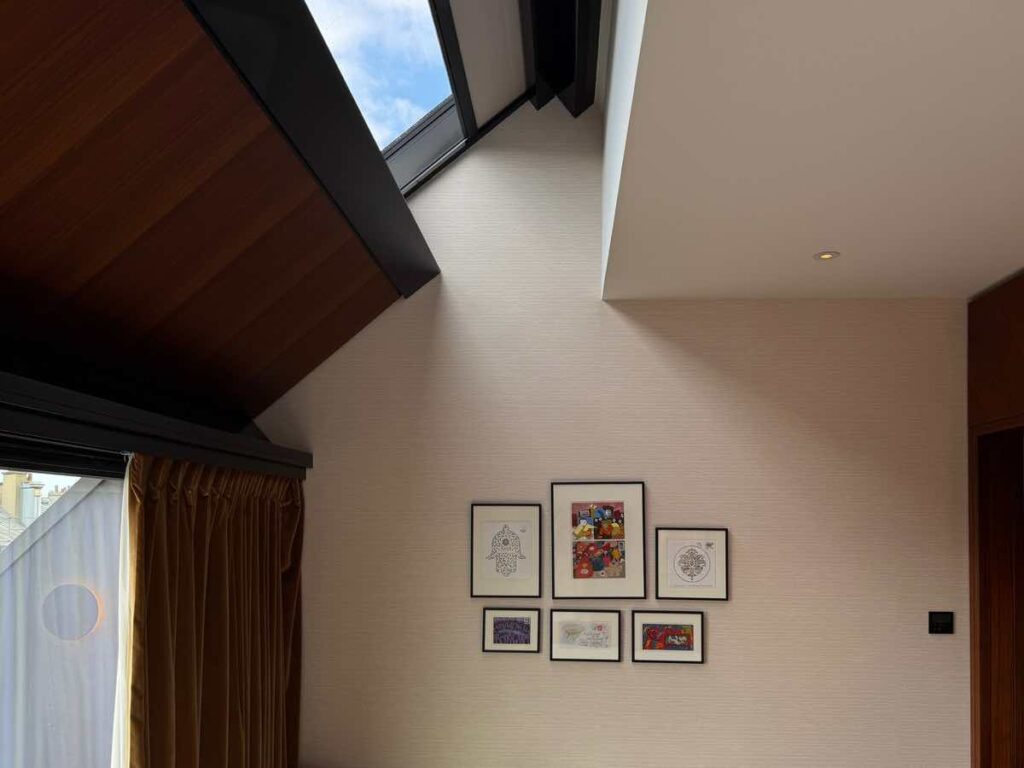
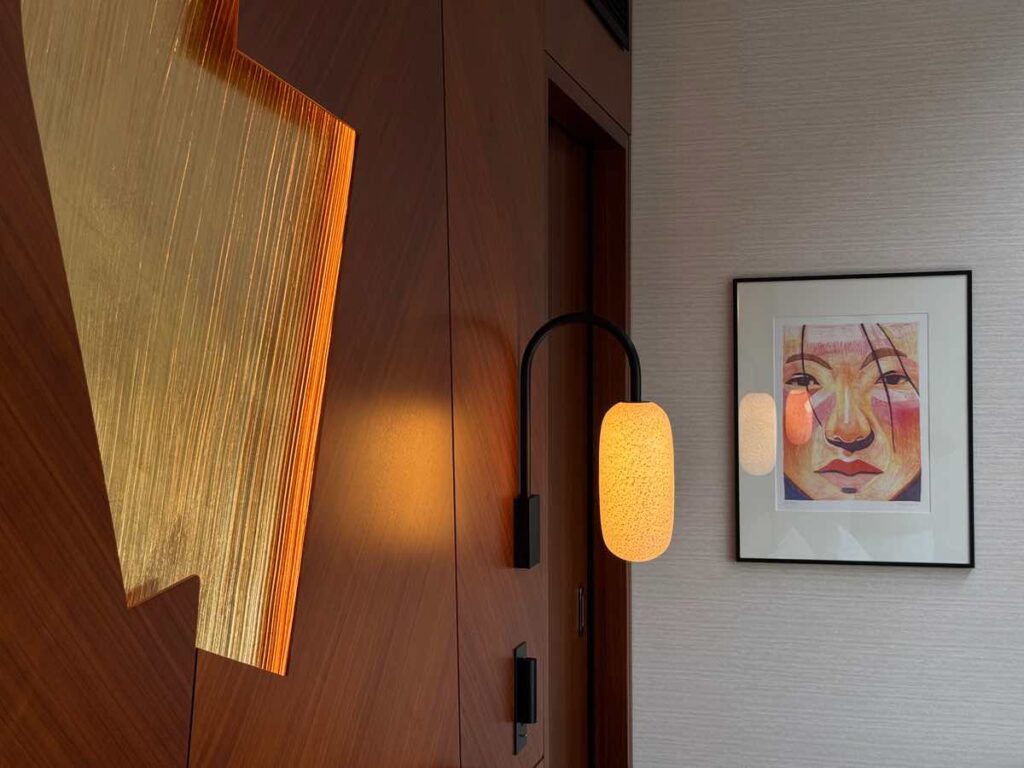
The bedrooms feature portraits by Inès Longevial and more than 800 works of mail art displayed throughout the rooms, paying homage to the building’s postal heritage. Subtle postal-themed details pervade the design, including telegram-inspired rugs featuring a witty quote from comedian Jean Yanne, decorative accents shaped like a woman’s décolleté with corset visible in lamp fittings and corridor carpets, and custom bespoke carpets from Tai Ping that evoke the sensuality and flow of women’s hair in the La Plume restaurant.
Room configuration and spatial experience: atelier-style suites, panoramic views, and contemporary luxury within historic architecture
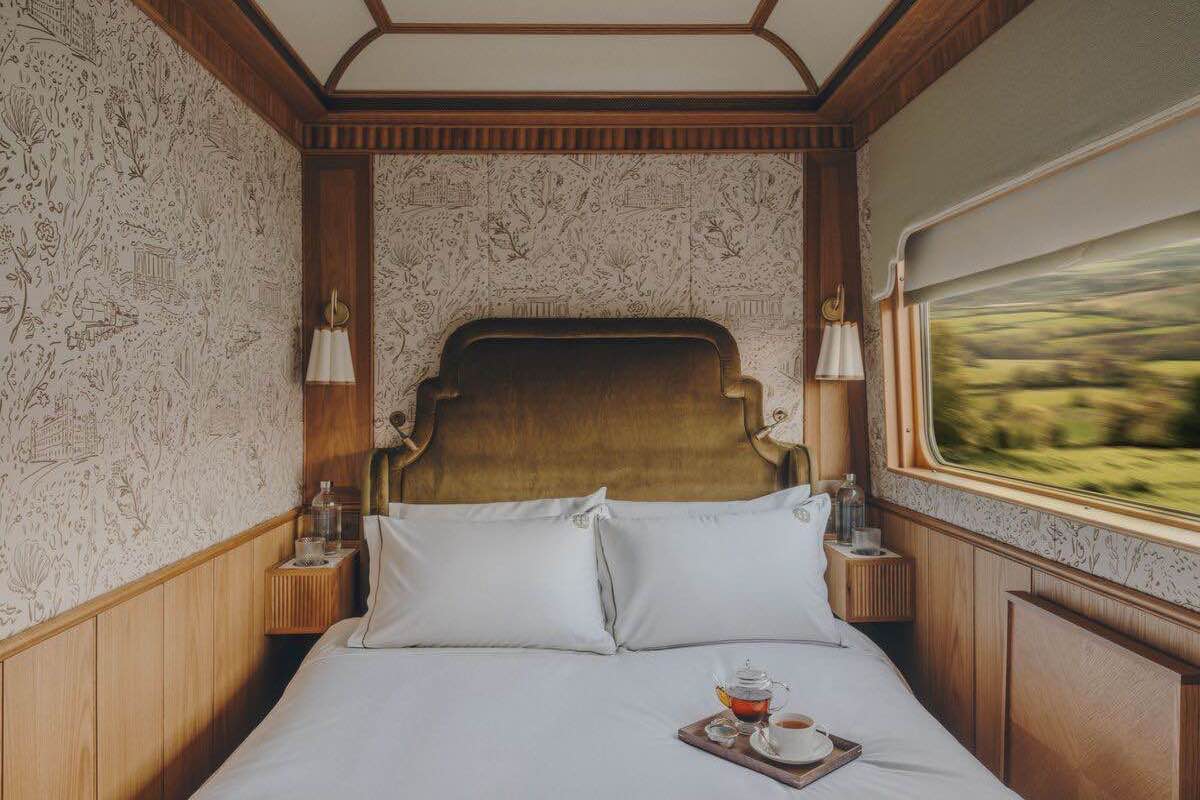
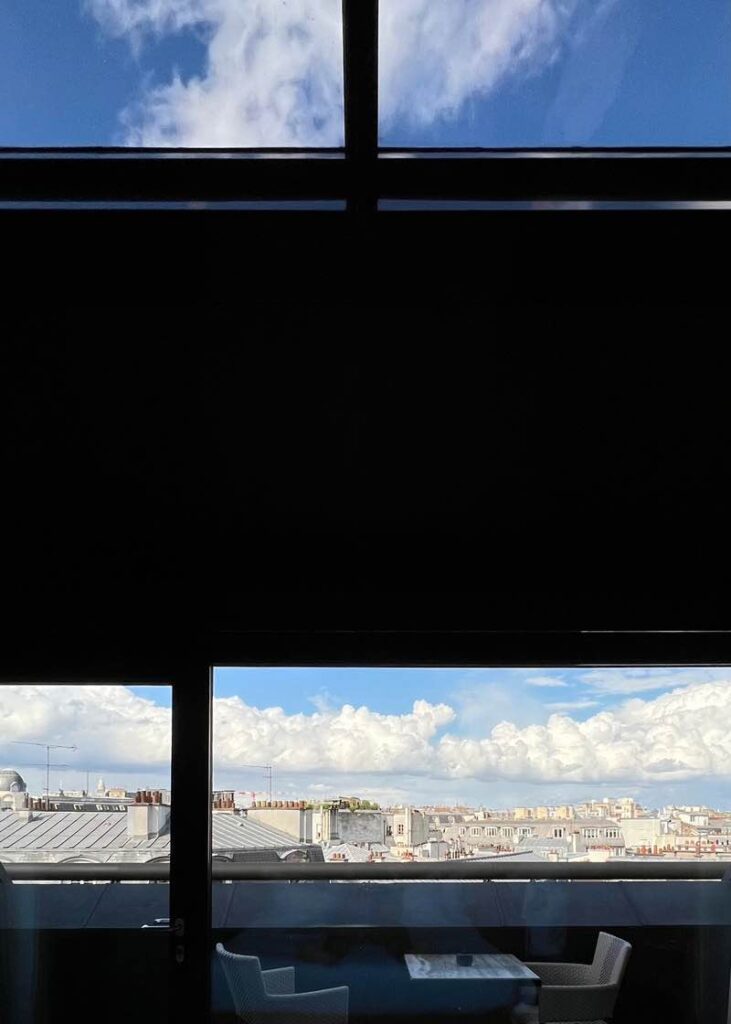
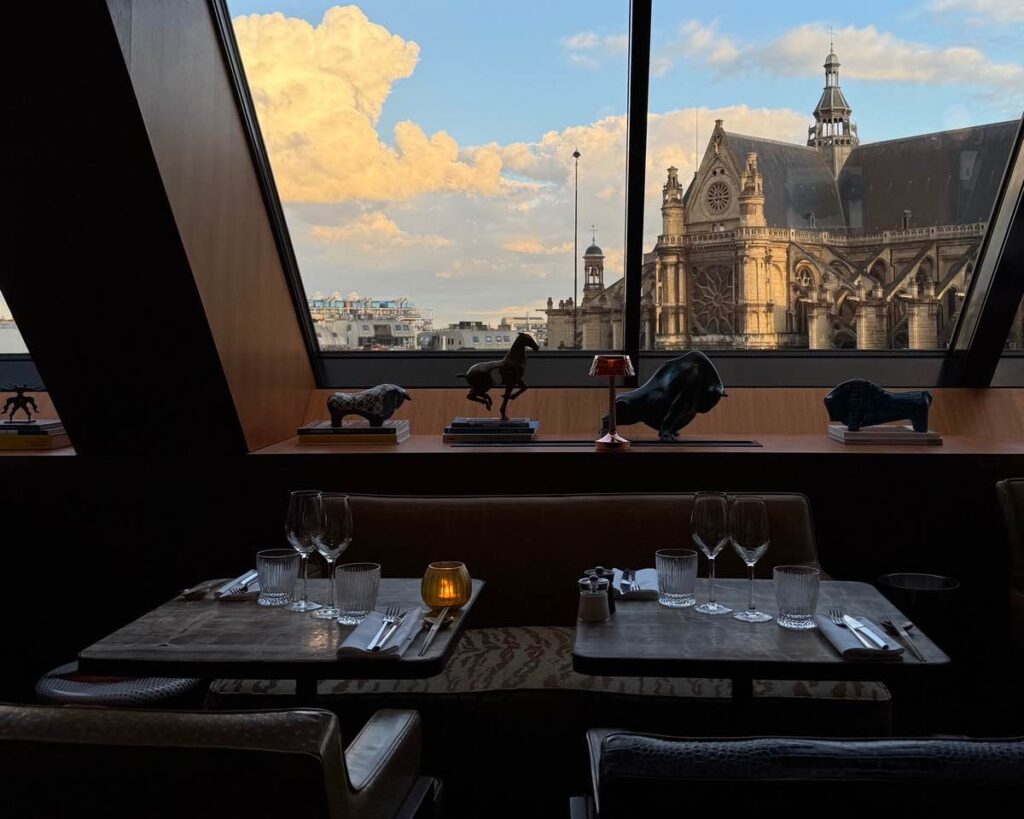
The 83 rooms and suites at Madame Rêve showcase a contemporary aesthetic that balances elegance with comfort, featuring carefully selected furniture, tailor-made fabrics, and patterned woods throughout. Each space is designed as an atelier-style sanctuary with sloping windows that frame panoramic views of Parisian landmarks including the Eiffel Tower, Saint-Eustache Church, and Montmartre.
The rooms are clad in walnut with oak floors and thick curtains that create a warm cocoon effect, while period mosaics and subdued lighting contribute to an intimate, sophisticated ambiance. The interior architecture successfully merges the building’s 19th-century grandeur with modern enhancements, creating a resolutely contemporary vision of luxury that is both inclusive and sensory. This careful curation extends to every detail, from the quilted ruffled pillowcases edged with gold bumblebees to the smart Madame Rêve stationery, ensuring that guests experience a stay that feels both timeless and distinctly Parisian.
Kitchen by Madame Rêve: Belle Époque atmosphere and contemporary French cuisine in a historic grand café setting
Kitchen by Madame Rêve occupies the ground floor of the hotel, transforming the former postal hall into a majestic restaurant that evokes the lively atmosphere of Parisian Belle Époque grand cafés. The space spans 300 square meters with eight-meter-high ceilings adorned with ornate moldings, elegant chandeliers, and golden velvet furnishings that create an immersive historical ambiance. The restaurant features continuous service from morning until late evening, offering contemporary French cuisine in a relaxed yet refined setting.
The menu emphasizes classic French dishes reimagined with modern sensibility, showcasing accessible gastronomy without unnecessary complexity. Opening onto the Cour Gutenberg, a covered interior courtyard, the restaurant provides both an elegant indoor dining room and an outdoor terrace space. On Friday and Saturday evenings, Kitchen transforms into a vibrant social destination where guest DJs provide musical accompaniment to signature cocktails and refined cuisine, blending historic grandeur with contemporary nightlife culture in a uniquely Parisian synthesis.
La Plume restaurant and ROOF bar: Japanese-influenced cuisine, botanical patio, and panoramic terraces overlooking historic Paris
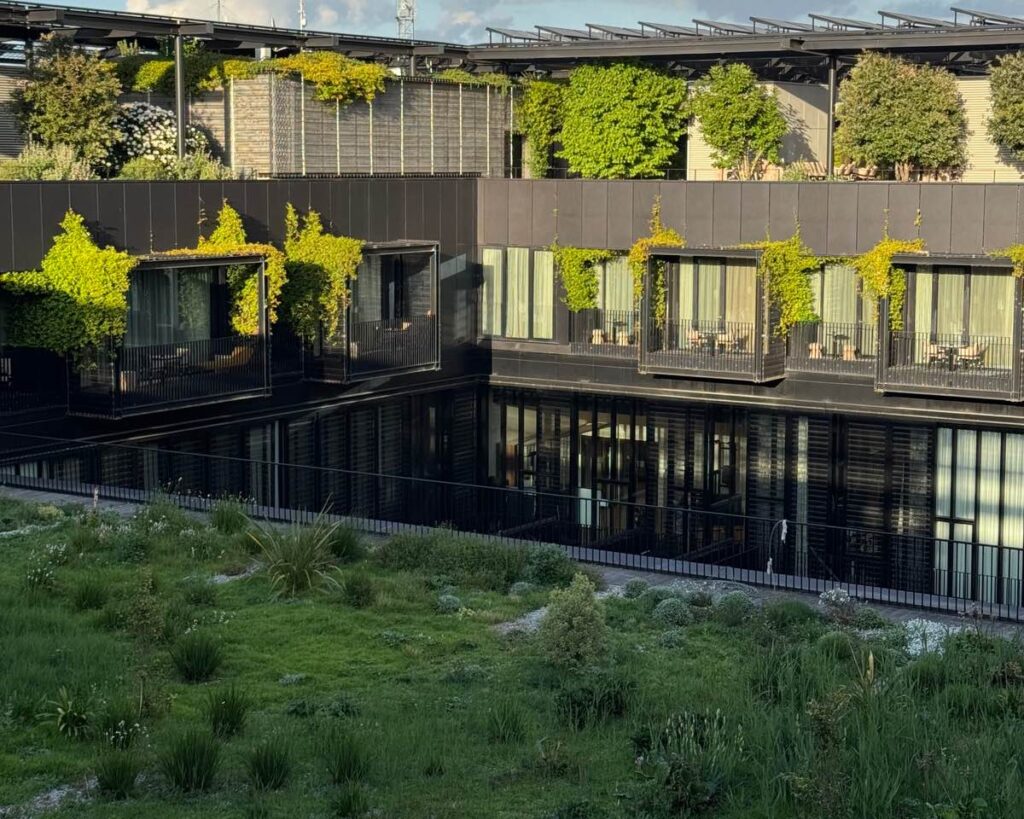
La Plume occupies the third floor of the hotel, offering 300 square meters of dining space centered around an exceptional botanical patio containing over one hundred plant species including palm and olive trees. The restaurant features a separate entrance at 43 rue Étienne Marcel and opens onto spectacular views of the Saint-Eustache Church and Parisian rooftops. Chef Benjamin Six, previously of Zuma London and Zuma Dubai, has developed a menu inspired by contemporary Japanese cuisine with French influences, featuring dishes such as wagyu beef gunkan, tempura sole with nori seaweed, and braised octopus with Jerusalem artichoke purée.
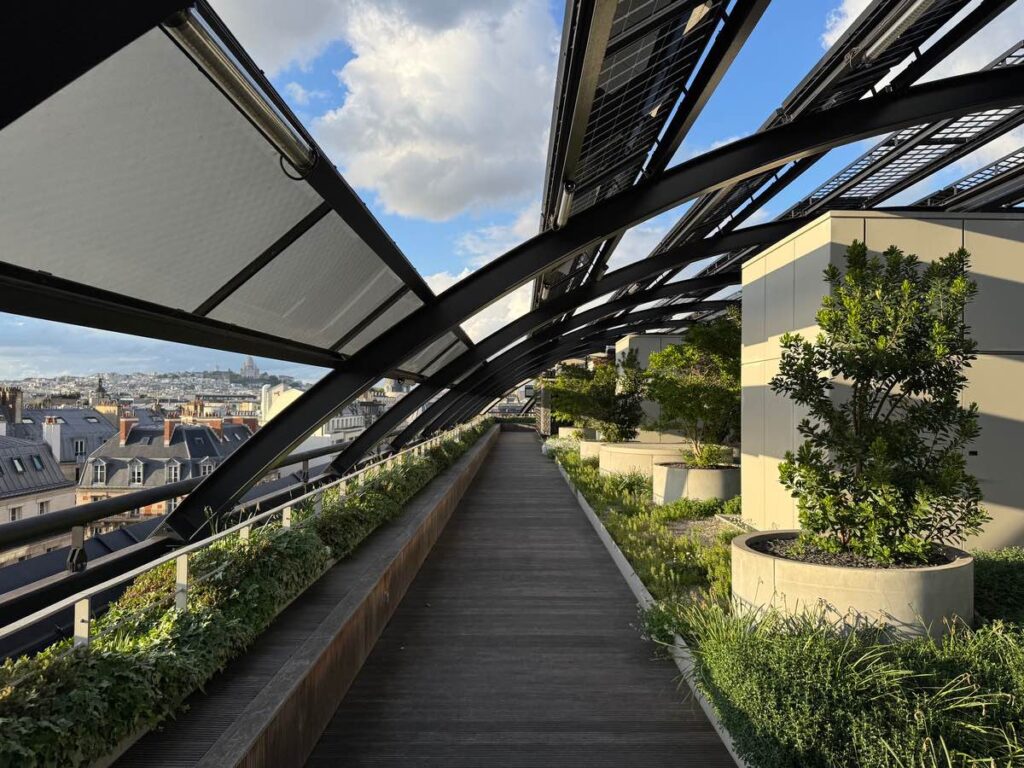
The restaurant’s design incorporates Calacatta Oro marble, copper accents, and warm wood tones, with ceiling frescoes by María José Benvenuto adding artistic dimension to the space. Adjacent to La Plume, the ROOF terrace extends across 500 square meters of the hotel’s rooftop, offering signature cocktails and finger food in a covered, heated green patio. The rooftop operates as both a restaurant and bar, providing panoramic views of Paris landmarks while functioning as one of the city’s largest hotel rooftop spaces, available for private events and open to the public during designated hours.
Urban forestry on rooftops: biodiversity, microclimates, and heat-island mitigation in central Paris
The rooftop garden forms the core of the project’s environmental strategy. It was installed without dismantling the original cupola, incorporating it into the new spatial system. Positioned above Rue du Louvre, it operates as an instance of urban forestry within a dense metropolitan fabric. The intervention aligns with Paris’s commitment to increase green surfaces by thirty hectares by 2026.
More than one hundred and fifty plant species were selected for resilience to wind exposure, limited soil depth, and temperature fluctuation. The planting system includes dwarf fruit trees, native grasses, sedums, and pollinator-supporting perennials. Biodiversity, climate adaptation, and mitigation of the urban heat-island effect structure the design logic.
The garden is organized into zones defined by microclimatic conditions such as sun exposure, wind flow, and building massing. This zoning enables staggered flowering cycles and seasonal variation. Spring emphasizes fruit tree blossoms, while late summer is dominated by grasses. These changes are ecological processes rather than decorative effects.
Rainwater is collected and reused through automated irrigation. Lightweight substrates retain moisture while minimizing structural load. All plant species are non-invasive. Passive water-retention systems reduce runoff during heavy rainfall, contributing to the regulation of Paris’ drainage infrastructure.
Madame Rêve Hotel
Madame Rêve Hotel occupies part of the former Poste du Louvre complex in Paris’ first arrondissement. Opened in 2021 after a large-scale renovation, it is embedded in a mixed-use development combining offices, public services, and retail. The hotel includes eighty-two rooms and suites distributed within the preserved industrial structure. Its rooftop garden is an integral element of the building’s architectural and environmental system.