Local forests, engraved wood traditions and energy-efficient systems define a project by Gris+Dainese, integrating architecture, research and alpine gastronomy
Where sustainable luxury and Italian design meet the natural rhythm of the mountains
In the heart of the Dolomites, Hotel de Len in Cortina d’Ampezzo stands as a symbol of sustainable architecture and alpine wellbeing. More than a hotel, it is a manifesto of conscious design — a place where recycled wood, local craftsmanship and scientific research converge to create an experience that soothes both body and mind. This is not just a stay, but a story carved in timber: an encounter between nature and human sensibility.
Hotel de Len in Cortina d’Ampezzo: Where Wood Speaks and the Mountains Listen
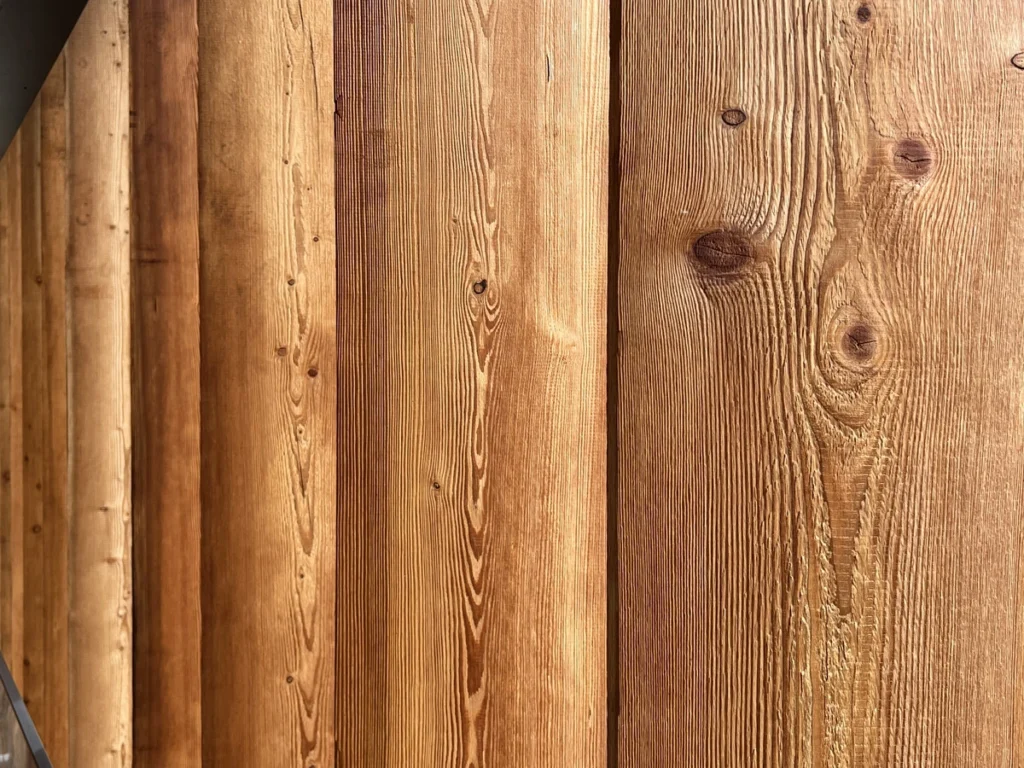
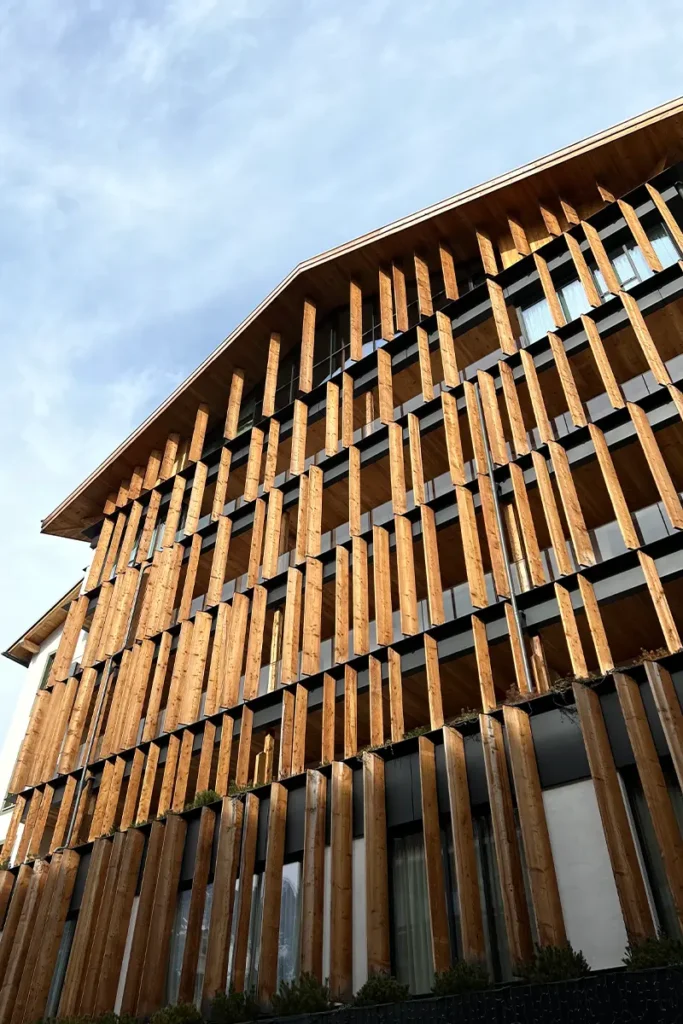
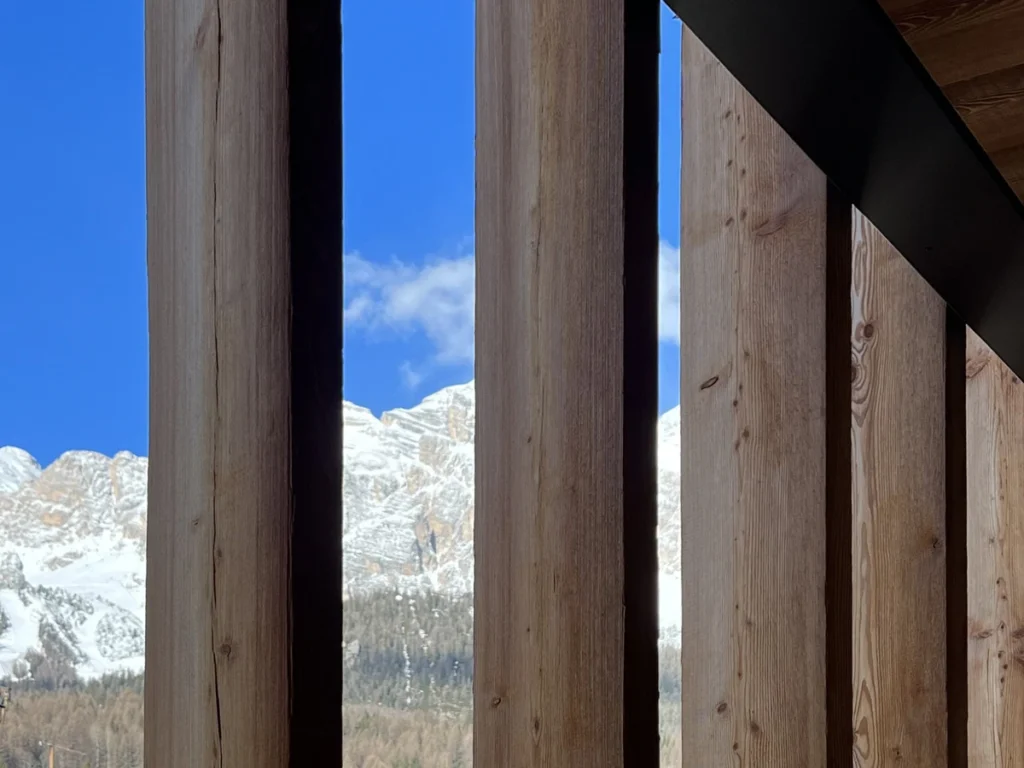
At Hotel de Len, wood is alive. Even before you step inside, the façade — cloaked in vertical boards of natural timber — seems to whisper to the surrounding peaks. Though located in the very center of Cortina d’Ampezzo, the hotel is deeply connected to the wilderness that surrounds it. From the ground floor to the sixth level, where the panoramic spa unfolds, guests can admire Tofana di Rozes, Monte Cristallo, Sorapiss, Cinque Torri and Pomagagnon. The name “De Len,” meaning made of wood in local dialect, perfectly encapsulates the essence of the place: rooted in the forest, shaped by human hands, and designed for harmony.
Hotel de Len: A Sustainable Reinvention of Cortina’s Historic Hotel Impero
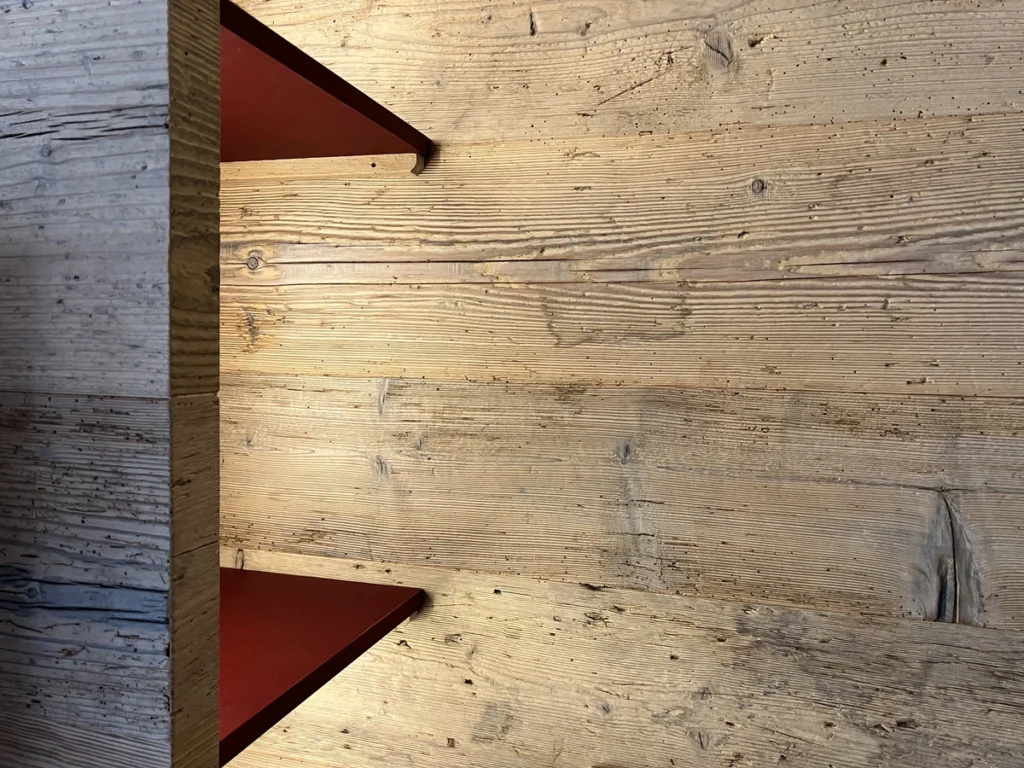
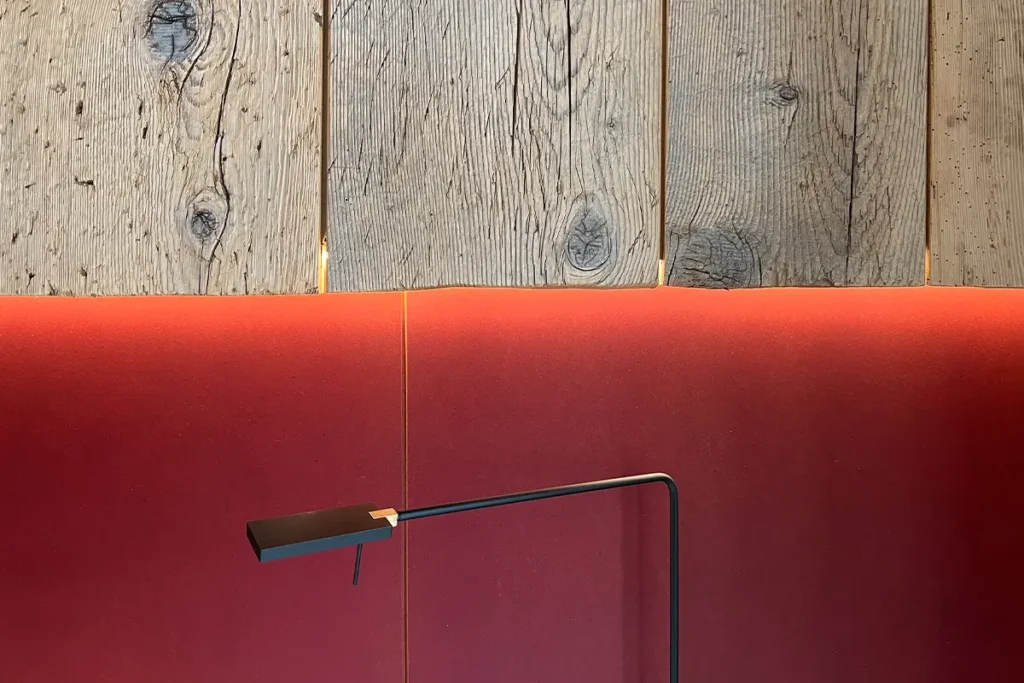
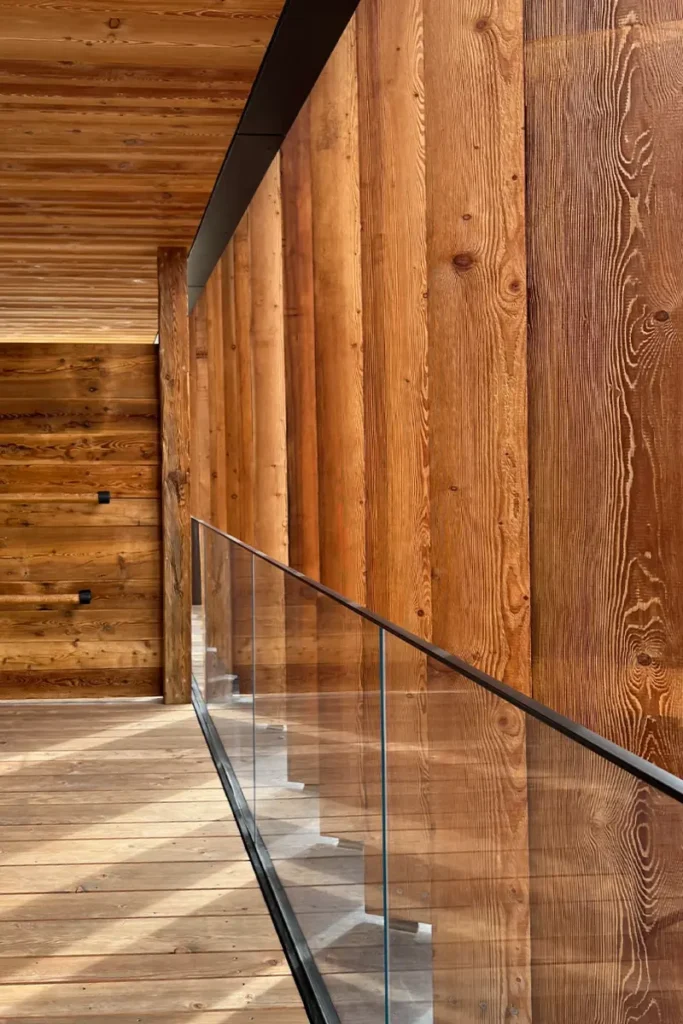
The story of Hotel de Len begins with transformation. After a meticulous three-year renovation, the historic Hotel Impero was reborn in 2022 under the creative direction of the Venice-based studio Gris+Dainese. The new design bridges past and present, blending traditional alpine craftsmanship with a clean, contemporary aesthetic. Inside, reclaimed wood tells its own tale — planks marked by time, knots and patterns that reveal centuries of life. These imperfections are celebrated, not concealed, creating spaces that feel both lived-in and timeless. In every room, the architecture invites calm, silence and introspection: a luxury that feels human, not ostentatious.
Hotel de Len and the Secret Language of Wood in the Dolomites
In northeastern Italy, wood has always carried meaning. For generations, families engraved their marks onto beams, doors and tools — signs of ownership, protection and faith. These symbols often included crosses, dates and the letters C–M–B, the initials of the Magi or the Latin phrase Christus Mansionem Benedicat — “May Christ bless this house.” At Hotel de Len, this ancient tradition is revived as part of the design identity. Each beam tells a story, each engraving connects the building to the cultural and spiritual heritage of the Dolomites. Wood becomes both material and memory.
The Heritage of the Forest: A Conversation with Hotel de Len’s Manager, Carla Medri
“The Cortina area has its own rules,” explains Hotel de Len’s manager, Carla Medri. “Each family has its ‘house marks.’ These were once burned into wood to identify ownership and allocate each family’s annual share of timber. Our logo is inspired by this symbol — it represents continuity with our land.” This philosophy extends beyond symbolism. In Cortina, descendants of ancient families still manage 16,000 hectares of forest collectively under a system that ensures sustainable use. Hotel de Len followed the same principles, sourcing wood locally and involving local craftsmen in every phase of the renovation. “In one of the rooms, you can still see the imprint of horses’ hooves,” Medri adds. “That’s the beauty of working with material that has lived before.”
Hotel de Len and the Future of Sustainable Hospitality in the Dolomites
Sustainability at Hotel de Len goes hand in hand with comfort. The building’s wooden structure offers natural insulation and reduces energy consumption, while protecting against acoustic and electromagnetic pollution. “Wood retains heat perfectly,” Medri notes. “Our underfloor system keeps rooms warm with minimal energy, and in summer the same pipes circulate cool water. We use wood pellets instead of methane for heating, reserving gas only for cooking.” Here, sustainability isn’t an add-on — it is the very essence of the design. Guests experience the comfort of modern technology within a structure that breathes with the rhythm of the mountains.
Inside Hotel de Len: Natural Materials, Minimal Design and Alpine Serenity
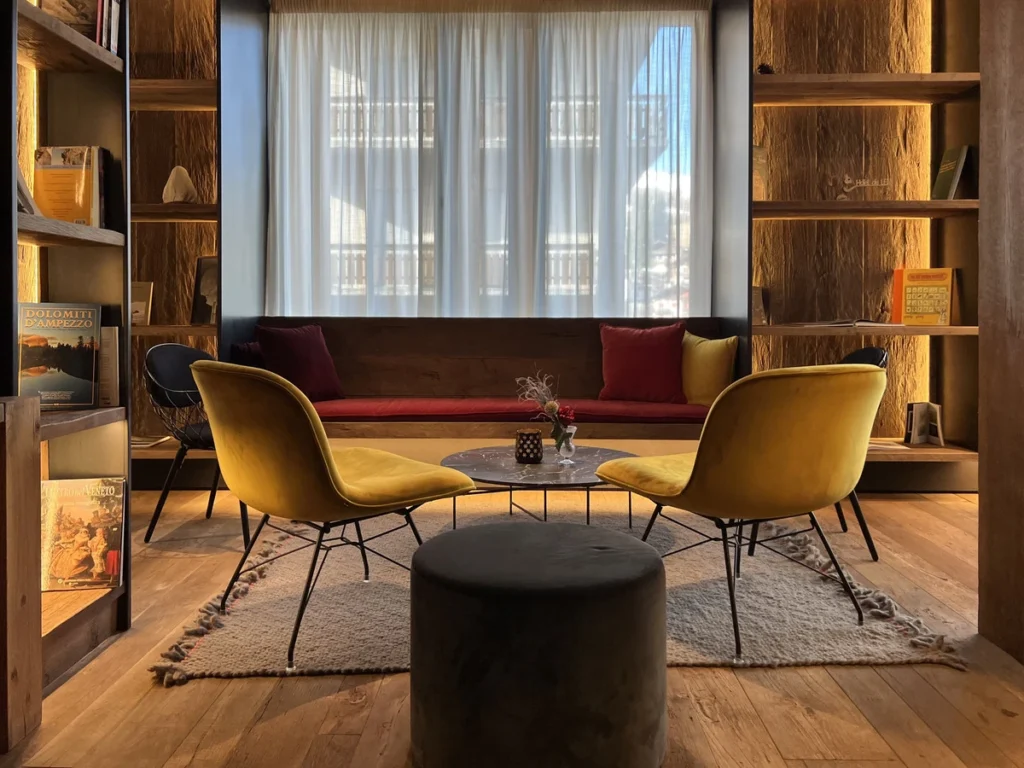
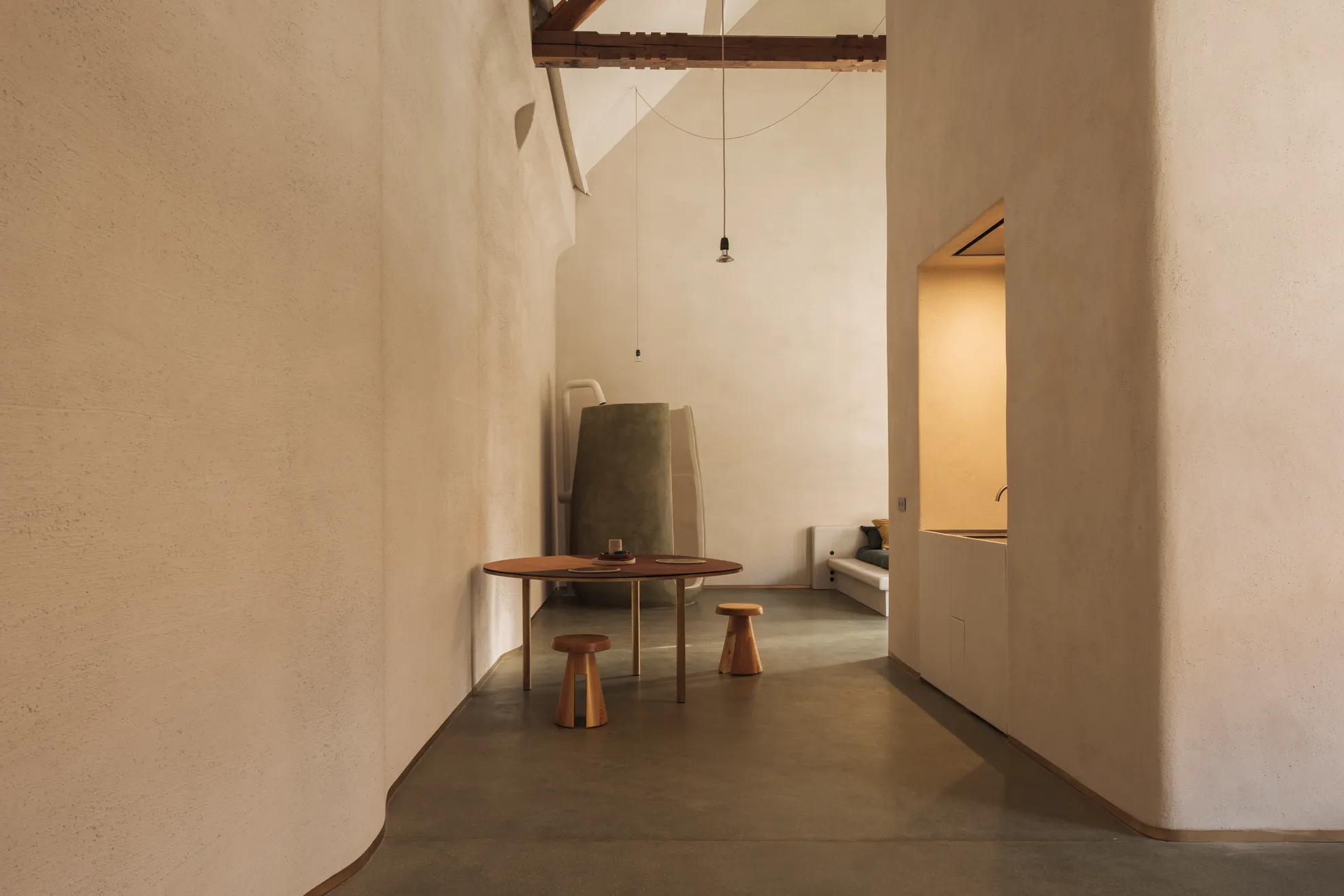
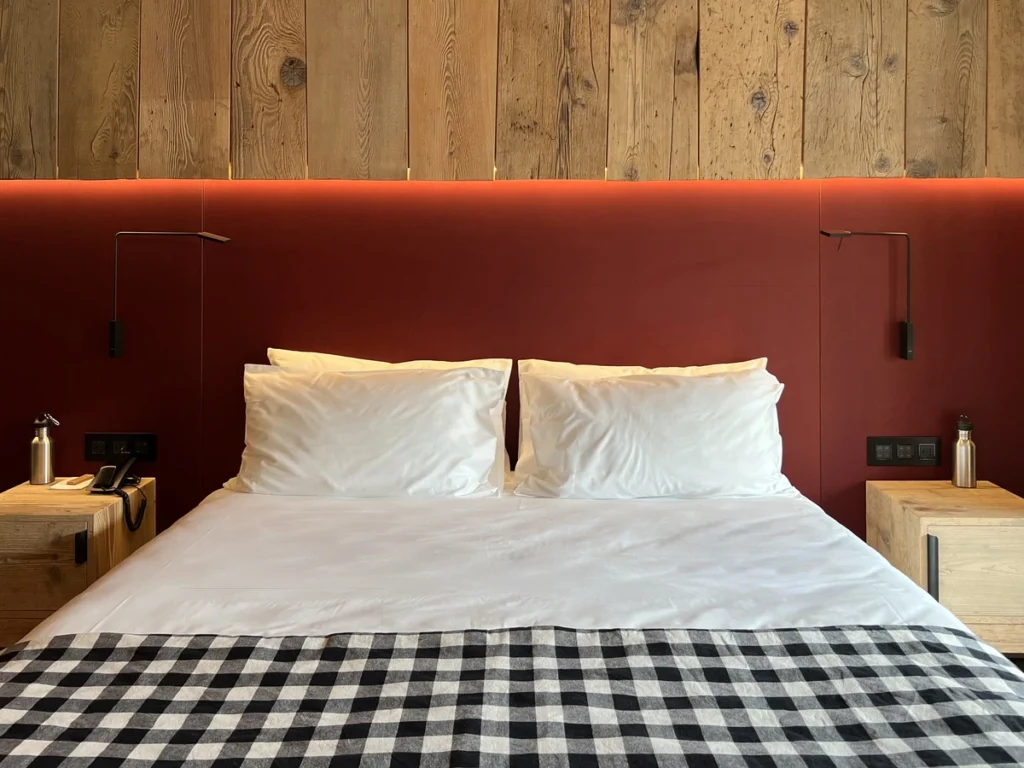
Inside Hotel de Len, the design language is one of simplicity and sensory harmony. The hotel offers twenty-two rooms across five floors, each defined by clean lines, neutral colors and natural textures. Antique fir and Swiss stone pine dominate the interiors, filling the air with a distinctive alpine scent. Swiss stone pine, known for improving sleep quality and purifying the air, combines with antique fir — whose balsamic fragrance supports balance and relaxation. Together, they create an environment that feels both restorative and authentic. In every room, the connection between material, light and wellbeing is tangible.
Hotel de Len as a Research Case Study: Architecture for Health and Wellbeing
Hotel de Len has attracted the attention of academia. In collaboration with the University of Primorska in Slovenia, and under the InnoRenew CoE program, it became the first hotel in Europe to be studied as an organism of wellbeing. The research explores how wood, light, ergonomics and color affect the human psyche. It examines how architecture can actively contribute to emotional balance and physical health. The findings aim to guide future designers toward buildings that are not only sustainable but also psychologically nurturing — a frontier that Hotel de Len embodies every day.
Wellness and Technology at Hotel de Len: The Science of Rest and Regeneration
Recognized by the Sols – Swiss Optimal Living Society, Hotel de Len ensures each space meets biocompatible standards. Every bedroom is designed to minimize environmental stress and optimize sleep quality, incorporating innovative technologies such as Magma13, Orpheus and Astreo. The Magma13 bed system, based on magnetic field principles, claims to enhance circulation and energy flow, though its effectiveness remains under study. Orpheus filters electromagnetic radiation from electronic devices, while Astreo reduces high-frequency “dirty electricity.” Together, these systems create a cocoon of calm that supports deep, regenerative rest.
The Spa at Hotel de Len: A Sanctuary of Light, Silence and Mountain Air
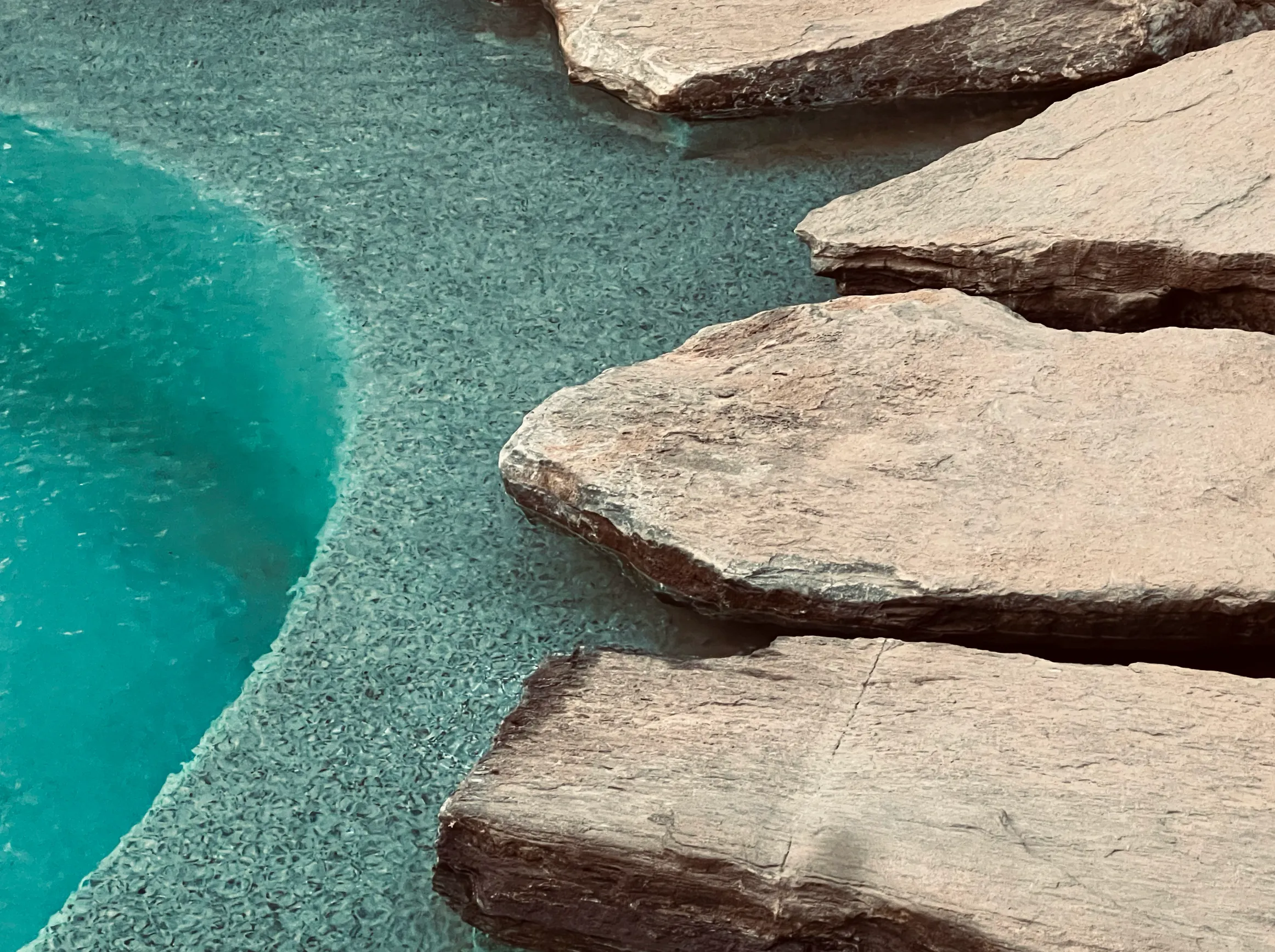
The sixth floor of Hotel de Len houses one of the most spectacular spas in the Dolomites. Bathed in natural light and framed by vast windows, it offers panoramic views of Faloria and the Cortina bell tower. Guests can follow a journey through warmth and cold — from steam baths to ice fountains, from experience showers to salt and Finnish saunas. The outdoor whirlpool, overlooking the snow-covered peaks, completes the ritual. Here, wellness becomes communion with nature, and silence becomes luxury.
Culinary Excellence at Hotel de Len: From Alpine Forest to Italian Table
At Hotel de Len, gastronomy mirrors the philosophy of the place — authentic, sustainable and deeply local. Under the direction of Chef Andrea Ribaldone, executive chef of Egnazia Ospitalità Italiana, the restaurant celebrates the territory’s ingredients: Ampezzo cheeses, mountain vegetables, wild game and freshwater fish. The signature fried fallow deer fillet reinterprets the Italian fritto misto with alpine flair. Collaborations with producers such as El Brite de Larieto and Caseificio Quattro Portoni ensure that every dish tells a story of place, season and craftsmanship. The menu evolves with nature itself, moving from fresh cod and raw vegetables in summer to rich fondues in winter.
Hotel de Len Meets Milan’s Cà-Ri-Co: When Mountain Tradition Meets Mixology
In one of its most memorable evenings, Hotel de Len hosted Milan’s celebrated cocktail bistro Cà-Ri-Co for a four-hand dinner with chefs Andrea Ribaldone and Leonardo d’Ingeo. Each chef crafted two courses, merging alpine tradition with international flair, while the hotel’s bartenders created bespoke cocktail pairings. Sponsored by Martini, the event embodied the spirit of Hotel de Len — innovation grounded in authenticity.
Hotel de Len and Egnazia Ospitalità Italiana: A New Era of Italian Sustainable Luxury
Behind Hotel de Len stands Egnazia Ospitalità Italiana, the hospitality group founded by Aldo Melpignano, the visionary behind Borgo Egnazia in Puglia. The group’s mission is to create places that embody the identity of their landscapes — blending sustainability, design and emotional authenticity. Its growing portfolio includes Hotel de Len in Cortina, Le Carrube in Ostuni and Santavenere in Maratea, with Castel Badia in Brunico and a Roman property soon to open. By 2027, Egnazia Ospitalità Italiana aims to reach twenty properties across Italy, redefining sustainable luxury from the Adriatic to the Alps.
Hotel de Len, Cortina d’Ampezzo: A Dialogue Between Nature, Design and the Human Spirit
Hotel de Len is not simply a hotel — it is a philosophy carved in wood. It speaks the language of the forest, the silence of the mountains and the warmth of human craft. By uniting architecture, sustainability and research, it transforms hospitality into a form of wellbeing and belonging. In the heart of the Dolomites, Hotel de Len is where design becomes emotion, and luxury becomes simplicity — a place to breathe, to reconnect, and to feel the world anew.