190 years after the Luxor Obelisk arrived in Paris, Egyptian granite returns—this time as contemporary art
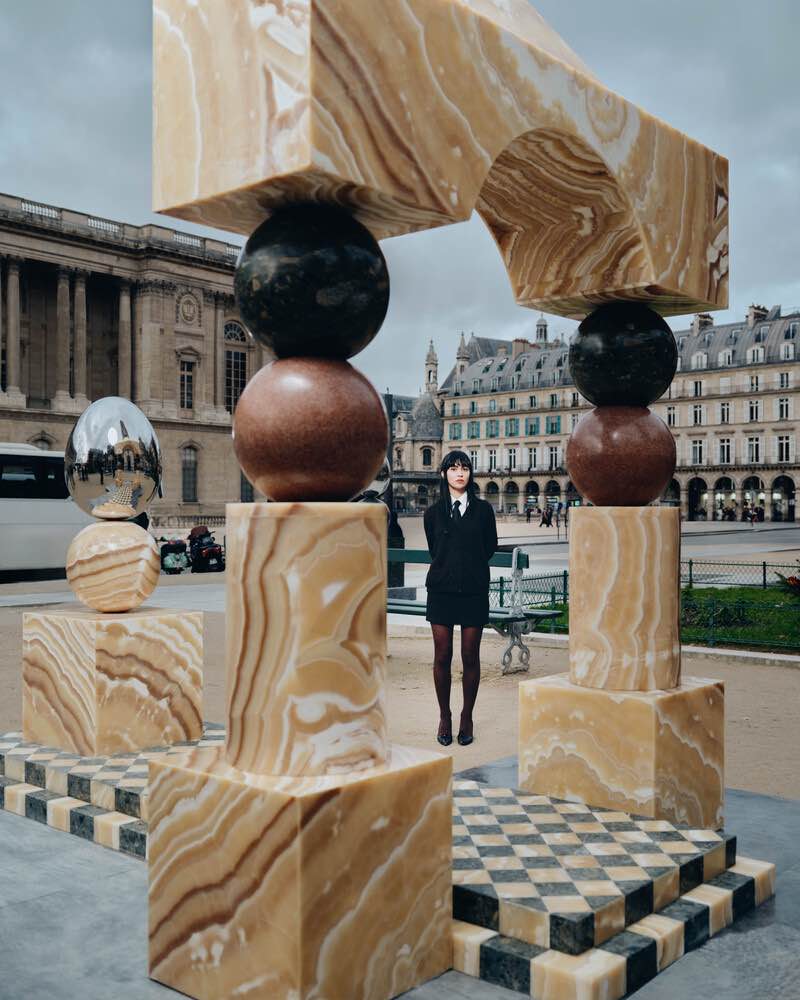
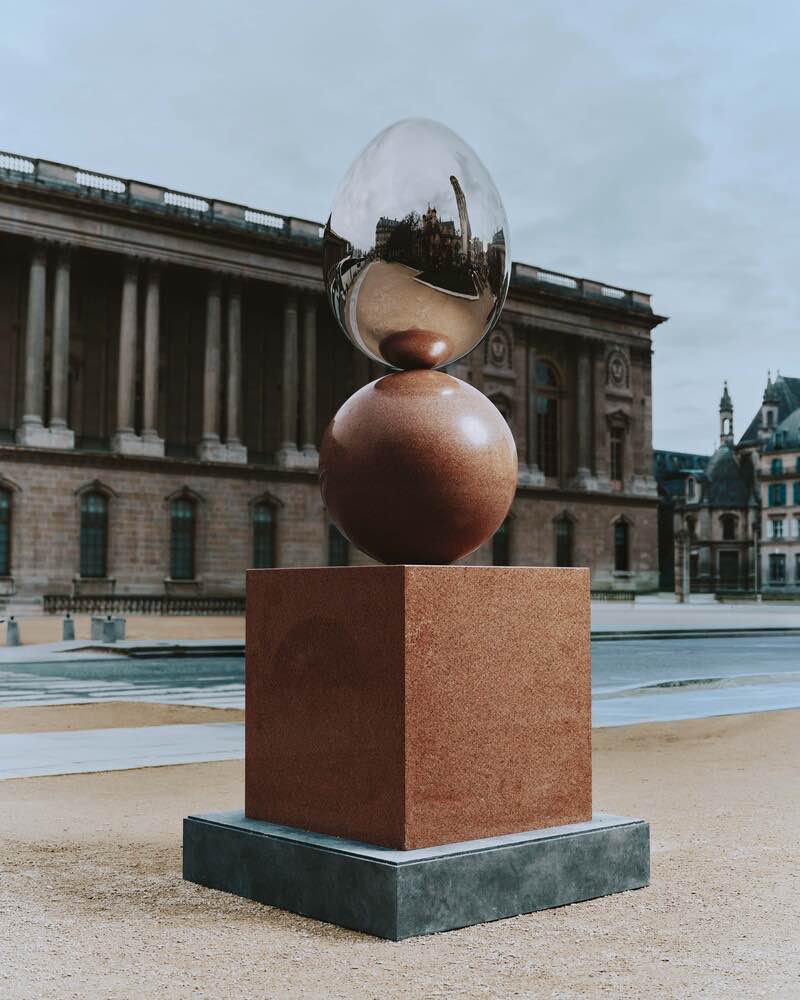
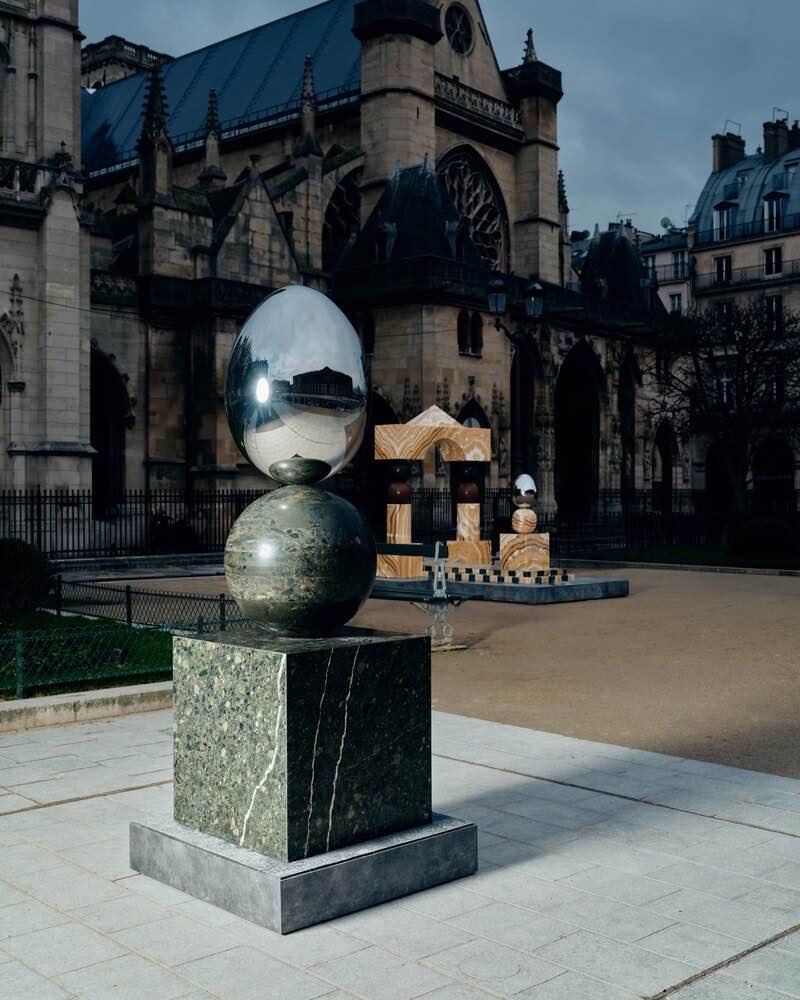
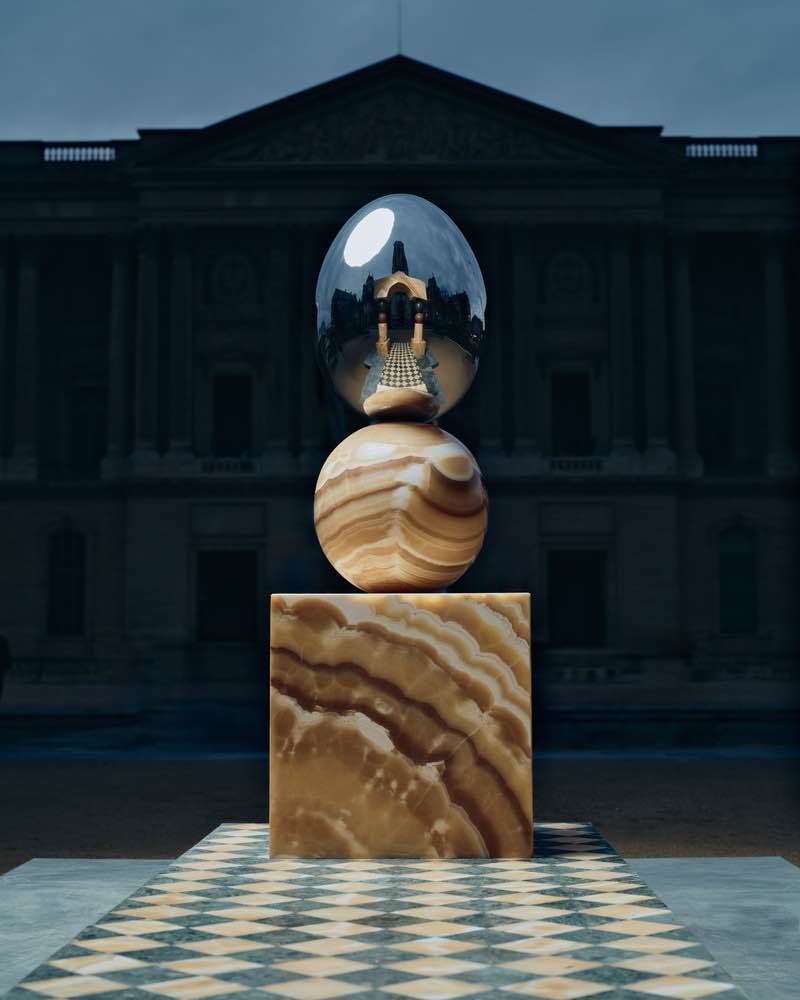
On Place du Louvre, facing the museum’s glass pyramids, stands a monumental gate carved from Egyptian stone. “Mirror Gate II” by artist Pilar Zeta is built from yellow alabaster, red Aswan granite, and Fawakheer breccia—the same materials that shaped temples and monuments for millennia. At its center: a mirrored egg, reflecting visitors who pass through its checkerboard threshold.
The installation arrives almost exactly 190 years after another Egyptian monument reached Paris: the Luxor Obelisk, now standing at Place de la Concorde. That story began in 1830, when Egypt’s Viceroy Muhammad Ali Pasha offered France two 3,300-year-old obelisks as a gesture of friendship. Only one ever left Egypt. Its journey took six years—workers dug canals, built a custom barge named Louxor, and survived epidemics before the 230-ton pink granite column finally reached Paris in December 1833. When it was erected on October 25, 1836, before 200,000 spectators, the engineer stood beneath it throughout the operation, willing to die rather than survive its failure. In return, France sent Egypt a mechanical clock. It rarely worked.
The Quarries That Never Stopped
Both monuments share a common origin: the granite quarries of Aswan, in southern Egypt. Active for over 4,500 years, these quarries supplied stone for the Great Pyramid’s King’s Chamber, countless obelisks, and the colossal statues that defined pharaonic architecture. Ancient workers used diorite pounding stones—only slightly harder than granite—to carve monuments from bedrock, a process that could take eight months or more.
The quarries never stopped operating. Today, Marmonil, a third-generation Egyptian stone company, runs the same sites that supplied material for the Luxor Obelisk. Recently, the company provided over 110,000 square meters of marble and granite for the Grand Egyptian Museum, which opened in November 2025. Among those materials: Aswan granite for the base of the 11-meter-tall statue of Ramses II that now greets visitors in the museum’s entrance atrium—a 3,200-year-old colossus that once stood in a Cairo traffic circle.
“Mirror Gate II” was carved from stone quarried at these same sites. Marmonil first collaborated with Pilar Zeta in 2023, when the artist installed the original “Mirror Gate” at the foot of the Pyramids of Giza as part of the Forever Is Now IIIexhibition. The Paris version—Mirror Gate II—transforms that work, using ancient Egyptian materials to create a contemporary sculpture.
Two Centuries, Two Directions
The difference between 1836 and 2026 isn’t just chronological. The Luxor Obelisk was a gift from Egypt to France, extracted and transported at enormous cost during an era when European powers were competing to claim ancient Egyptian heritage. French Egyptologist Jean-François Champollion had just deciphered the Rosetta Stone; Napoleon’s Description de l’Égypte had sparked European fascination with pharaonic civilization. The obelisk became a symbol of France’s cultural prestige.
France was granted two obelisks, though the second remained at Luxor until 1981, when President François Mitterrand formally renounced France’s claim to it. Today, the Louvre holds over 6,000 Egyptian objects. An estimated 90,000 sub-Saharan African artifacts remain in French museums, despite President Emmanuel Macron’s 2017 pledge to pursue restitution. Of 27 objects announced for return, only a handful have been repatriated.
Mirror Gate II doesn’t engage directly with these debates. It’s not a demand for repatriation or a critique of museum collections. Instead, it’s a contemporary artwork that happens to use materials with 4,500 years of history. The stone was quarried, carved, and finished in Egypt by Egyptian craftsmen, then installed in Paris as a temporary sculpture (it will remain until February 15, 2026).
The Artist and the Stone
Pilar Zeta, an Argentine multimedia artist based in Mexico, works at the intersection of philosophy, sacred geometry, and post-modern architecture. Her practice uses portals, thresholds, and symbols—particularly the egg—as devices of transformation. She’s known for large-scale installations that invite introspection: Hall of Visions at Faena Miami in 2021 (where Deepak Chopra led a meditation), Future Transmutation during Miami Art Week 2022, and Doors of Perception at MACO Art Week in 2023.
Her collaboration with Marmonil began in 2024 in Mexico City, when the company’s family encountered her work and recognized a shared interest in stone as both medium and symbol. The partnership culminated in the Giza installation, where limestone (the material of the pyramids themselves) was combined with marble and fiberglass to create a gateway “between time and space.”
For Mirror Gate II, Zeta worked exclusively with Egyptian stone. The checkerboard path at the sculpture’s center evokes duality—a recurring motif in Egyptian symbolism. The mirrored egg represents potential and creation, inviting viewers to see themselves reflected at the threshold between past and present.