In Noceto, near Parma, a mid-19th-century palazzo has been restored as a destination for design and fine dining — with Stefano Guidotti’s interiors and Enrico Bartolini’s culinary direction
Palazzo Utini: a 19th-century palazzo in Italy’s Food Valley, restored as a destination for design and fine dining
In the small town of Noceto, a few miles from Parma, a mid-19th-century building has quietly become one of the most compelling hospitality projects in Emilia-Romagna. Palazzo Utini is not a hotel that happens to have a restaurant, nor a restaurant that happens to have rooms. It is a deliberate fusion of architecture, interior design, and gastronomy — a project that took two decades to realize and draws its identity from the territory it sits within.
The Utini family, long active in the production and distribution of cured meats and Prosciutto di Parma, purchased the building from the local municipality in 2002. Renovation work began in 2012, and the project found its culinary direction in 2016, following a chance encounter with chef Enrico Bartolini at the Teatro Regio in Parma during the launch of that year’s Michelin Guide. The building had been a historical touchstone for the local community for over a century. What it became is something harder to categorize.
Restoration under constraint: Stefano Guidotti’s approach to the palazzo’s identity
Because of its recognized historic value, the renovation was subject to restrictions imposed by the Italian Heritage Authority. Designer Stefano Guidotti, who led the artistic direction and interior design, took those constraints as a starting point rather than a limitation.
“From the beginning, our plans were strongly tied to the local context,” Guidotti explains. “We didn’t want just any renovation — we wanted a modern reimagining that honored the building’s genius loci.”
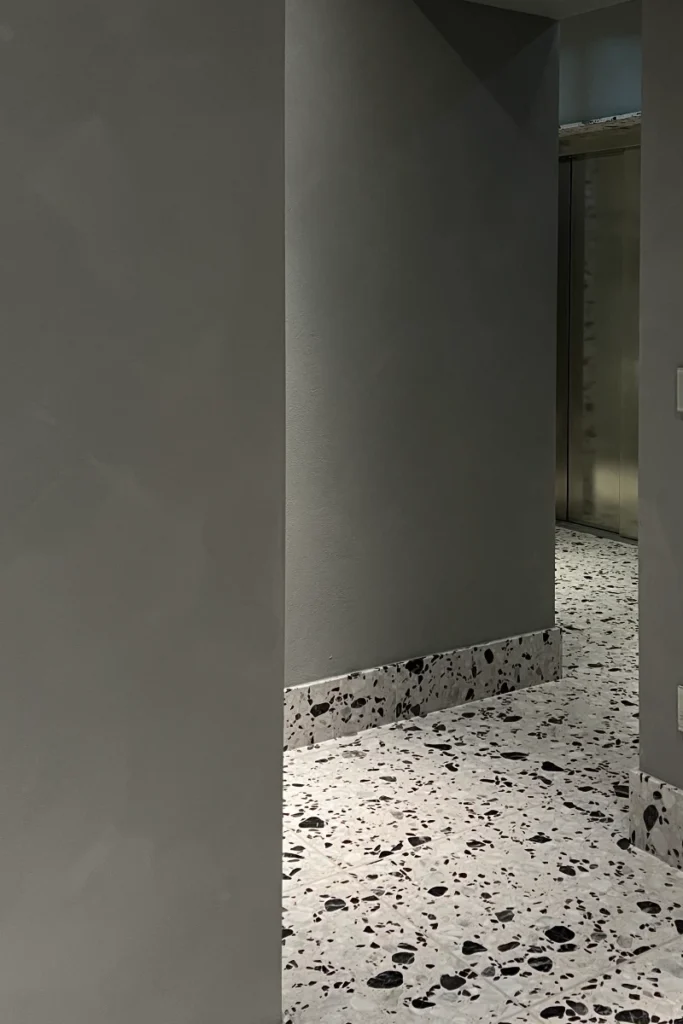
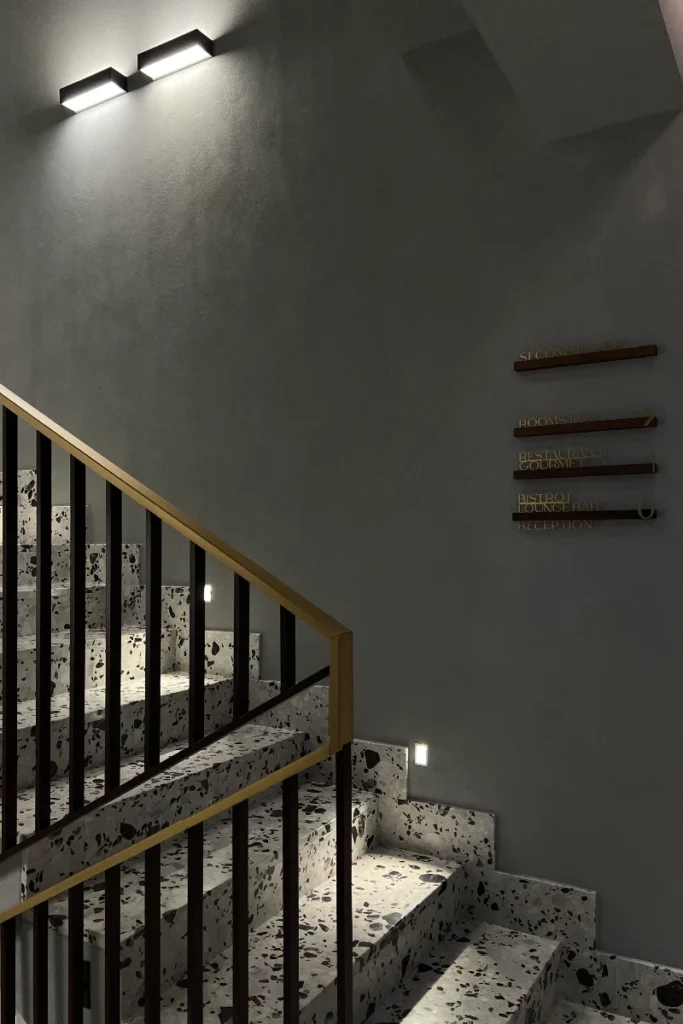
The research phase proved decisive. Fragments of original patterned tiles — cementine — were discovered during preliminary surveys, and from that finding grew the central design gesture of the entire project: a continuous terrazzo floor that runs from the entrance stairs through hallways and into the grand rooms, unifying every level of the building under a single surface. “I wanted to create one unbroken surface, like a carpet cascading down the stairs,” Guidotti says. The choice gives the palazzo visual coherence while carrying a memory of what was there before.
Raw earth, brass, and theatrical light: the material language of Palazzo Utini
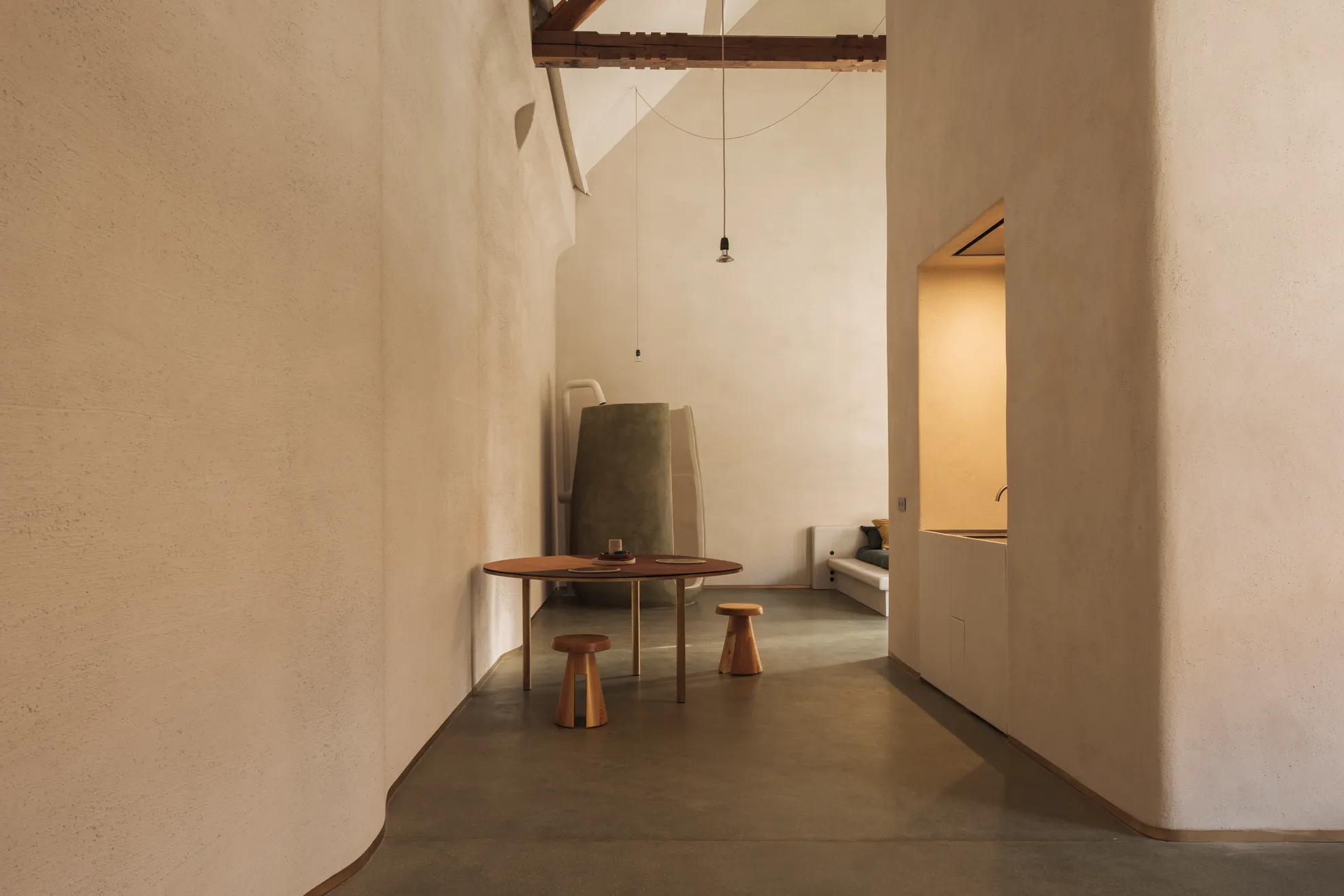
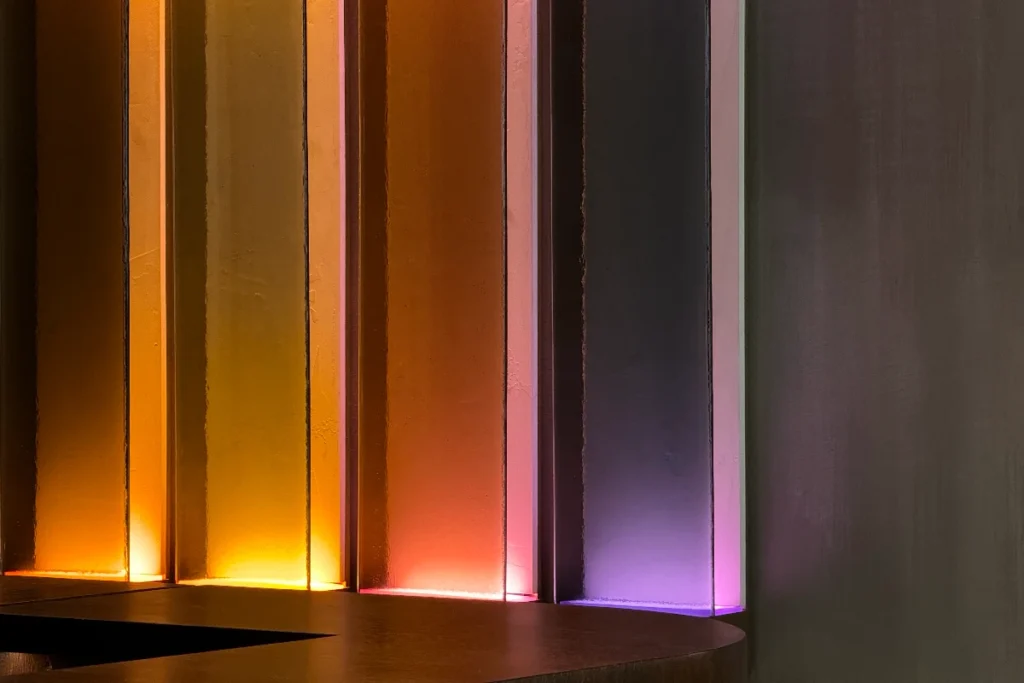
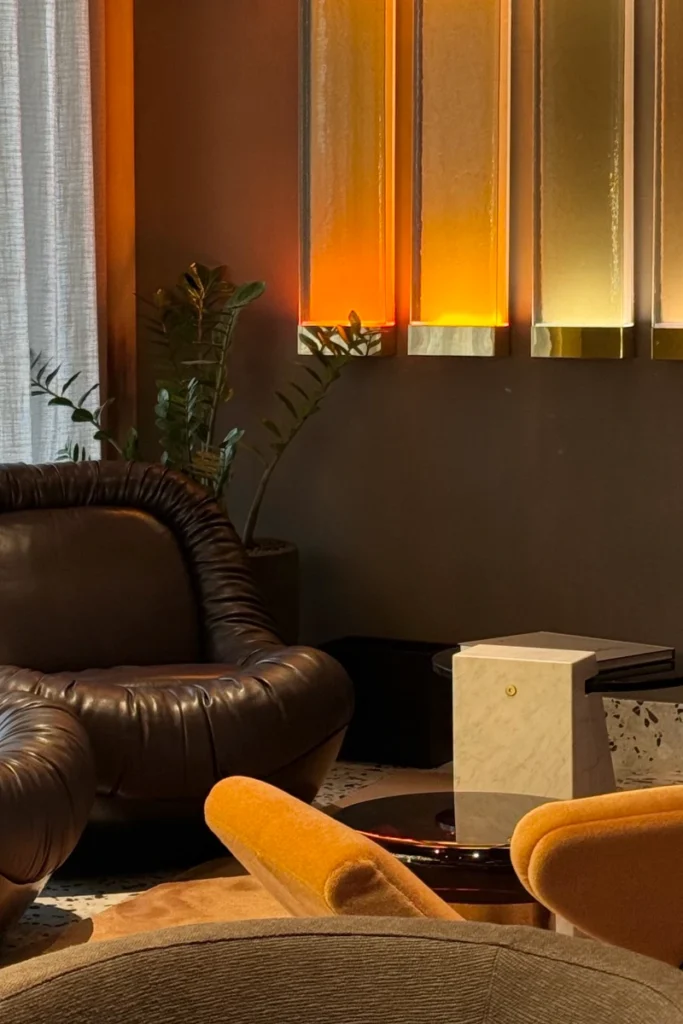
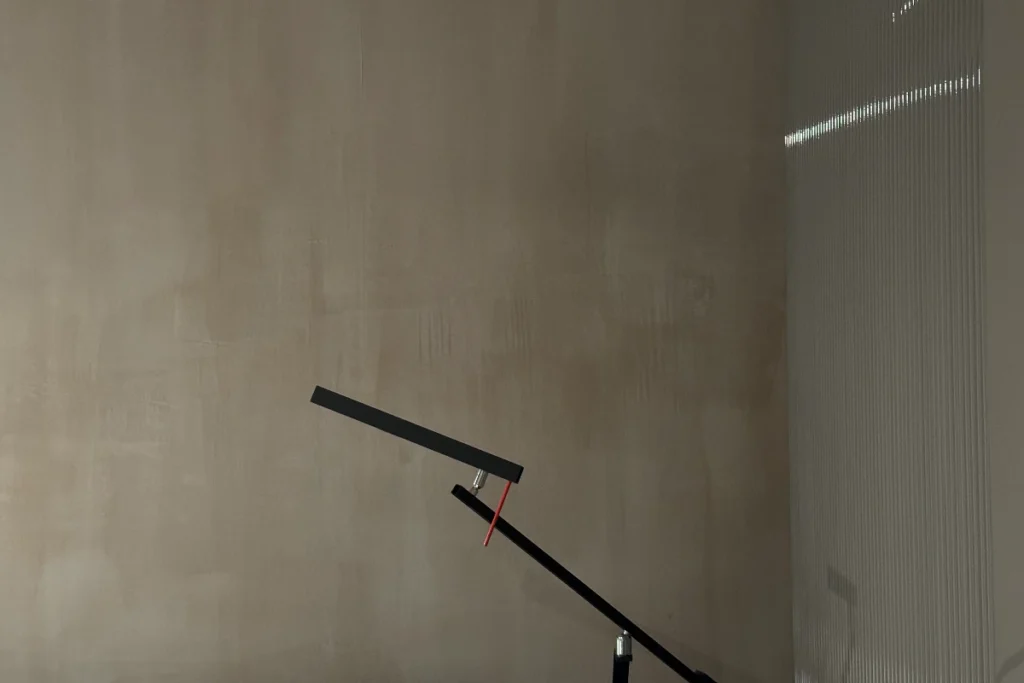
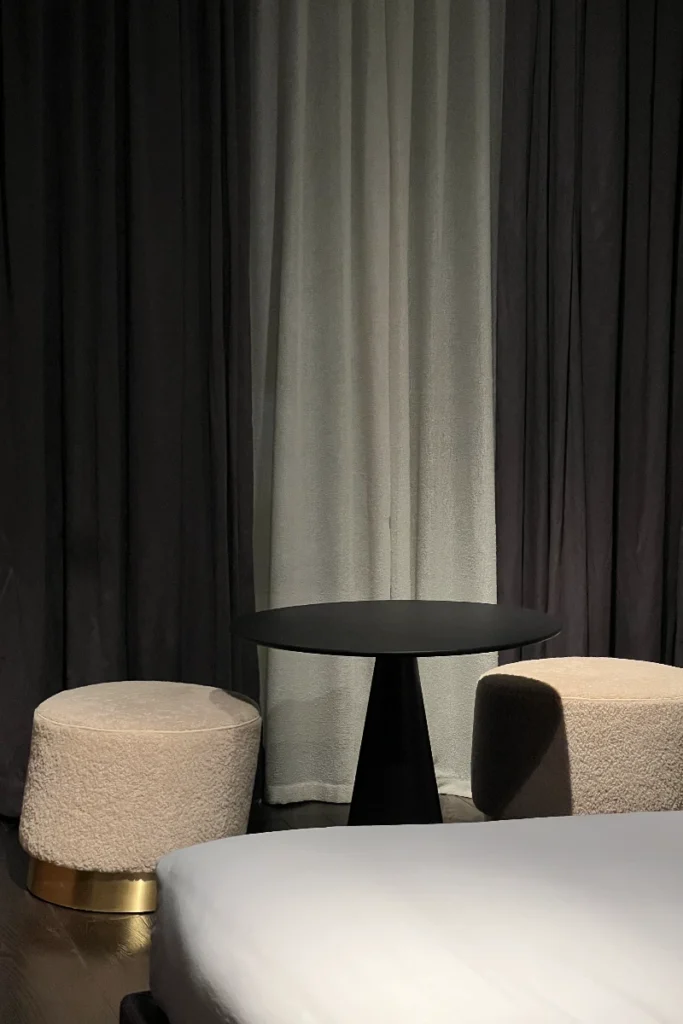
The interiors work through contrast. Raw-earth walls, realized in collaboration with natural finishes specialist Matteo Brioni, introduce a tactile warmth that sits in deliberate tension with reflective elements — brass fixtures, lacquered surfaces, metallic accents. “It’s a dialogue between mute textures that absorb light and those that give it back,” Guidotti notes. “I wanted surfaces to feel alive and tangible.”
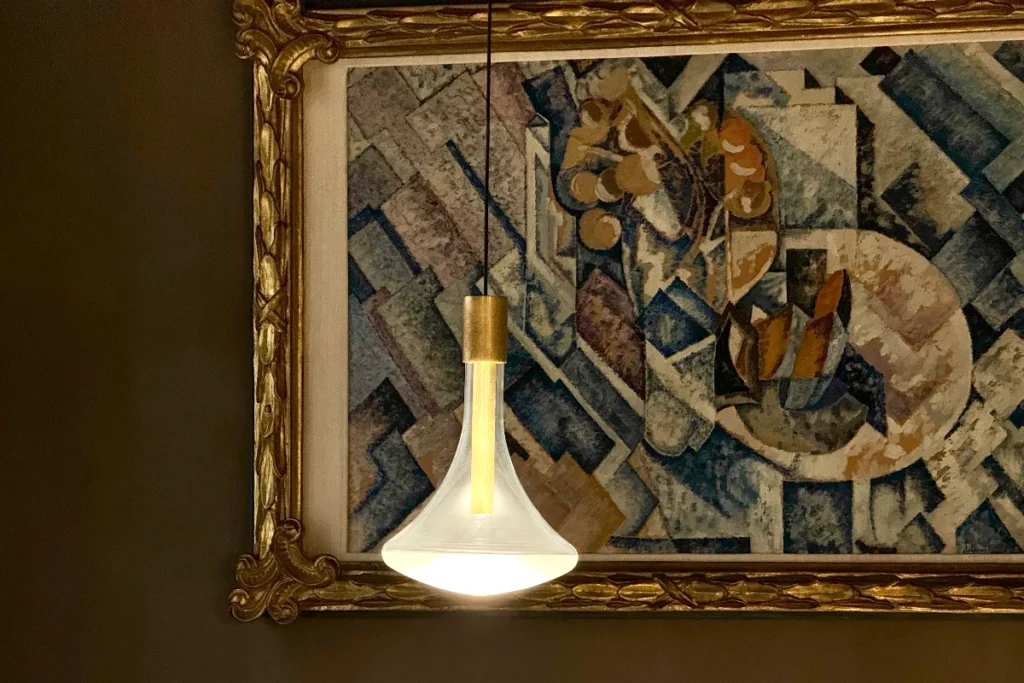
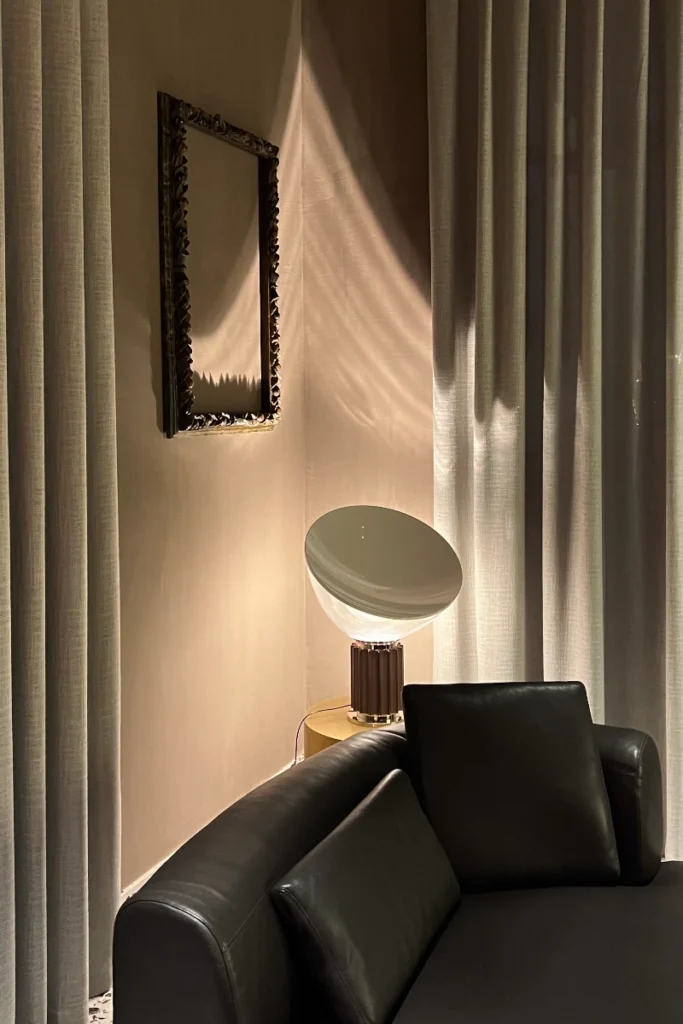
Lighting design by Davide Groppi reinforces this quality. Fixtures are understated in some spaces, theatrical in others: oversized bedside lamps create dramatic focal points in the suites, while pieces originally finished in black have been refinished in gold to harmonize with the warm tones of the earth walls. Art design elements by Draga & Aurel contribute a refined linearity that holds the visual language together across the building.
Furniture was selected with the same deliberateness. Iconic pieces from Baxter, Cassina, Tacchini, Meridiani, Gallotti&Radice, and Dedar are distributed throughout, never as decoration for its own sake but as part of what Guidotti describes as a “tailored design” approach — each element chosen to contribute to the palazzo’s broader narrative. Hallways function as informal galleries; larger rooms are organized around togetherness; quiet corners with armchairs near large windows invite slow, unhurried stays.
Palazzo Utini restaurant: bistrot, fine dining, and the logic of the Food Valley
The gastronomic offering at Palazzo Utini unfolds across two distinct registers, both rooted in the extraordinary ingredient culture of Emilia-Romagna.
On the ground floor, the Bistrot is an intimate, minimalist space displaying works by local artists. The menu emphasizes short supply chains and seasonal ingredients, with dishes that revisit classic Emilian recipes through modern technique. Salumi, Parmigiano Reggiano, and the region’s celebrated cured meats take their natural place at the center of the table — products that the Utini family has spent generations producing and distributing, and which here find their most direct expression.
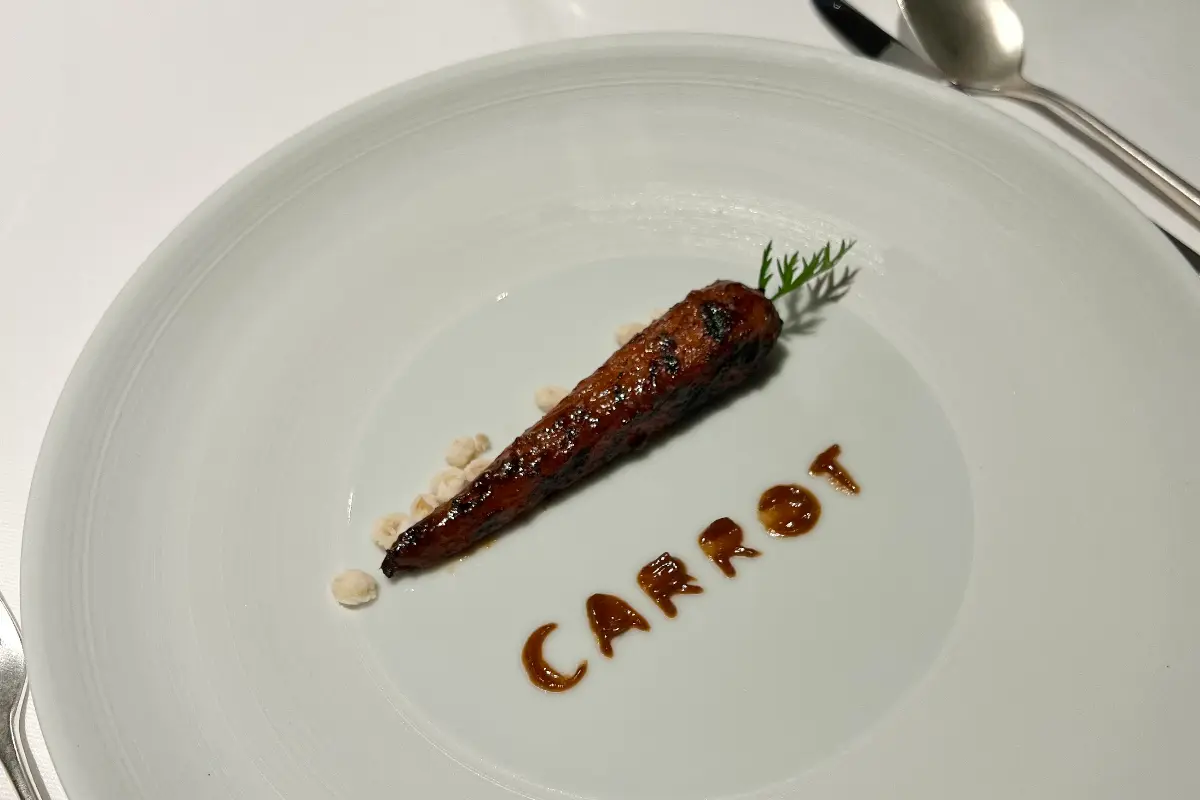
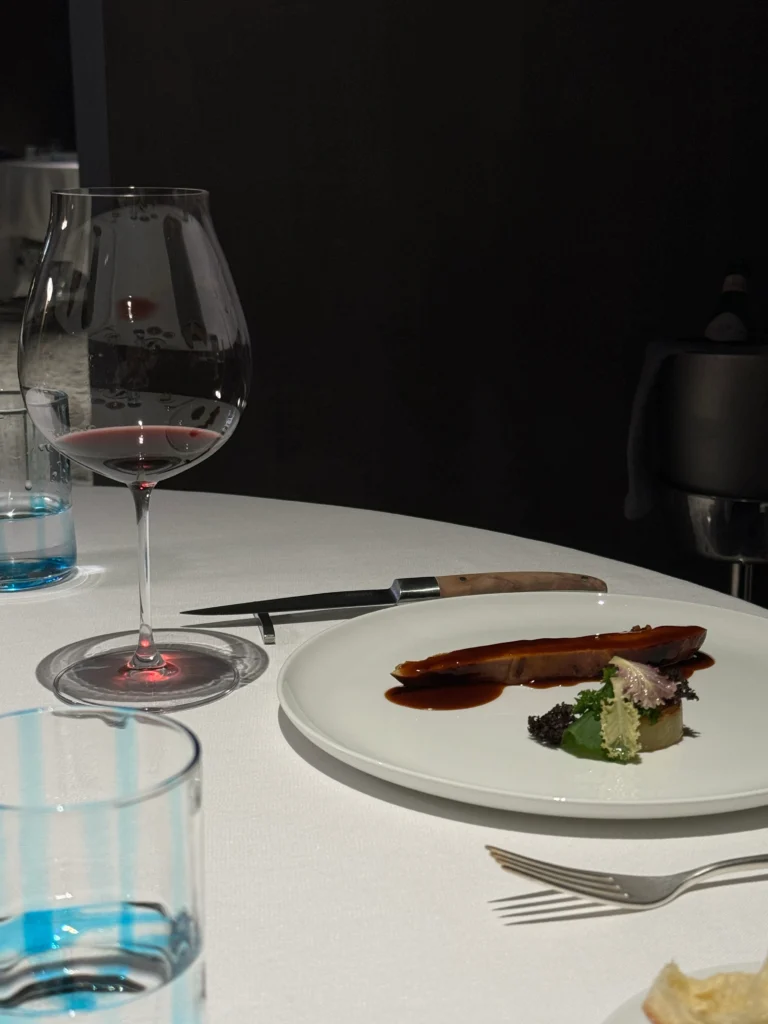
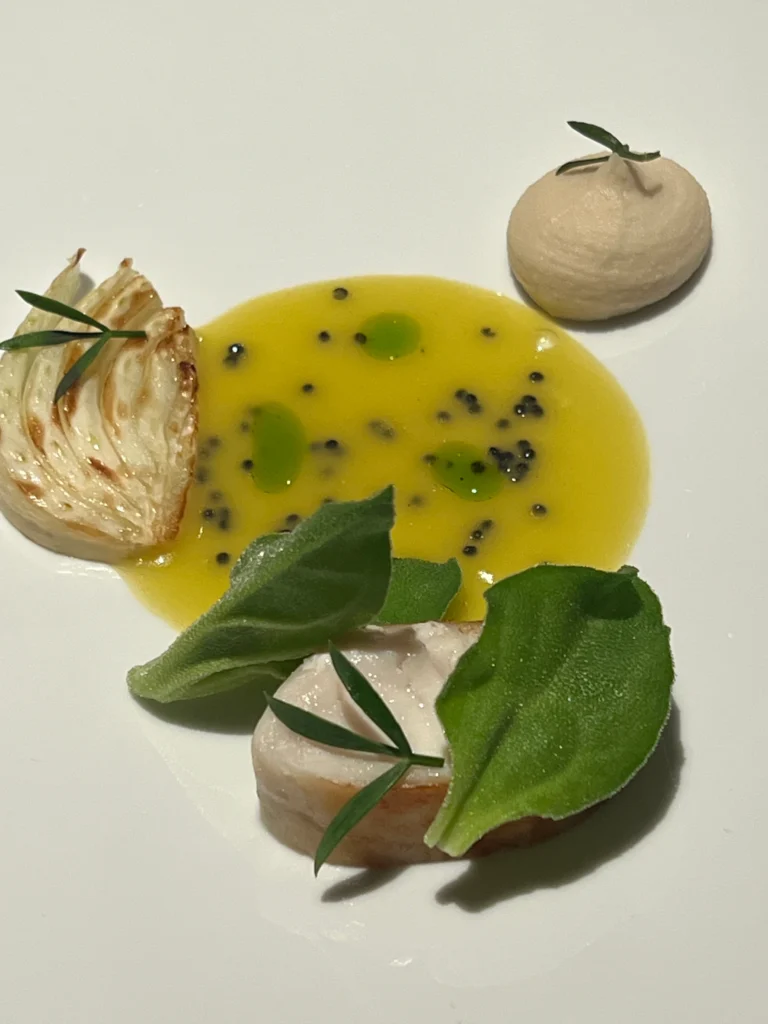
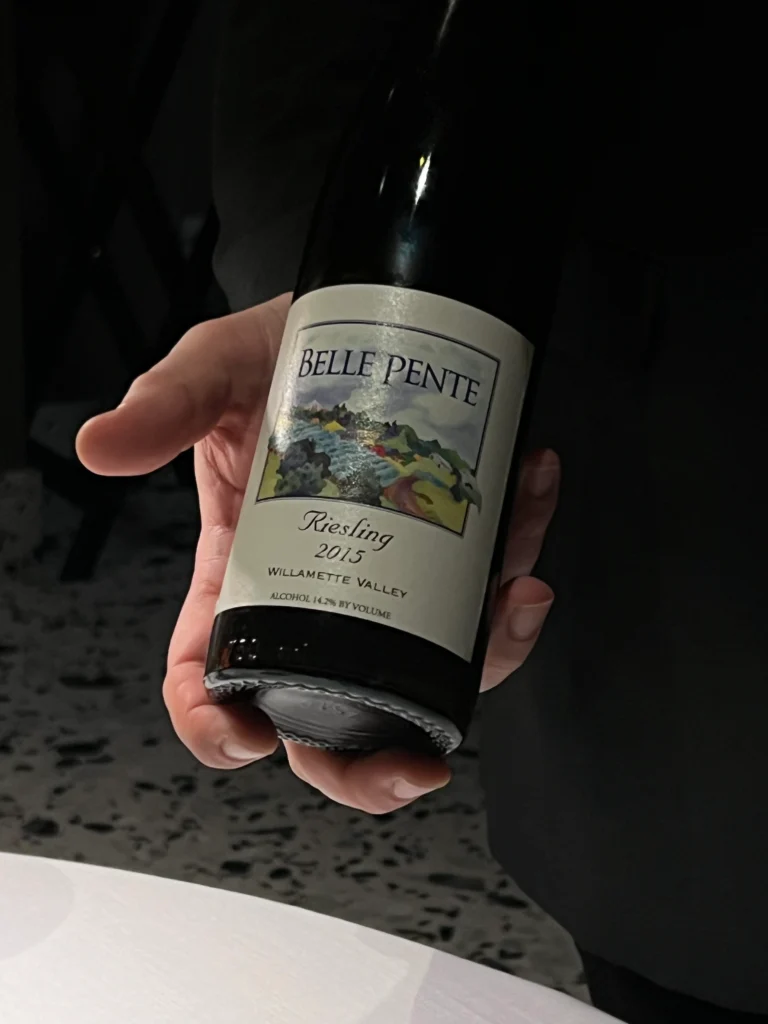
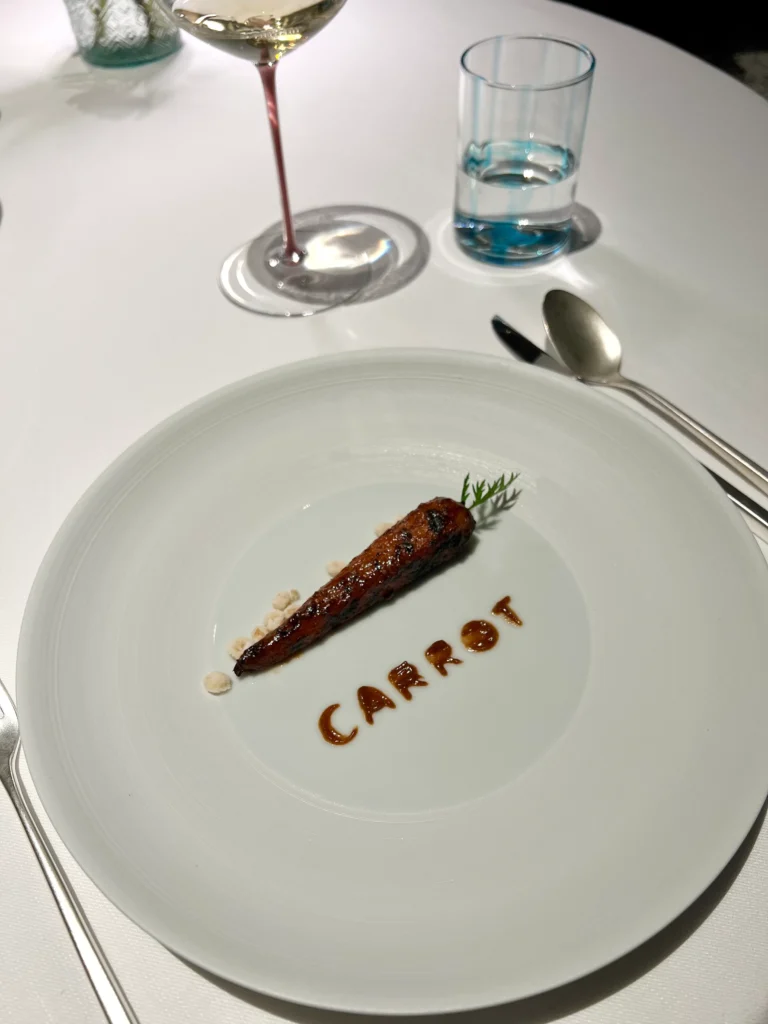
On the first floor, the gourmet restaurant operates under the culinary direction of Enrico Bartolini, one of Italy’s most decorated chefs, with resident chef Roberto Monopoli executing the vision day to day. Monopoli’s background — which includes experience at several award-winning establishments — aligns closely with Bartolini’s philosophy: innovation grounded in regional identity, technique in service of the ingredient rather than imposed upon it. Presentations balance experimentation with restraint, avoiding artifice in favor of harmony on the plate.
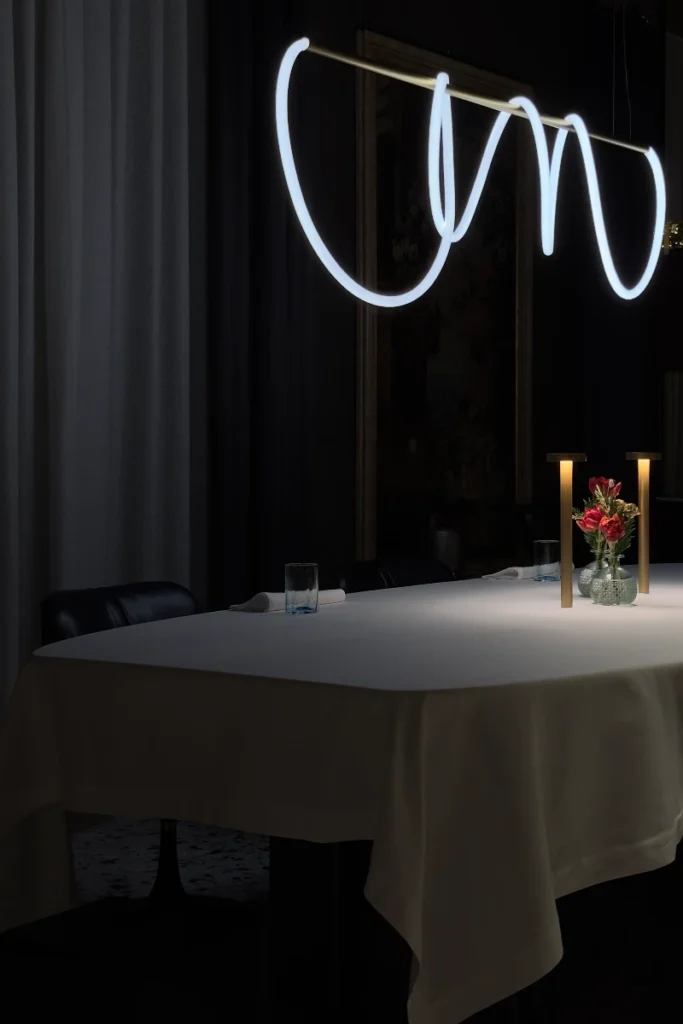
The dining room itself amplifies the experience. Custom lighting and metallic accents play against textured walls, and a site-specific lighting installation by Studio Morghen transforms one table in the fine dining space into something closer to a theatrical set — an apt description for a room where the act of eating is treated as a form of composition.
The suites: 19th-century atmosphere and contemporary automation
The upper floors house fifteen suites, each with its own distinct character while sharing the same material grammar as the rest of the building. Pale-blue lacquered walls, oversized lamps, and glossy finishes sit alongside raw-earth surfaces; brass details — in doorknobs, banisters, and ornamental elements — run as a unifying thread throughout. A domotics system controls lighting, temperature, and blinds. All suites are soundproofed.
The contrast between technological precision and the handcrafted quality of the surfaces is deliberate. Guidotti never lets the contemporary feel clinical. The result is rooms that read as thoroughly modern while retaining the atmospheric weight of a 19th-century building that was never stripped of its history.
“A spaceship in the center of Noceto”
The exterior of Palazzo Utini still presents its original 19th-century façade to the town square. What visitors find inside is, by local standards, a provocation. “Someone told me I’d landed a spaceship right in the center of town,” Guidotti admits. “But the Utini family wanted a strong statement — a symbol that could showcase the region’s potential and bring new energy to the local scene.”
It has. The gap between the historic exterior and the interior’s ambition has attracted both Italian and international travelers to a town that most visitors to Parma would previously have bypassed. Noceto’s profile has risen; the palazzo’s cultural and architectural offer extends and deepens the region’s existing reputation for food.

Beyond the palazzo: Noceto, Parma, and the surrounding Food Valley
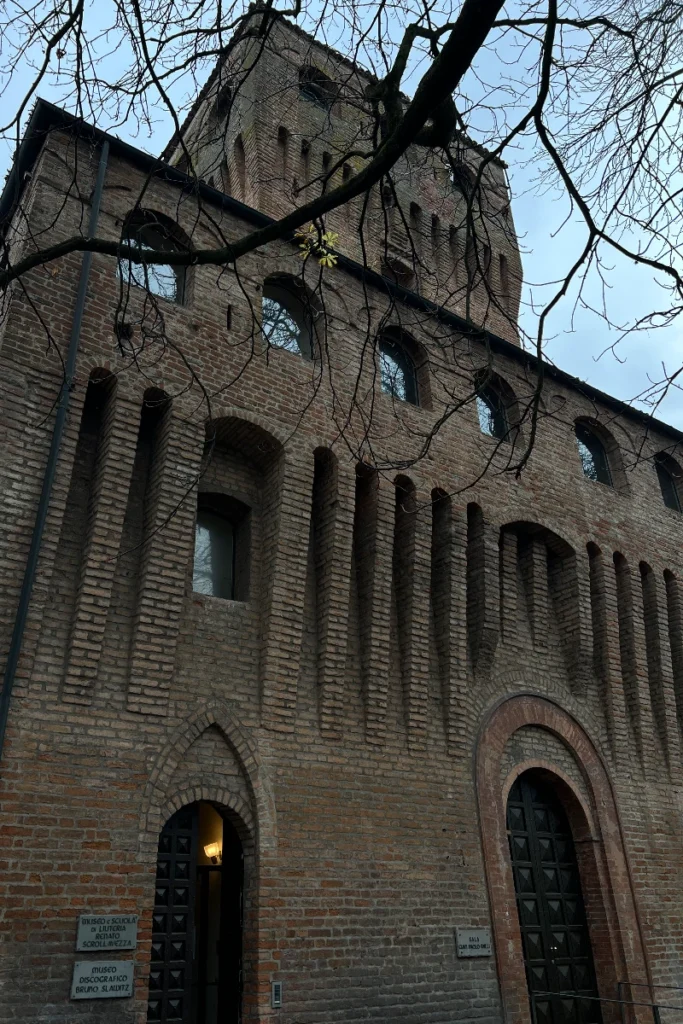
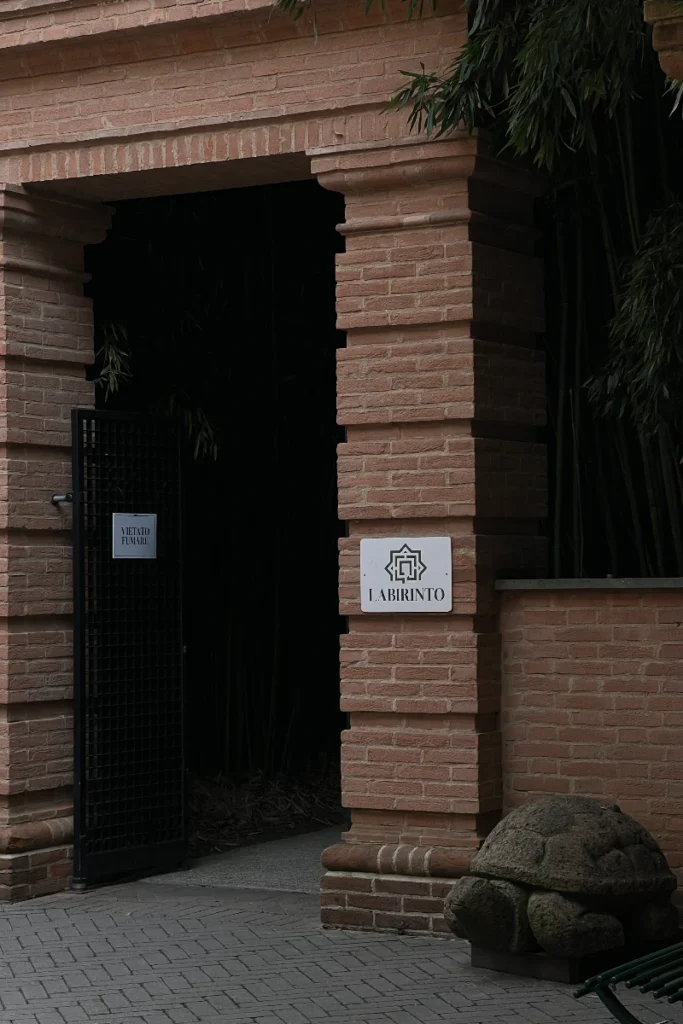
Palazzo Utini sits within a territory of exceptional cultural density. Noceto is home to the Rocca dei Sanvitale — known as the Castello della Musica — which hosts concerts, festivals, and cultural events throughout the year. A short distance away, Franco Maria Ricci’s Labirinto della Masone, the world’s largest bamboo labyrinth, combines exhibition spaces, a museum, and temporary shows in a setting of quiet architectural strangeness.
Parma itself, a fifteen-minute drive away, offers a UNESCO-recognized historic center, the Teatro Regio, and the Galleria Nazionale alongside dairies, prosciuttifici, and one of the most coherent food cultures in Italy. From Palazzo Utini, a stay can be organized around all of it — a base for a region where architecture, gastronomy, and landscape are, as at the palazzo itself, parts of the same story.