For Ferrari’s Crafting Identities show in New York, Venetian house Rubelli translates 9 yearbook covers from 1949 to 1993 into large-scale jacquard tapestries
Ferrari and Rubelli have turned 9 covers from Ferrari’s yearbooks, published between 1949 and 1993, into jacquard tapestries, unveiled on 12 November 2026 at the Crafting Identities Spring/Summer 2027 show in New York and developed with creative director Rocco Iannone. Each measures about 190 × 260 centimetres and will be sold after the show.
Ferrari × Rubelli, from printed paper to woven images
Ferrari × Rubelli works on the visual culture Ferrari built around its cars: the source is not the vehicle but the graphic language through which the company told its own story. Presented at the Jack Shainman Gallery in Manhattan, the project takes covers from an archive usually tied to racing history and corporate publishing and carries images designed for paper into the weight and physical presence of textile.
The move is not obvious. A printed image and a woven image work on different principles: ink sets colour on the surface of paper, while weaving builds an image through the interlacing of threads. When the source is a graphic composition, the translation takes more than matching colours — typography, reflections, gradients and imperfections have to be rebuilt through the structure of the fabric.
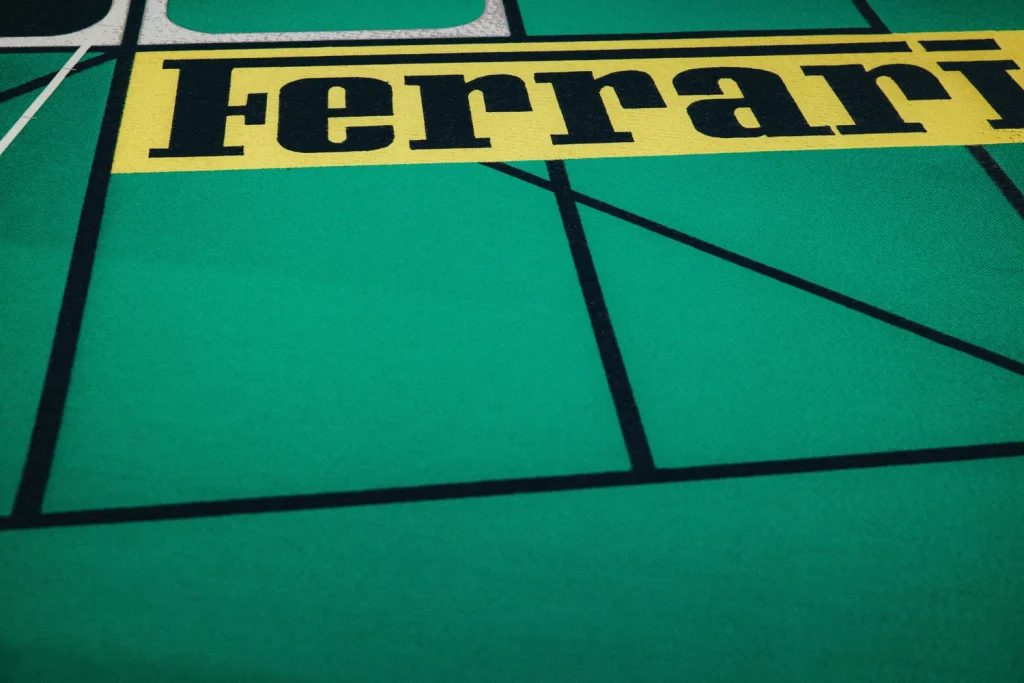
Ferrari’s yearbooks, a graphic archive from 1949 to 1993
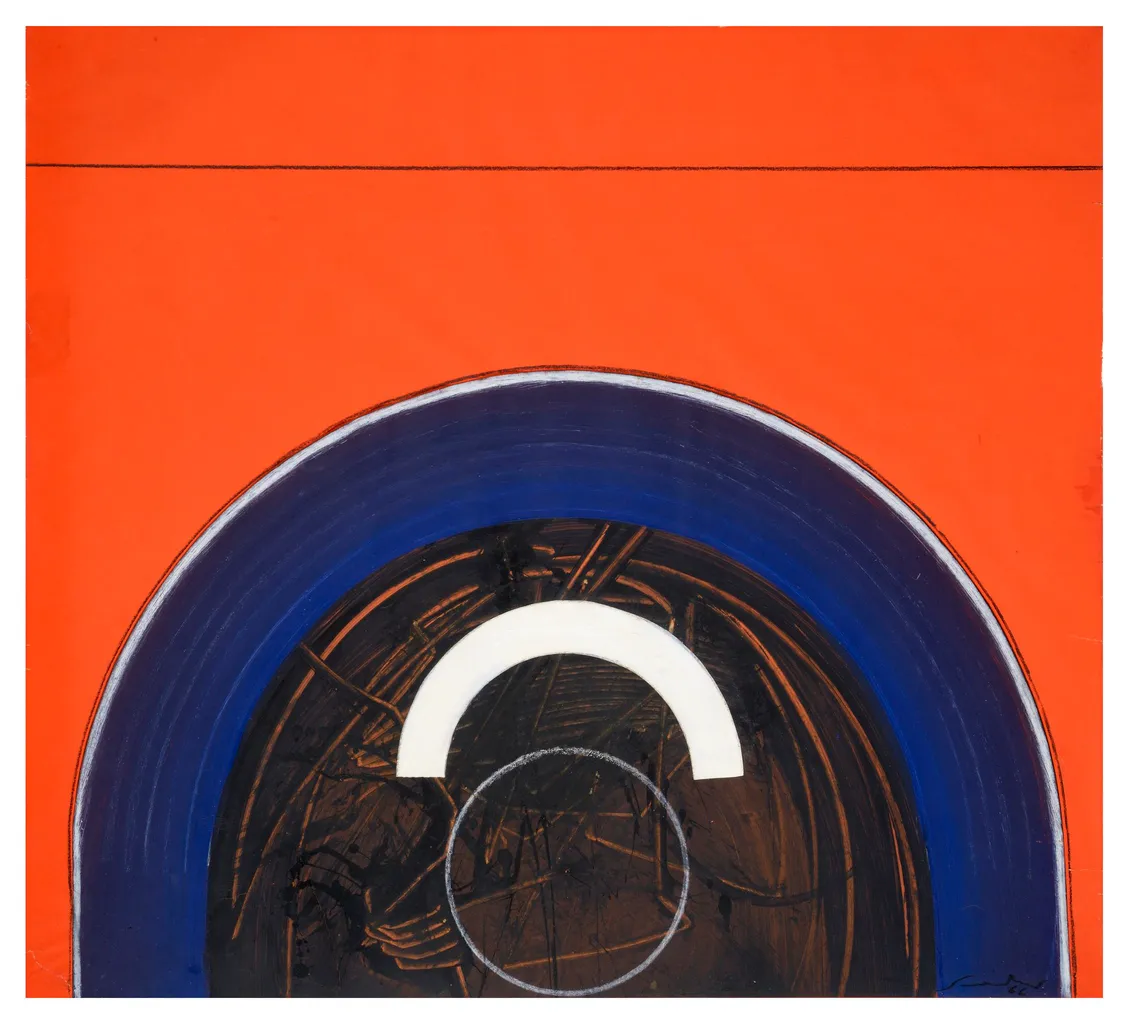
Ferrari’s yearbooks record racing seasons, results and technical developments. Beyond the information they carry, the covers built a graphic identity of their own, edition after edition. The 1949 volume opened with a letter from the founder, Enzo Ferrari, to friends around the world; the early covers set out the company’s identity through the Prancing Horse, lettering and references to victories, one framing the Cavallino Rampante with the words Victoires – Affermazioni – Victories across French, Italian and English.
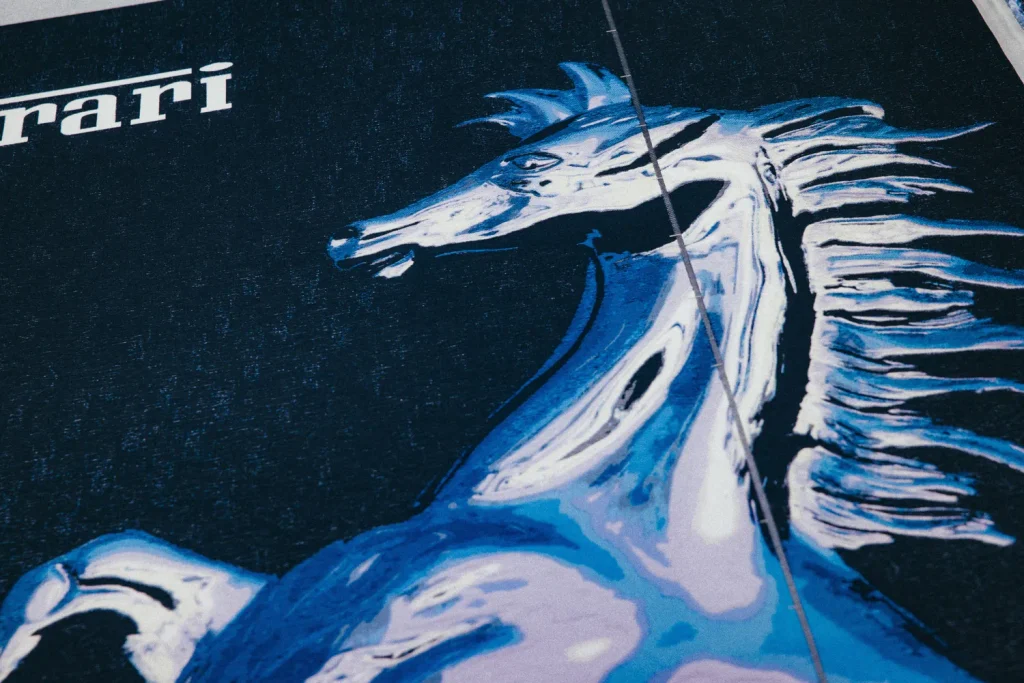
Later editions grew bolder. The Ferrari wordmark ran diagonally like tyre tracks, lettering expanded to fill the surface, and photography replaced the earlier arrangements of emblems and titles. The selected covers include the red bonnet of a Ferrari seen from above and a chrome Prancing Horse on black, the visual language moving between abstraction, industrial photography and the handling of the company’s most recognisable symbols. In 1989 the yearbook documented the making of the Ferrari F40 interiors — materials cut, stitched and finished by hand — work close to the practices of an atelier. Returning to New York in 2026, Ferrari takes this same period as material to be reinterpreted, not merely reproduced.
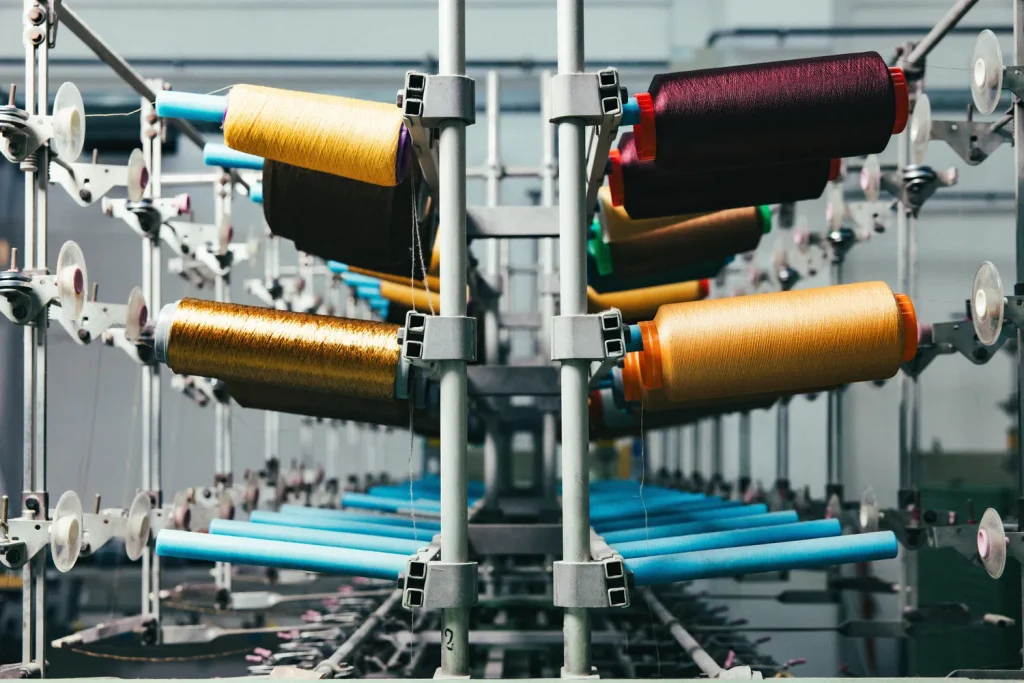
Rubelli and the history of Venetian textile manufacturing
The collaboration brings in a second industrial history, rooted in Venice and its textiles for grand residences, ceremonial interiors and the decorative arts. Rubelli’s origins lie in the Venetian silk trade: in 1781 Giovanni Paolo Rubelli entered the city’s Arte dei Mercanti della Seta, and the modern company began in 1889, when Lorenzo Rubelli bought the G.B. Trapolin mill. The house became known for Venetian velvets, among them soprarizzo, a technique of cut and uncut pile that produces different levels of relief. At the 1934 Venice Biennale it showed fabrics by artists and architects including Gio Ponti and Vittorio Zecchin, and in 1984 it acquired the Zanchi mill in Cucciago, near Como, where contemporary weaving technology runs alongside historical handlooms. Its archive holds more than 50,000 textile artefacts and over 1,000 weaving patterns.
For Ferrari, the mill worked outside its usual repertoire. The result is neither a historical Venetian pattern nor a furnishing fabric: the source is twentieth-century automotive publishing, and the technical knowledge had to be bent to a different kind of image.
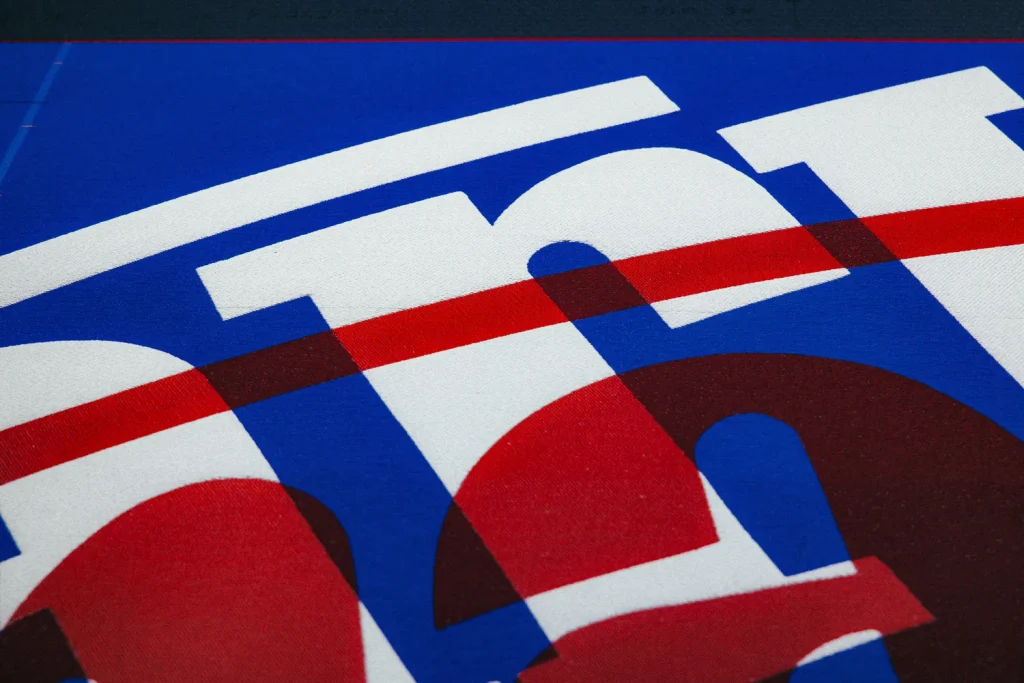
Jacquard weaving and the technical construction of the Ferrari tapestries
Each tapestry was produced with a complex jacquard construction. A jacquard loom controls individual warp threads to a set pattern, making the design directly through the interlacing of yarns, so the image is part of the material’s structure rather than applied to it. For Ferrari × Rubelli, the mill built a black-and-white warp interlaced with multiple coloured wefts, so that colour, reflectivity and tonal depth come from the relationship between the threads.
The process took more than 200 weave structures, each tested for a specific quality of the printed covers — gradients, reflections, changes in density, the texture of aged paper. The cloth reaches about 7,000 interlacings of warp and weft per square centimetre, a density fine enough to hold small graphic details across an enlarged surface. Some yarns were chosen for their closeness to the original tones, others dyed specially when a shade was missing.
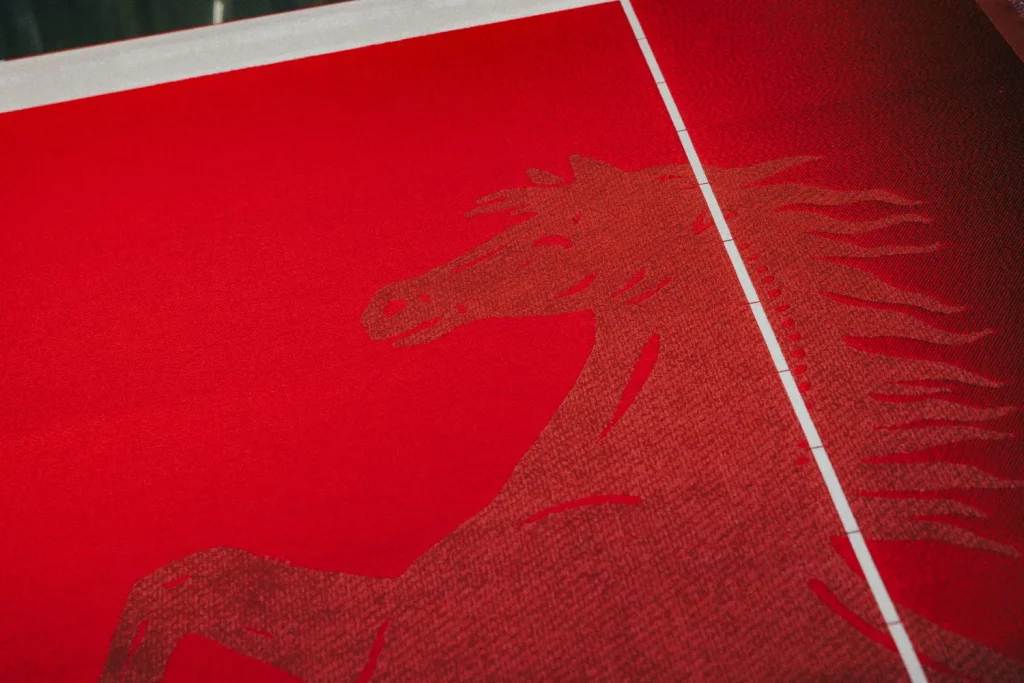
Ferrari’s reds were the hardest part. The covers carry no single uniform red: the variations come from printing, photographic light, reflections and the ageing of paper, and each had to be read on its own. The aim was the colour relationships inside each composition rather than one recognisable Ferrari red. Rubelli added its cordonetto, a thicker, glossier weft that lifts selected areas; the contrast between matt and reflective yarns gives the images relief, above all where the original holds chrome or strong shifts of light. Each piece took about 2 months, 15 people, 86 kilograms of yarn and more than 50 colours, and was checked under magnifying equipment before finishing.
Rocco Iannone, Crafting Identities and the Ferrari archive in New York
The tapestries debuted inside Ferrari’s Spring/Summer 2027 runway show, Crafting Identities, on 12 November, timed to the opening of Ferrari Style’s first permanent New York flagship in SoHo. Clothes and tapestries shared one concern: the transformation of material. The garments explored identity through construction and manipulation; the installation did so by turning printed images into fabric. Enlarged to about 190 × 260 centimetres, the covers change in the reading — typography becomes a graphic field, the Prancing Horse takes a new relation to the space around it, and marks of printing and time are rebuilt in thread. The result is not a textile printed with Ferrari graphics but a woven object in which the graphics set the structure of the material, bringing together two archives: Ferrari’s record of its own image and Rubelli’s weaving knowledge.
For Andrea Favaretto Rubelli, the company’s chief executive, the project was a technical challenge and a way to apply Venetian craft outside furnishing fabrics. The 9 tapestries, presented in New York on 12 November 2026, are to become available for purchase after the show.