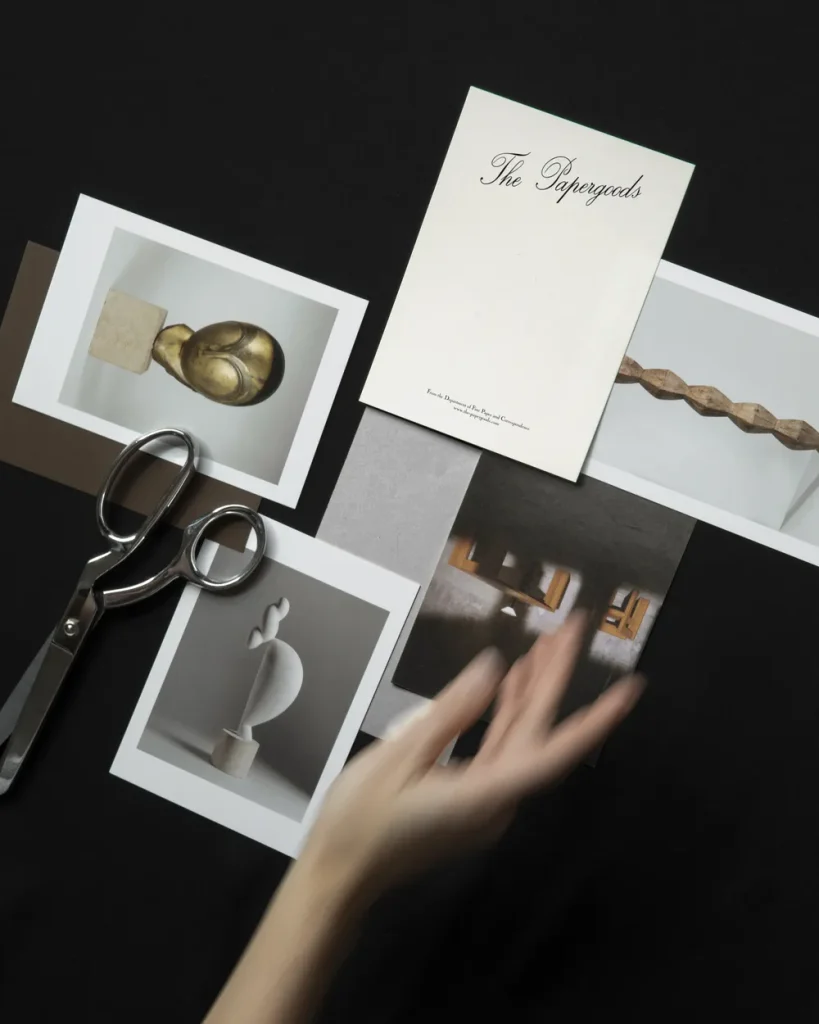
From visiting cards to the Confessional Post Room, Lisbeth Antoine uses stationery to reconsider how format changes the way a message is written and received
Antoine founded her Brussels studio in 2014 and spent a decade building visual identities for clients in fashion, food and culture, among them Delvaux, the Antwerp restaurant Misera and Grain Bakery. She then turned to an object whose role had faded with digital communication — personal stationery. In a world of swiping, scrolling and tapping on keyboards, I wanted to create a space for people who value attention, slowness, and words that deserve to be preserved, she says. She does not copy historical designs but takes their conventions — where a name sits, the size of a card, the balance of blank and printed — and adapts them to the present.
From visiting cards to shop signs, the references behind The Papergoods
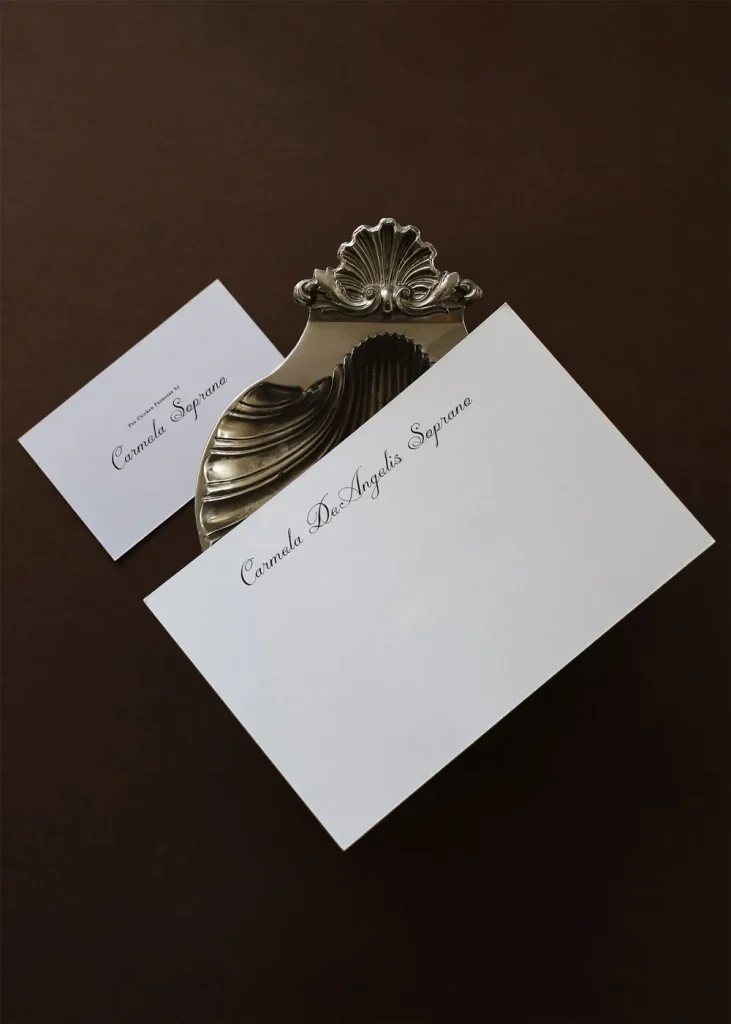
The reference is the social history of the visiting card. In the eighteenth and nineteenth centuries a card left at a home could announce a visit or carry congratulations, condolence or farewell, its paper, engraving and typography part of a language of etiquette. Antoine draws too on old address books, restaurant menus, hand-painted Italian signs and handwritten shop labels, objects tied to everyday ritual and the mark of an individual gesture.
The Papergoods stationery sets: paper, typography and printing
Each set runs to 100 pieces — 25 A5 writing sheets, 25 A6 note cards, 25 smaller name cards and 25 matching envelopes — with 21 templates online, from restrained to assertive typography, personalised with a name, initials or a phrase such as from the desk of. The papers are Old Mill, textured in the manner of traditional correspondence stock, and Colorplan, coloured without printed decoration; the sheets are 135 gsm, the cards 270. Printing is usually in black, leaving type and paper to set the character, with blind embossing, gold foil or letterpress available on bespoke commissions. Antoine oversees the materials and the production, each order proofed, trimmed, checked and packaged.
Lisbeth Antoine on digital fatigue and the Confessional Post Room
She calls the flattening of contemporary communication a form of digital fatigue — everything has become flat: communication, interiors, screens — and answers it with writing that takes time and a physical surface. In February 2026 The Papergoods turned the lobby of The Standard in Brussels into a Confessional Post Room for Valentine’s Day, where visitors wrote declarations and confessions on its cards. Antoine, who kept up a weekly pen pal at nine, treats writing as an exchange that unfolds over time, shaped by anticipation and the physical presence of the message.