In Bossolasco, the “Village of Roses,” entrepreneur Arianna Cefis transforms a 17th-century farmhouse into a model of circular economy and regenerative living
A Circular Dream Among Roses: The Regenerative Soul of Le Due Matote
In the gardens of Le Due Matote in Bossolasco, nestled among the gentle slopes of the Langhe, bloom 450 rose bushes — and counting. “The figures on the website refer to our opening year, 2023,” explains Andrea Boffa, the agronomist entrusted with the care of the grounds, plantings, and kitchen garden. “Several guests who have stayed here have donated roses, which we’ve planted. Nothing goes to waste. We’re now at around fifteen varieties — the site still says thirteen, but once we reach twenty, we’ll update it. Two are French, one American, and all the others are English.”
Roses are the invisible thread connecting every chapter of Arianna Cefis’s life. Milan-born, she spent two decades in London working in advertising. There, in the land of the Tudor Rose — the red-and-white emblem that united warring dynasties — she fell in love with the flower, studying its varieties and cultivation techniques. Upon returning to Italy, Cefis placed the rose at the very heart of her new life project. “This climbing rose with soft pink hues was already here before we began the works,” she says. “We found out it was patented in 1932.” If England is the homeland of rose culture, Bossolasco is its Italian counterpart. Known as Il Paese delle Rose — the Village of Roses — this small town of about a thousand residents bursts into color every May and June, when over 350 varieties bloom along its cobbled lanes.
From London to the Langhe: How Arianna Cefis Turned a Vacation into a Vision
After a summer spent in the Langhe, Arianna Cefis fell under the spell of Bossolasco. She first purchased a 19th-century home, already functioning as a small guesthouse, then — in 2021 — acquired a nearby 17th-century farmhouse. A meticulous two-year restoration, carried out by local craftsmen, breathed new life into the ancient stone walls. The property retained its original name, Le Due Matote, meaning “the two little girls” in Piedmontese dialect — a homage by a former owner to his daughters. “Arianna doesn’t demolish or distort,” says Boffa. “She restores and enhances. Her vision was clear from the beginning: create something entirely natural. Here, there’s no chemistry, only life.” Traditional Langhe houses were built directly on rock, without modern foundations. “When the old builders hit the impermeable layer, they stopped — they couldn’t dig into the tuff with the tools they had,” explains Boffa.
Building Sustainability from the Ground Up: The Circular Construction Philosophy
During the excavation for new foundations, the soil removed was reused to build terre armate — reinforced embankments covering 700 square meters. Nothing was wasted. The property’s ecosystem thrives on this principle: all organic waste, including coffee grounds, goes into the compost system. “From our composter we now produce humus,” says Boffa. “And this year we’ve advanced to a vermicomposter — meaning our humus now includes beneficial worms from Tuscany. We mix it with equal parts soil and 10% zeolite.” Zeolite, a porous mineral that retains both water and nutrients, is enriched with Trichoderma and mycorrhizae, ensuring that microorganisms stay active in the soil. Le Due Matote also collaborates with nearby organic farms for fresh produce used in the hotel and restaurant.
Boffa himself cultivates 30 giornate (roughly 11 hectares) mainly dedicated to hazelnuts — the symbolic crop of the Langhe and a long-time partner of Ferrero. “Everyone around here works with Ferrero,” he explains. “They’ve always supported our region — even after the 1994 flood, when farmers rebuilt their businesses before their homes.”
From Positano to the Langhe: Reimagining Luxury with a View of Green Hills
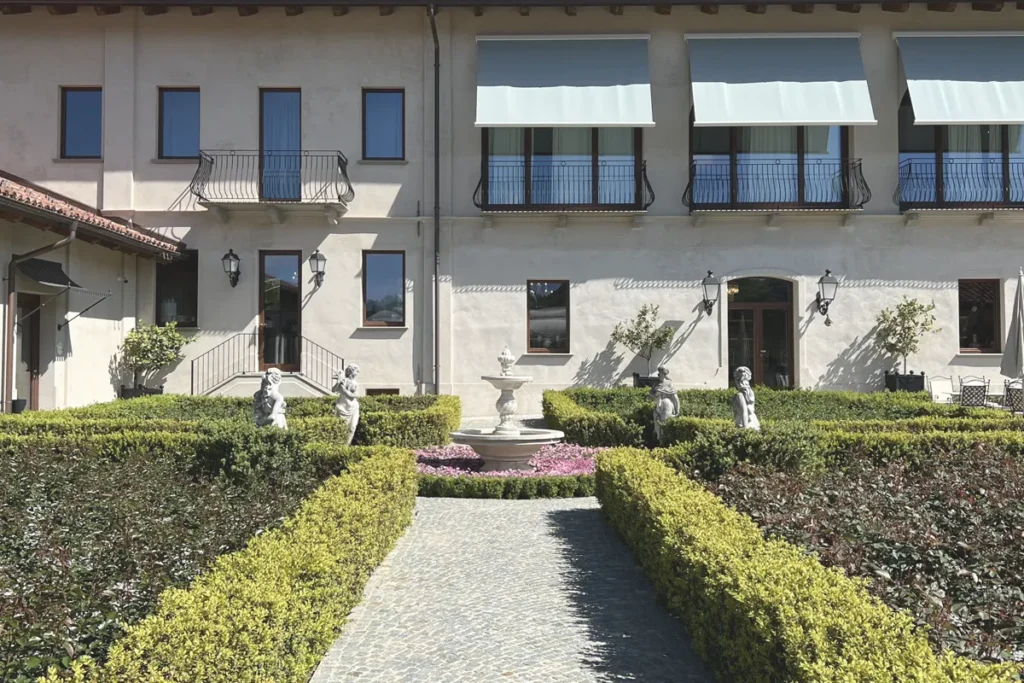
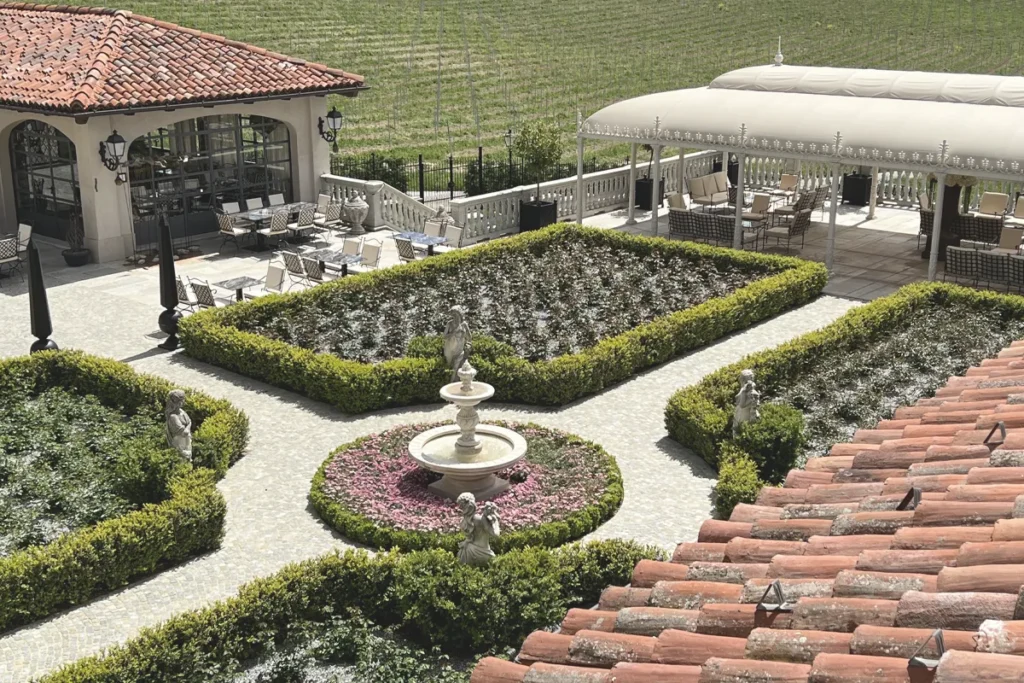
“Arianna once sent me a photo of a hotel terrace in Positano, overlooking the sea,” recalls Boffa. “She said: I want to recreate that feeling here — but with the green of our hills instead of the blue of the sea.” Where there was once a threshing floor, there is now an Italian garden: box hedges frame three rose varieties — Lady Emma Hamilton, Botticelli, and Princess Anne. In the other half of the courtyard, elegant ars topiaria sculptures from Pistoia rise like living art — crafted by a Tuscan artisan who, after a stay in Japan, began intertwining living branches until they naturally fused together. Against the farmhouse wall grow lemon trees from Sicily, carefully moved indoors in November and brought out again in spring. “Despite two snowfalls this year, they’re fruiting beautifully,” says Boffa. “The mycorrhizae are my soldiers — if the plant thrives, they thrive too.”
Water Wisdom and Regenerative Systems: Every Drop Counts
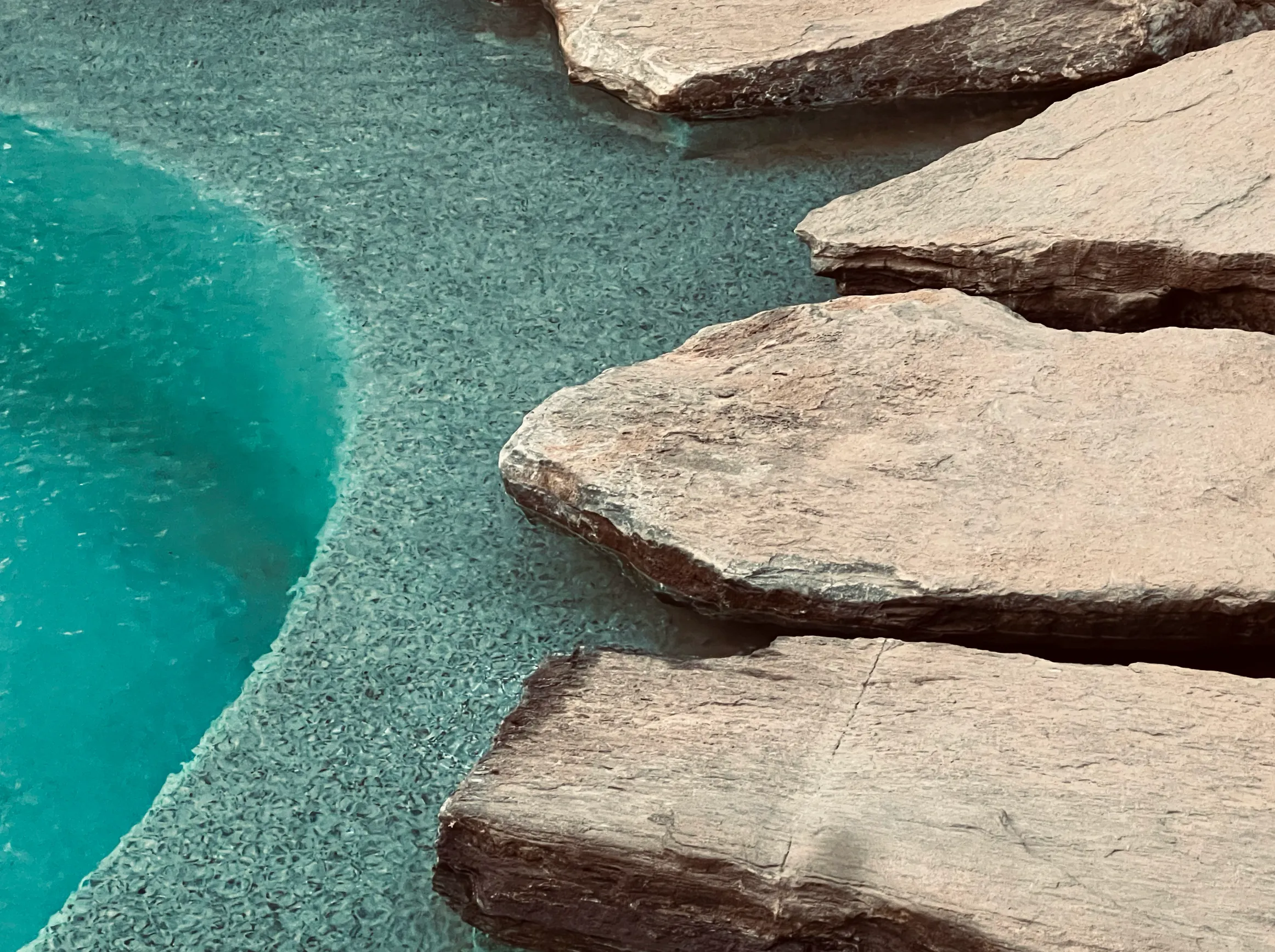
At the edge of the property lies a rainwater recovery system connected to all gutters. “A filter removes impurities and stores clean water for irrigation,” explains Boffa. “But I never automate watering — it wastes water. I’m here every day: if the grass needs water, I give it; if not, I don’t.” Beyond the pool — a geometric blue framed by green hills — stretches the kitchen garden. With guidance from agronomist Raffaele Mana and garden designer Maurizio Zarpellon, the property practices symbiotic regenerative agriculture. This system, popular in the Cuneo area, uses beneficial fungi like mycorrhizae and Trichoderma to enrich soil health and plant resilience. “Only about two percent of the world’s fungi are known,” says Boffa. “We’re experimenting here — like Mana’s trial in Carmagnola, where peppers grown symbiotically yielded 20–30% more.” All vegetables grown on site are used in the kitchen.
The Flavors of the Land: L’Orangerie by Di Pinto and the Alta Langa Spirit
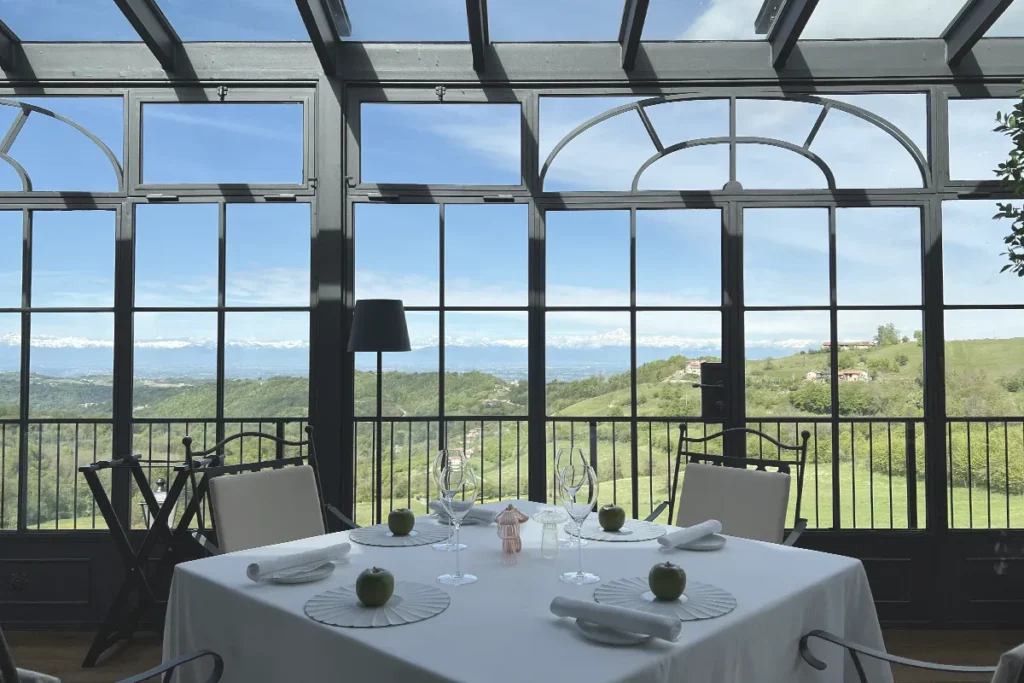
The fine-dining restaurant, L’Orangerie by Di Pinto, is housed in the estate’s only new architectural addition — a luminous glass pavilion facing the valley. Inside, citrus trees, a grand piano, and wrought-iron chairs create the feel of a sophisticated winter garden opening onto nature. From here, the eye travels across rolling fields, winding country roads, and the distant snow-capped Monviso. The menu is signed by Chef Roberto Di Pinto, of Sine by Di Pinto in Milan, and executed by Chef Luca La Peccerella, his long-time collaborator.
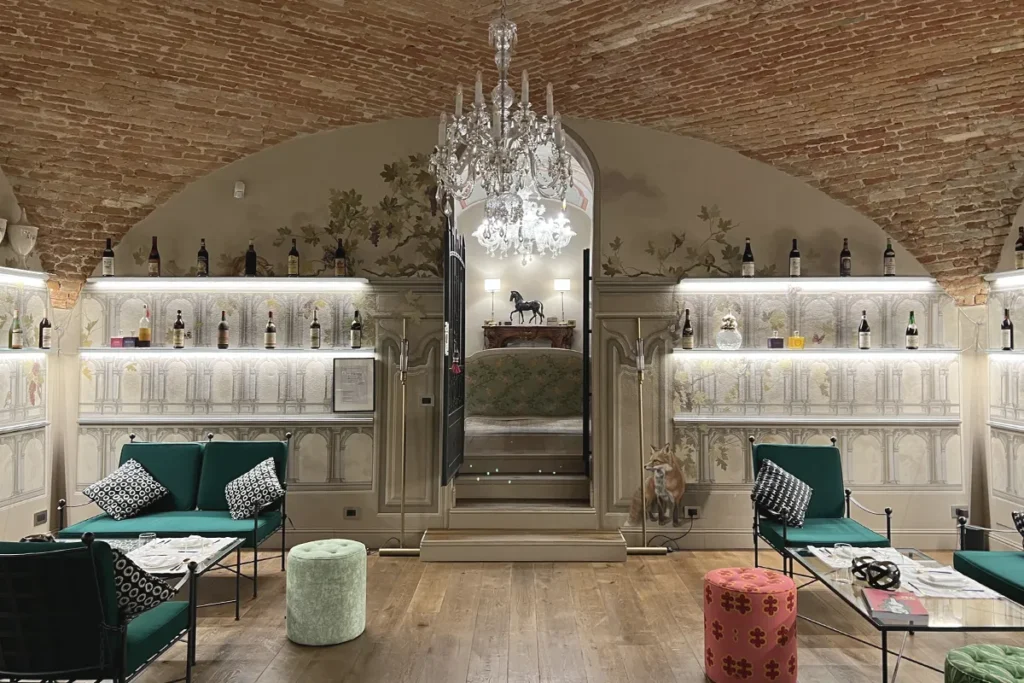
Next door, a gourmet pizzeria by Marco Messineo offers doughs with a 96-hour fermentation process, served in a stone-built trattoria that opens onto the courtyard in summer. Inside, the Crystal Bar gleams with a green onyx counter, hand-painted niches, and vintage porcelain (also available for purchase). Signature cocktails come from Domenico Carella, mixologist and owner of Carico and Ultra in Milan. Guests can also explore the excellence of local sparkling wines certified under the Alta Langa DOCG, a rigorous appellation created in 2014 that applies only to wines made above 250 meters of altitude across 155 municipalities in three provinces.
Design with a Soul: Craftsmanship, Memory, and Time
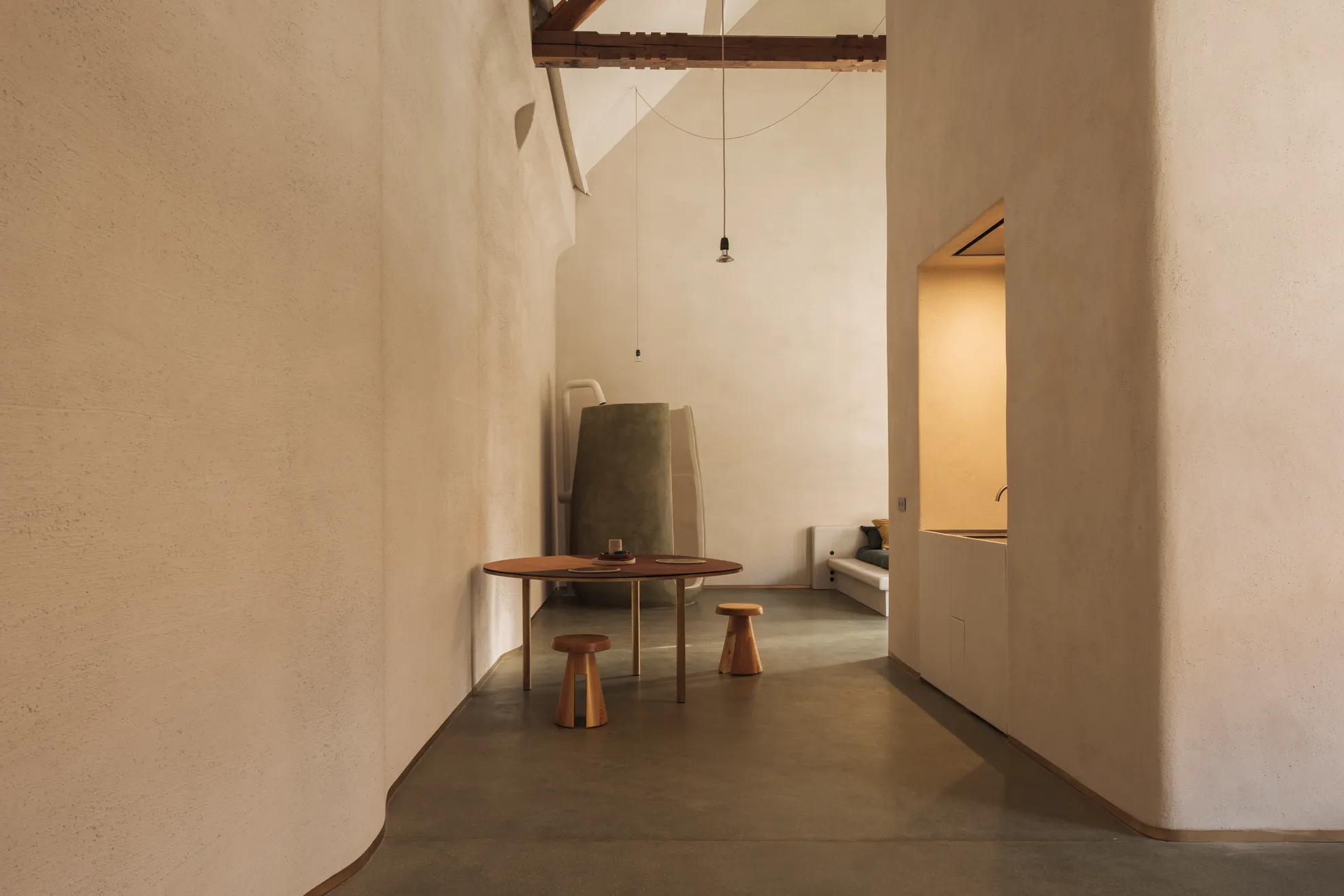
All interiors and design choices bear the imprint of Arianna Cefis herself. Reclaimed cement tiles from old Piedmontese farmhouses cover the floors, while common areas and suites combine artisanal crafts, modernist furniture, and contemporary art. Walls with a raw, textured patina and hand-painted ceilings preserve the building’s sense of history. The Botticelli Suite — the most prestigious — features a canopy bed that once belonged to Napoleon, acquired at auction, and an antique telescope pointed toward the Langhe hills. Every room tells a story of rebirth — of objects rescued, materials reused, and ideas reimagined through time.
Bossolasco: Between Roses, Boxwoods, and Centuries of History
The name Bossolasco derives from the Latin Buxolascum, from buxus (boxwood) and lascum (forest): literally “forest of boxwoods.” The village rises on a hill overlooking the Belbo stream, 25 kilometers south of Alba. The earliest settlers, the Stazielli Ligurians, were Celtic-Mediterranean tribes later subdued by Rome in 173 BCE. Survivors took refuge near the Belbo, founding a settlement called Buxale ad Belbum — “place of boxwood forests by the Belbo.” Over time, the settlement moved to the hilltop for defense, becoming Buxlacum, then Buzzolasco, and finally Bossolasco. “Besides roses and boxwoods,” locals say, “these hills are full of hawthorn.” Through centuries of invasions — from Goths to Lombards, Byzantines to Franks — Bossolasco has preserved its quiet dignity, now reborn through projects like Le Due Matote: where tradition, landscape, and innovation intertwine like living branches in a garden that never stops growing.