Chuanqi: Spacetime Dialogues, curated by Wu Hung, opens at Rong Zhai on 12 November with Geng Xue, Peng Wei, Song Dong and Xiaoze Xie, in rooms built for private life
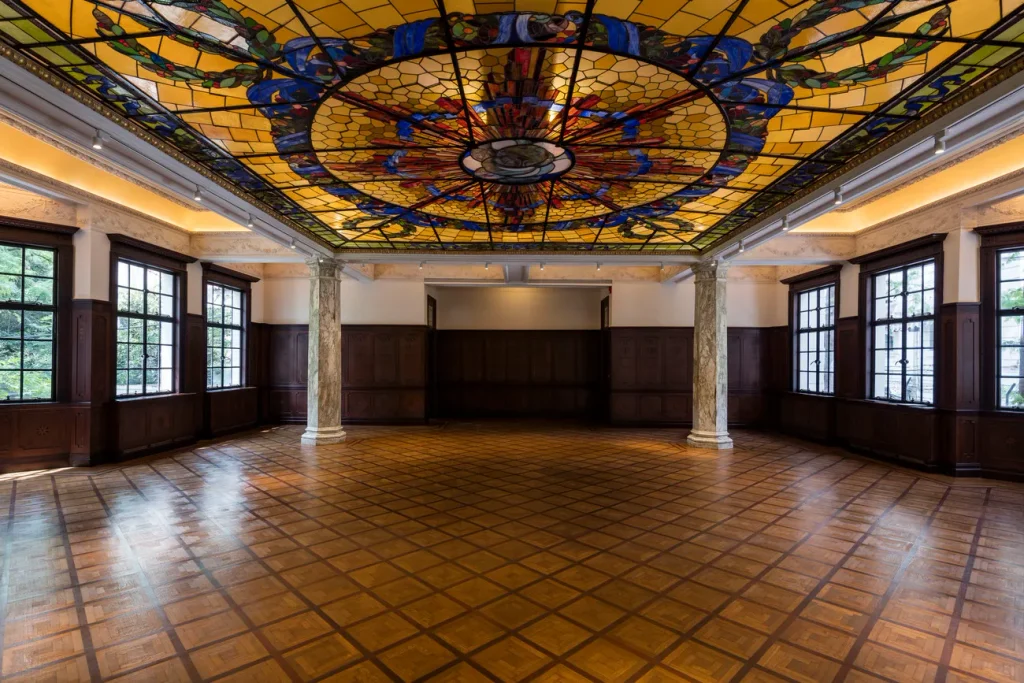
A mirror now lies across the floor of the ballroom at Rong Zhai, under a stained-glass skylight of sixty-nine panels. It takes in the imperfections of a walked-on surface and returns the ceiling as a kaleidoscope. It belongs to Song Dong, born in 1966, and it is the first of four interventions in Chuanqi: Spacetime Dialogues, which opens in Shanghai on 12 November 2026 and runs until 28 February 2027, with the support of Fondazione Prada.
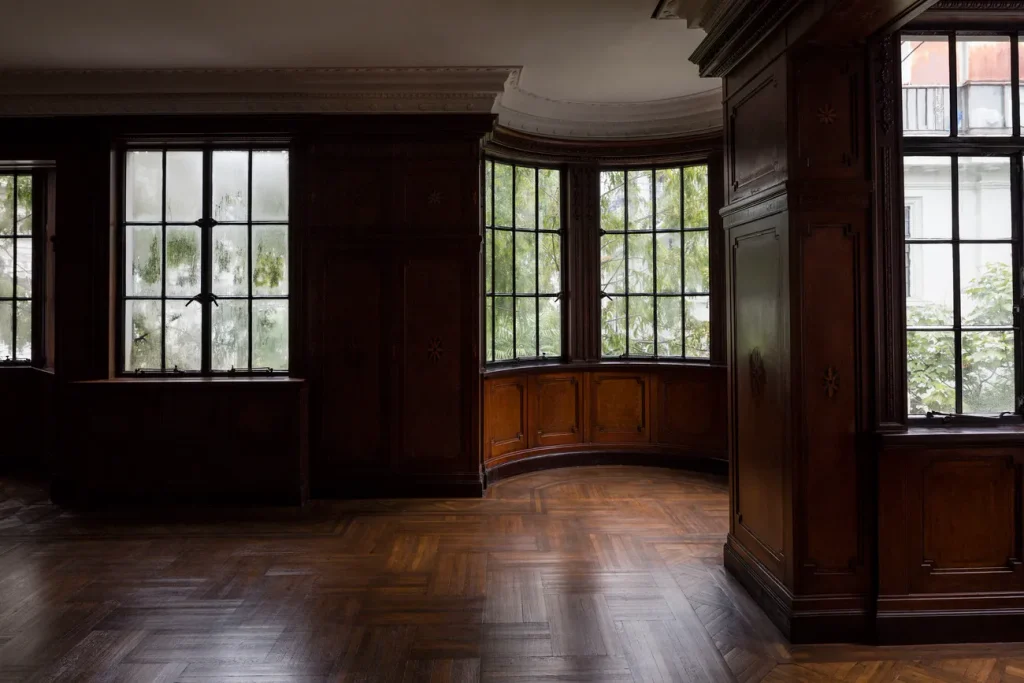
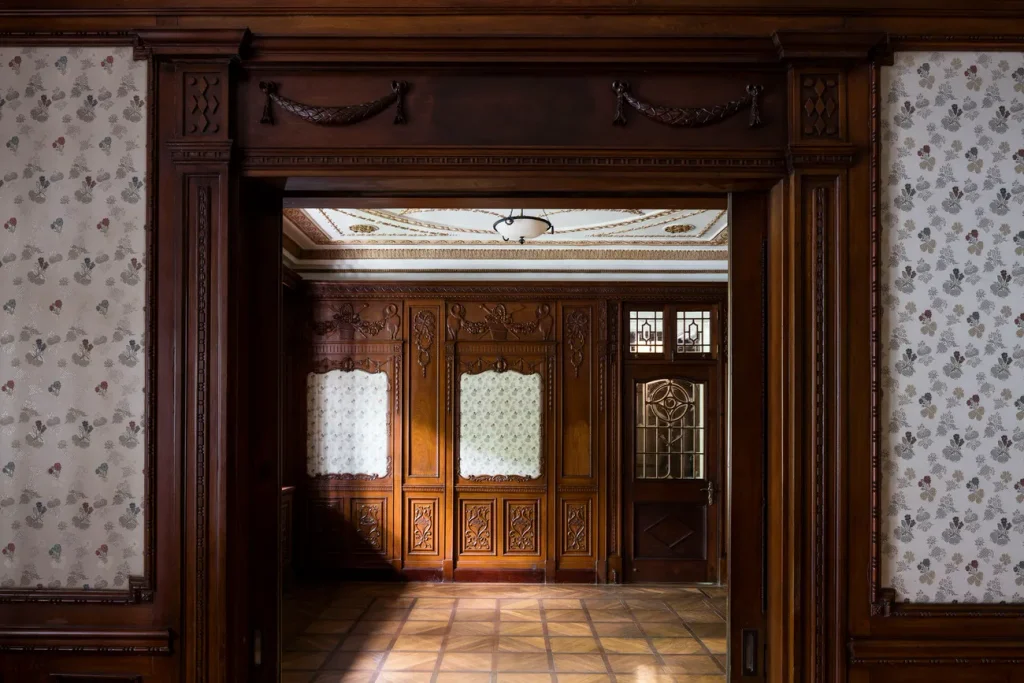
The curator is Wu Hung, art historian and critic, Harrie A. Vanderstappen Distinguished Service Professor of Art History at the University of Chicago, where he has taught since 1994 and directs the Center for the Art of East Asia. The four artists are Geng Xue, Peng Wei, Song Dong and Xiaoze Xie, and each takes a different part of the residence, across two floors. These are rooms built for private life — parties, work, conversation, sleep — carved panelling, gilded moulding, a stained-glass skylight, every surface worked.
The term chuanqi began under the Tang and Song dynasties, between the seventh and thirteenth centuries, as a genre of short fiction built on strange and marvellous tales. Under the Ming and Qing, between the fourteenth and twentieth centuries, it came to mean theatre and opera, and in particular the long musical dramas devoted to romantic passion. Content and narrative technique changed over the centuries, and the form is still performed across China.
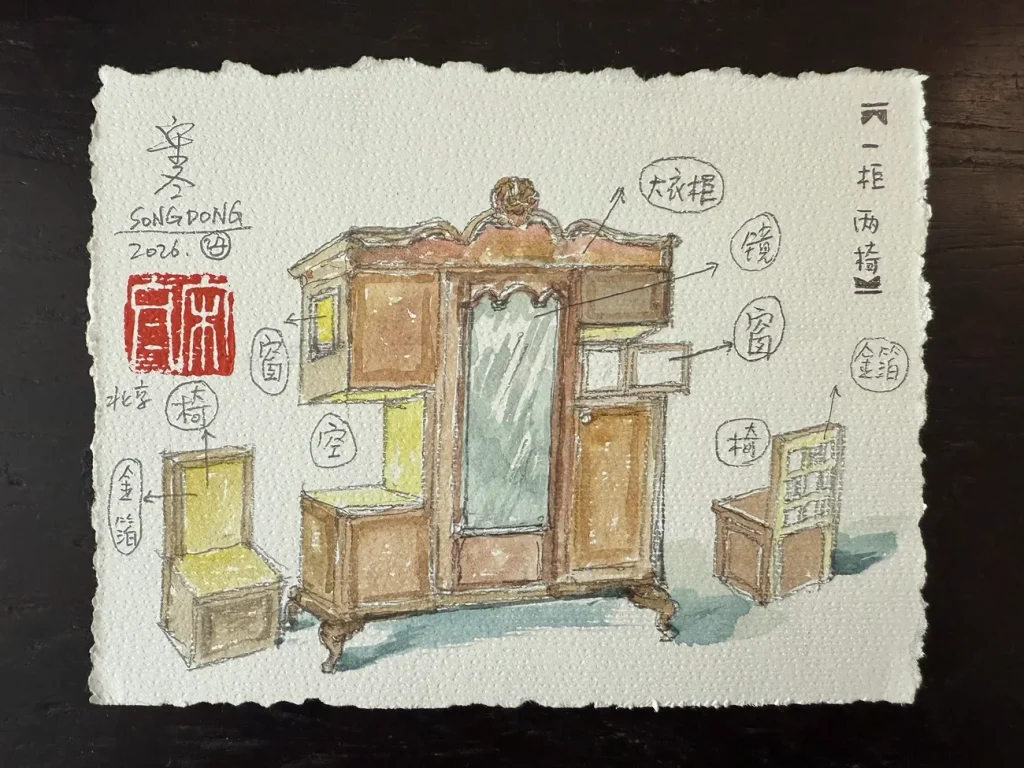
Song Dong and the mirror laid across the Rong Zhai ballroom
The ballroom is the largest room in the villa, the one that held the parties, and the skylight above it combines historical and modern decorative elements across its sixty-nine panels. Around Song Dong’s mirror stand pieces of furniture from ordinary homes, altered with golden panels and variegated surfaces that move between the domestic and the fantastic. The installation is site-specific and interactive, and continues the artist’s work on memory, impermanence and the transience of human endeavour.
Geng Xue in the north chamber, video between ceramics and classical literature
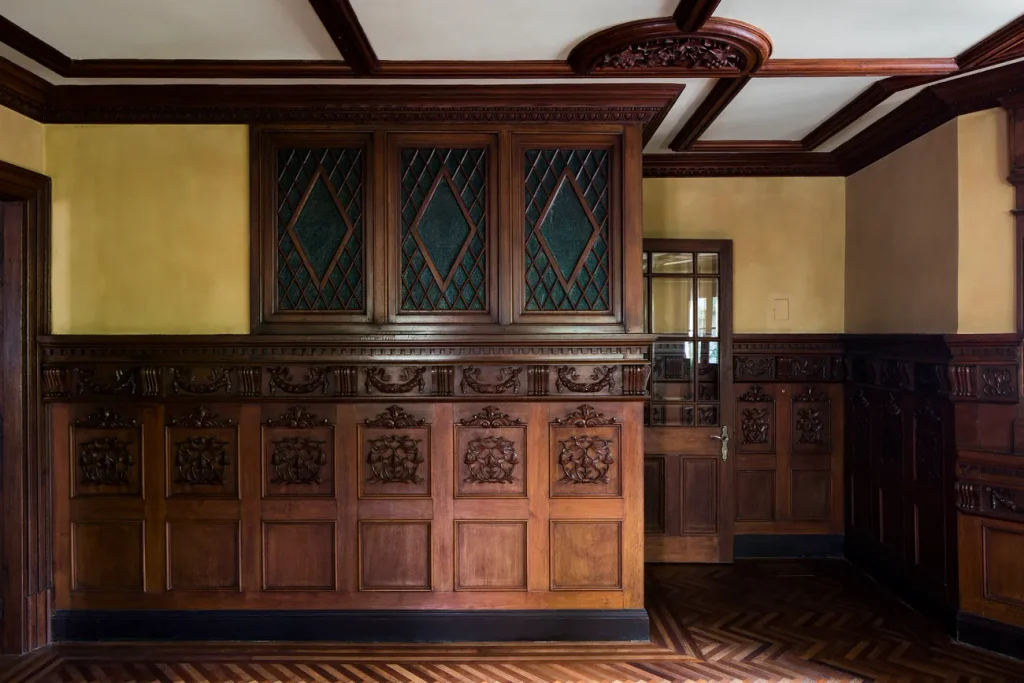
The north chamber is long, with windows down one side onto the garden. Opposite them, carved wooden panelling conceals a continuous run of cabinetry, the kind of fitted furniture that suggests a bedroom or a private study.
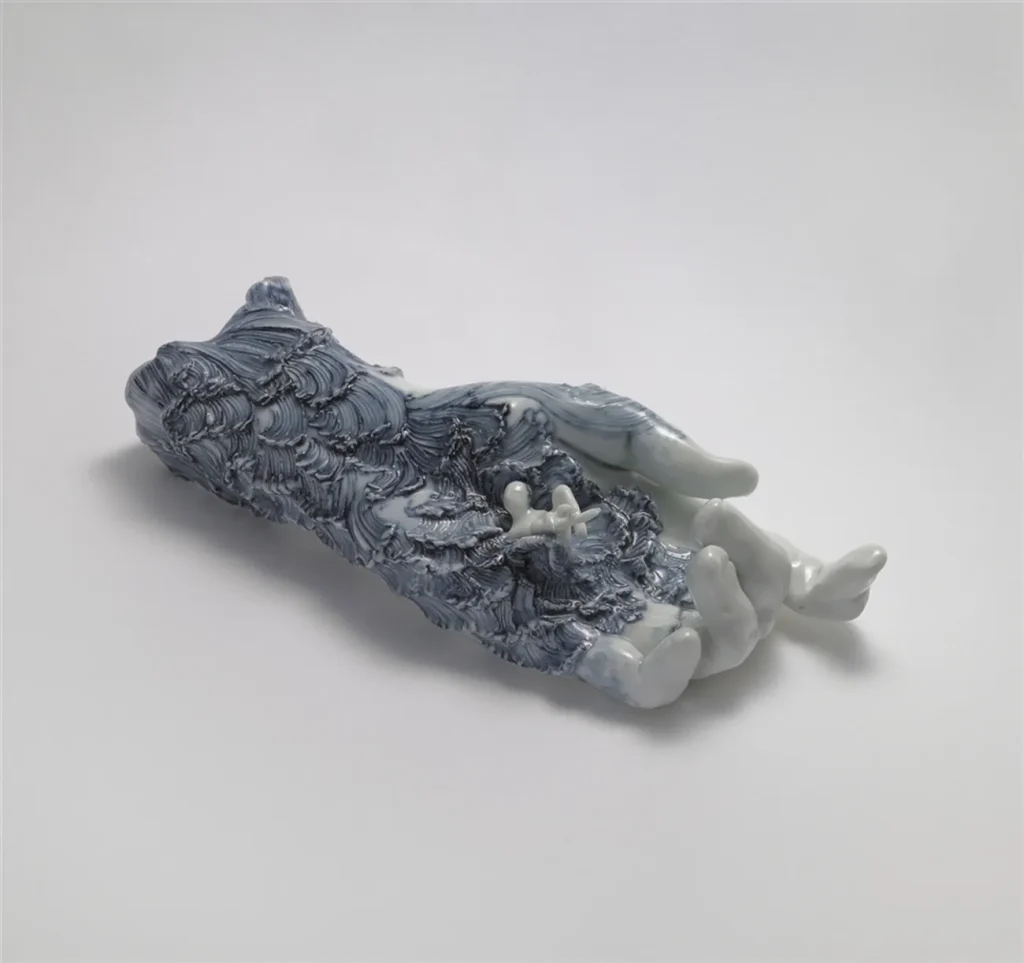
Here Geng Xue, born in 1983, presents a video installation. Her practice moves between ceramics, sculpture and video, draws on classical Chinese literature, and returns to perception and to the boundary between subjective and objective reality.
Peng Wei, thirty works between Eileen Chang and the present
The billiards room and the adjoining smoking room share a decorative scheme, conceived as a suite for gentlemen’s leisure, with every surface adorned and the gilded ceiling moulding catching the light to deepen the relief.
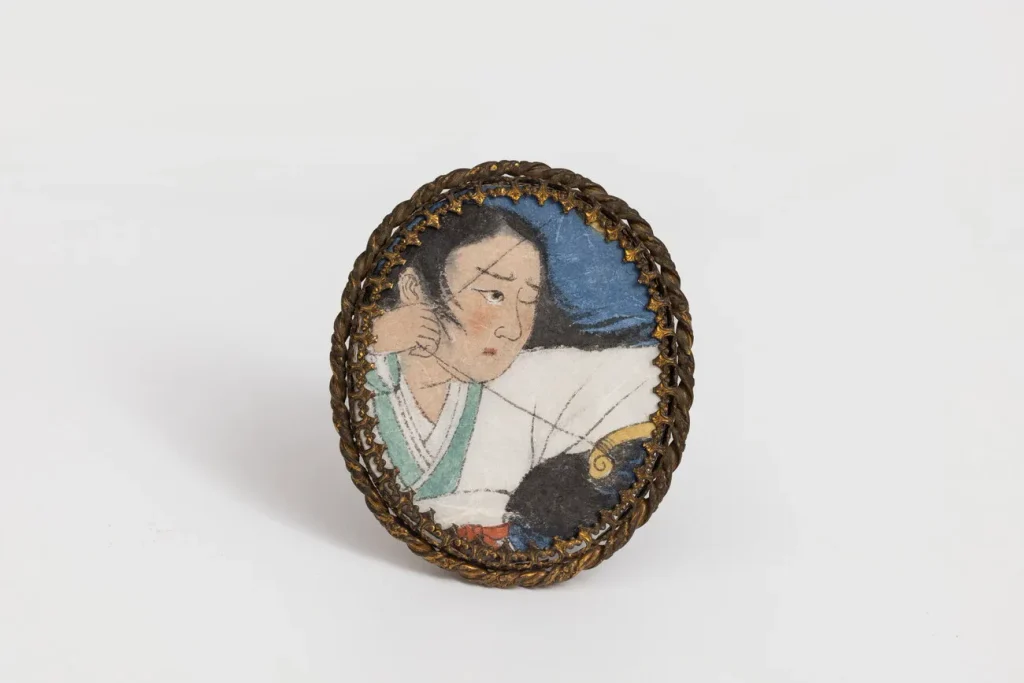
Peng Wei, born in 1974, fills both rooms with more than thirty works arranged in three narrative layers: antiquity, Republican China, the present. The sequence opens with The Story of the Corridor (2026), an animation that takes its imagery from classical chuanqi and follows the story of a fictional woman. It continues with Moon of the Floating World (2026), drawn from Eileen Chang, Zhang Ailing, the writer born in 1920 and died in 1995 who shaped twentieth-century Chinese literature. It closes with self-portraits and personal objects in cabinets, the world of a woman now.
Painting, installation and iPad animation run together, and the shifts between physical and digital work as plot turns inside a sequence about female acts of seeing, remembering and imagining.
Xiaoze Xie and Mogao Cave 17 at Dunhuang, printed in resin
In the bedroom that belonged to Mrs Yung, low carved teak panelling runs around the perimeter with vegetal patterns and abstracted forms.
Xiaoze Xie, born in 1966, installs Amber of History: Reimagining the Library Cave at Dunhuang (2017–), which works on Mogao Cave 17, in northwestern China. The cave complex was carved between the fourth and fourteenth centuries by Buddhist monks, pilgrims and merchants as sanctuaries for worship and meditation, and operated for centuries as a hub of trade, religion and intellectual exchange. Cave 17 was built between 851 and 862, in the late Tang, as a memorial hall for Dunhuang’s chief monk, and later became a sealed repository holding more than fifty thousand manuscripts and artefacts. It stayed closed for close to a millennium, was reopened by accident in 1900, and its contents were dispersed across institutions worldwide.
Nine semi-transparent 3D-printed resin sculptures reproduce the physical space of the cave, arranged to the geometry of a mandala, among ink drawings and a multimedia 3D projection.

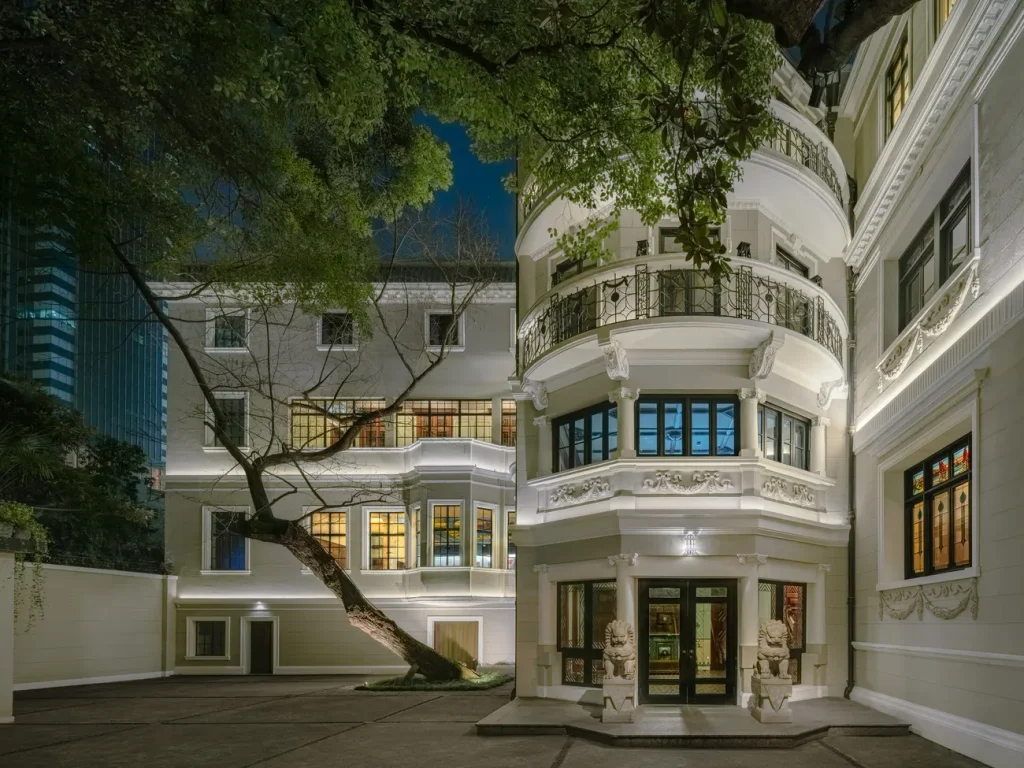
Rong Zhai, the house Rong Zongjing bought in 1918 and Prada restored
The villa carries the name of the family that lived in it. Rong Zongjing, an industrialist who had built his fortune in flour milling, bought it in 1918, towards the end of his career, to run his companies and live there with his family. His youngest son, H.C. Yung, is the source of much of what is known about domestic life inside those rooms. In 2004 the building was declared cultural heritage of Shanghai’s Jing’an district and placed on the city’s list of significant historic buildings.
After nearly a century the house had fallen out of use. Prada began the restoration in 2011 and worked on it for six years, funding it entirely, with particular attention to plasterwork and lead glass windows, the same expertise applied earlier to parts of the Galleria Vittorio Emanuele II in Milan and to Ca’ Corner della Regina in Venice. The residence reopened to the public on 12 October 2017, with the Resort 2018 show and an exhibition on the work just completed.
Since then the house has hosted cultural projects, among them Paraventi: 屏 in 2023, curated by Nicholas Cullinan, which set two antique Chinese folding screens of the seventeenth and eighteenth centuries against five works commissioned from Tony Cokes, John Stezaker, Shuang Li, Wu Tsang and Cao Fei, in parallel with the folding screens exhibition at Fondazione Prada in Milan.
The surfaces the four artists now work against — the sixty-nine skylight panels, the teak of the bedroom, the gilding of the ceilings — are what those six years produced.