On 8 November, Studio Portaluppi opens its Listening programme: two movements of Messiaen’s Quatuor pour la fin du Temps performed in the bunker beneath Piero Portaluppi’s Milan studio
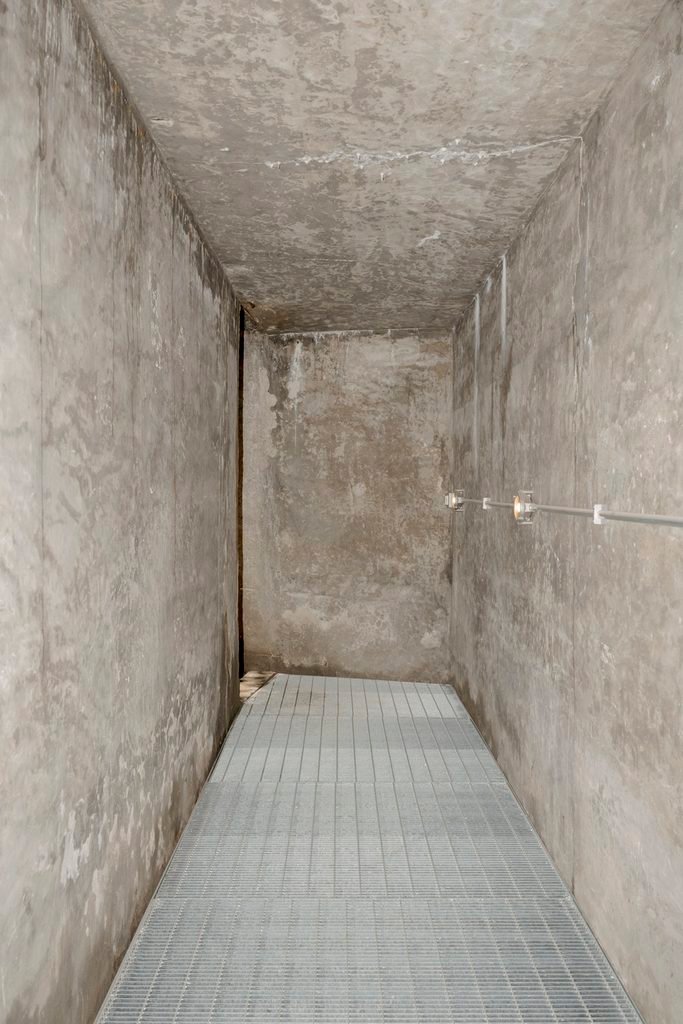
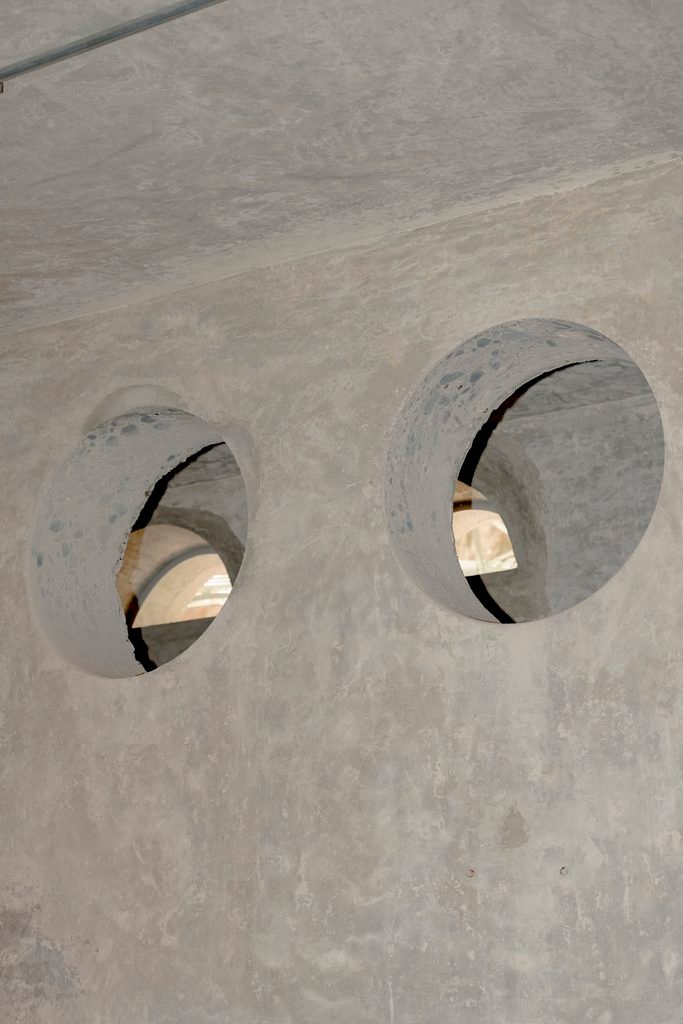
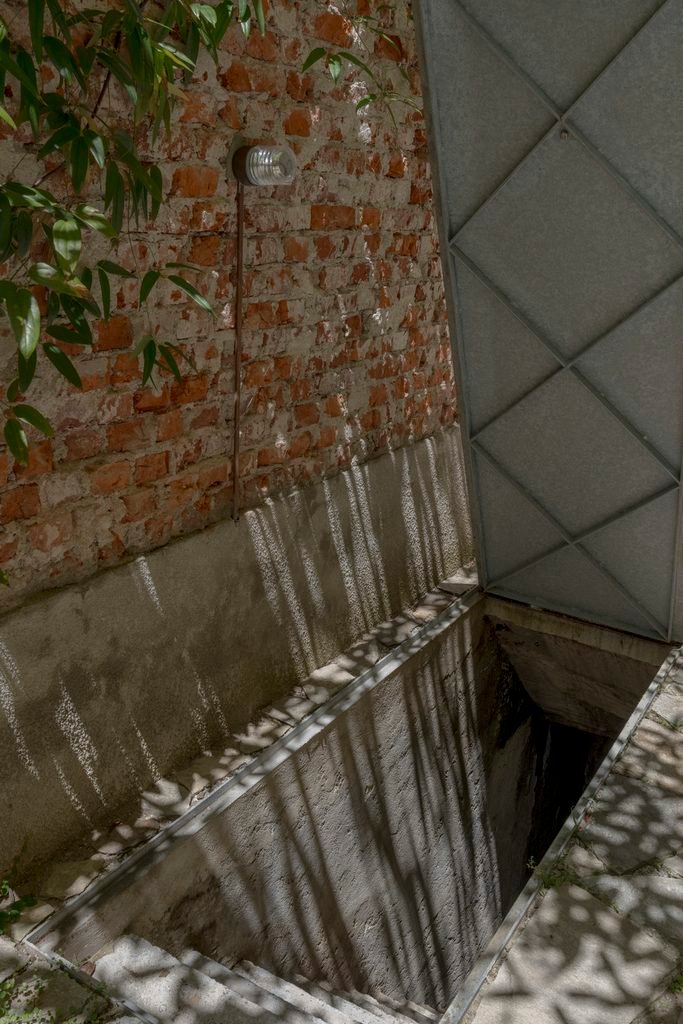
There is an air-raid shelter under the studio of Piero Portaluppi (1888–1967), in Via Morozzo della Rocca 5 in Milan. It was rediscovered recently, and an intervention by Filippo Taidelli Architecture opened it towards the courtyard and turned it into a meeting space, leaving the architecture of its original use intact. On 8 November 2026 a clarinet, a cello and a piano go down into it to play Olivier Messiaen, who wrote the music in a German prison camp.
That evening Studio Portaluppi opens its cultural programme C’est l’heure de bien faire with the first chapter, Listening: two extracts from Messiaen’s Quatuor pour la fin du Temps (1941), curated by Julia Koropoulos with the pianist Elena Lasala.
Two listening sessions, at 5 pm and 5.30 pm, bring Abîme des oiseaux, the third movement, for solo clarinet, and Louange à l’Éternité de Jésus, the fifth, for cello and piano, into the shelter. The fourth movement, Intermède, for violin, clarinet and cello, is played at 6 pm in the historic studio, where it opens a talk. The quartet is written for violin, clarinet, cello and piano, and four of its eight movements call for fewer than the four players: the programme takes three of those four.
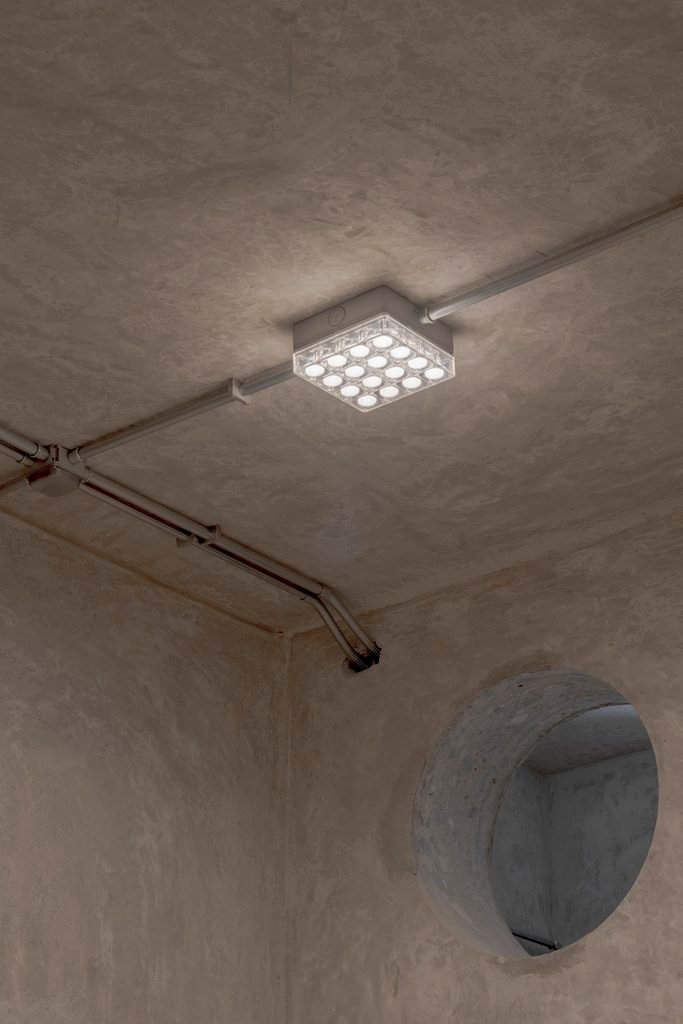
Listening at Studio Portaluppi: 17 minutes of chamber music in an air-raid shelter
Listening treats hearing as an active, embodied experience. The proximity between audience and musicians, the acoustics of the space and the travel of the vibrations bring the ear close to the material of the sound itself. The musicians adapt their playing to the acoustic conditions of the room. In the shelter, the two movements trace a path from the abyss to eternity, from the finitude of time to its dissolution. «The Abyss is Time», Messiaen wrote; the birds are «its opposite», an expression of the desire for light, stars, rainbows and song.
Olivier Messiaen’s Quatuor pour la fin du Temps: written in Stalag VIII-A in 1941
Olivier Messiaen (1908–1992) was a composer, organist, pianist, ornithologist and teacher. Birdsong became compositional material for him; harmonies were tied to specific combinations of colour; rhythm became a way to question the linear perception of time. Rooted in the Catholic tradition and in classical music, his work also fed the composers of the postwar avant-garde — Pierre Boulez, Karlheinz Stockhausen and Iannis Xenakis studied with him at the Paris Conservatoire. His catalogue includes L’Ascension (1932–1933), the Quatuor pour la fin du Temps (1941), the Turangalîla-Symphonie (1946–1948), the Catalogue d’oiseaux (1956–1958) and the opera Saint François d’Assise (1975–1983).
Messiaen composed the Quatuor as a prisoner of war in Stalag VIII-A, near Görlitz, and it was first performed there on 15 January 1941, in front of prisoners and guards, with the composer at the piano. The work takes its cue from the Apocalypse of Saint John and the announcement of the Angel — «there shall be no more Time» — and questions time in its spiritual dimension and in its musical construction alike. Messiaen undoes its linearity through particular rhythmic structures, among them the «non-retrogradable rhythms», palindromes built to read the same in both directions.
Progettare l’invisibile: Filippo Taidelli, Luca Ciammarughi and Giorgio Caimi in conversation
At 6 pm, in the meeting room of the historic studio, Intermède opens the talk Progettare l’invisibile (Designing the Invisible), conceived as a round table. The musicians take the oval parquet area at the centre of the room, framed by the kaleidoscopic marble floor. Musicians, scholars, technicians and designers discuss Messiaen’s language, the act of interpreting it, the question of creative work made under constraint, and the relations between sound and built space.
Messiaen’s own words enter the project through a graphic production with art direction by biffipol. In the days that follow, a sound recording keeps a trace of the performance in the shelter.
Studio Portaluppi, 8 November 2026: programme, performers and booking
Shelter, 5 pm and 5.30 pm — chamber music, about 17 minutes each session. Abîme des oiseaux: Selene Framarin, clarinet. Louange à l’Éternité de Jésus: Martina Rudic, cello; Elena Lasala, piano.
Historic studio, 6 pm — Intermède: Selene Framarin, clarinet; Alexia Tiberghien, violin; Martina Rudic, cello.
Talk, Progettare l’invisibile — Elena Lasala, pianist; Luca Ciammarughi, pianist, musicologist and radio presenter; Filippo Taidelli, architect, Filippo Taidelli Architecture; Giorgio Caimi, technical director and head of the Open Lab at Caimi Brevetti, the Milanese manufacturer whose Snowsound panels absorb sound. Moderated by Julia Koropoulos, curator, Studio Portaluppi.
Studio Portaluppi, Via Morozzo della Rocca 5, Milan. Booking: studioportaluppi_listening.eventbrite.it