The Saint-Siméon Collection opens Les Maisons Privées Normandes, five half-timbered houses for four to fourteen guests, let in their entirety, with concierge, housekeeping and a private chef
The Saint-Siméon Collection has opened Les Maisons Privées Normandes, five houses in Honfleur and the surrounding countryside, each let in its entirety, for four to fourteen guests, open all year, dogs included. There is no reception desk.
The five are La Grande Forge, the family house of the group; La Petite Forge, on the scale of a Norman cottage; La Ferme des Muses, which looks over the bocage from its terrace and wide windows; La Bergerie des Muses, built around seclusion; and Le Moulin de l’Auberge, the most recent to open, minutes from the centre of Honfleur, with six bedrooms, a garden and a jacuzzi.
What separates the model from a holiday rental is the service layer: a personalised concierge, daily or on-request housekeeping, a private chef in the house, wellbeing treatments and excursions, with access to the Collection’s Spa Forestier and Spa Potager, to its restaurants and to its cultural programme.
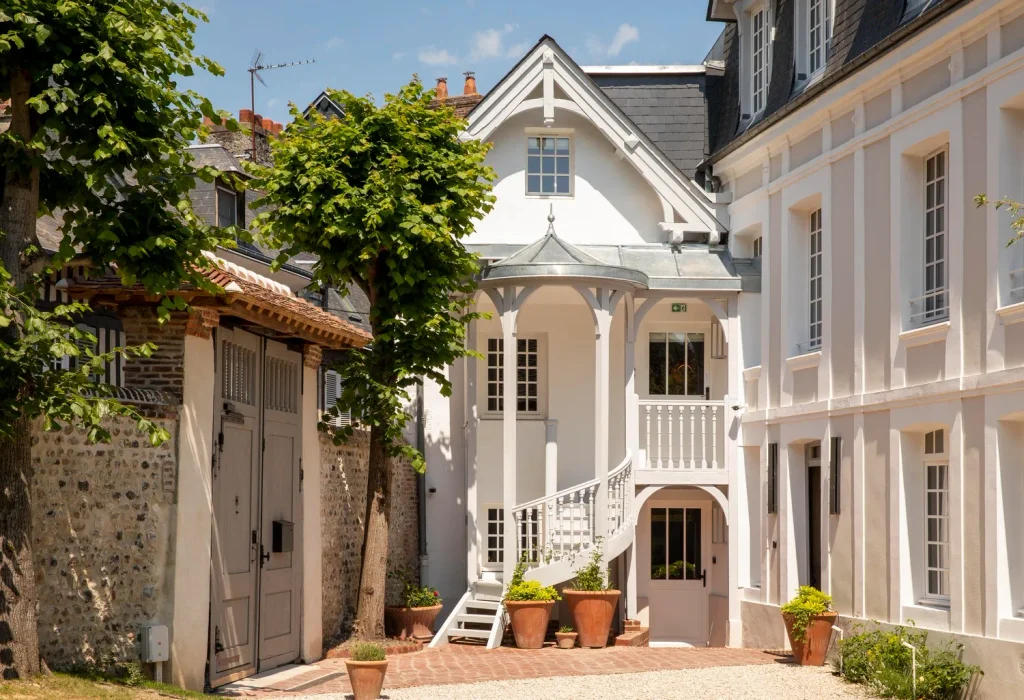
The Saint-Siméon Collection, three hotels and a restaurant on the Vieux Bassin
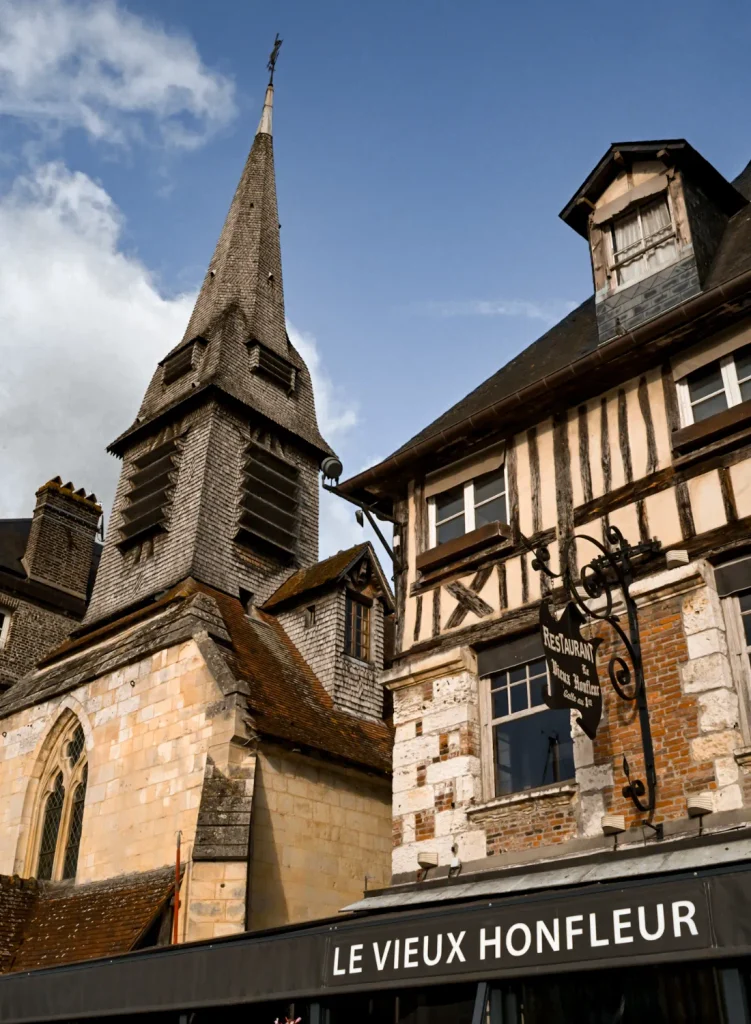
The houses extend a group assembled over time. Auberge de la Source, at Barneville-la-Bertran, is a former nineteenth-century inn with nineteen rooms and suites and two independent cottages, where three natural springs cross the gardens between apple trees. Le Saint-Delis, the last home of the painter Henri de Saint-Delis, who was born in 1878 and died in 1949, holds nine rooms behind a grey door in the centre of Honfleur, each with a private hammam, around a walled garden, and was named the world’s best boutique hotel in 2023. Le Vieux Honfleur, on the corner of Quai Saint-Étienne, was founded in the 1950s, is the oldest restaurant in the town and once served Queen Elizabeth II during a visit to Normandy. La Ferme Saint Siméon, a Relais & Châteaux property, is the only five-star hotel in Normandy with two Michelin Keys, with thirty-five rooms across the original farmhouse, the Pavillon and the Pressoir.
Mickaël Monti, chief operating officer, runs the Collection, after training at Château de la Chèvre d’Or, the Dorchester Collection in London and the InterContinental in Marseille. «Our aim is not simply to preserve a heritage, but to keep it alive», Monti says.
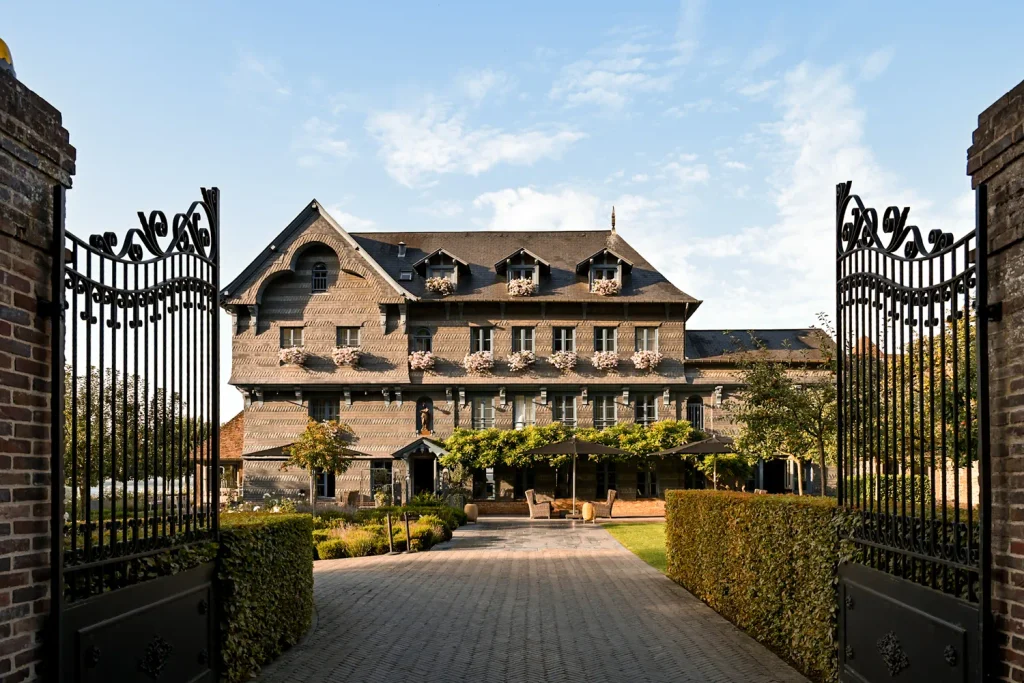
La Ferme Saint Siméon, the 1825 inn where painters paid with canvases
The Toutain family founded the inn above the Seine estuary in 1825, and from the 1850s it drew Boudin, Monet, Corot, Jongkind and Courbet, who came for the light. Under the innkeeper known as La Mère Toutain, canvases were sometimes left in lieu of payment, and a private collection of paintings and sketches from that period is still in the house, hung along the corridors and in the breakfast room. Some of the rooms once held Monet or Corot.
«Every day I discover something even more beautiful and it’s enough to drive a man mad», Monet wrote from the inn. «I want to try everything… my head is spinning».
The long wooden table where the painters gathered is still in place, laid for breakfast with honey from the estate’s hives, house-smoked salmon, walnut oil and jams made in the house, sourdough breads and juice pressed from the orchard’s apples. The kitchen garden that La Mère Toutain once tended is worked on permaculture principles by two gardeners and supplies the kitchens through the seasons. A seventeenth-century outbuilding on the estate, now the restaurant La Boucane, named after the old Norman word for a thatched cottage, appears in one of Monet’s winter scenes, A Cart on the Snowy Road at Honfleur, at the Musée d’Orsay.
The town around it carries the same history: Eugène Boudin, the first of the group to paint the estuary, was born in Honfleur in 1824, Charles Baudelaire spent the summer of 1859 in his mother’s house on the hillside, and Erik Satie was born in the town in 1866.
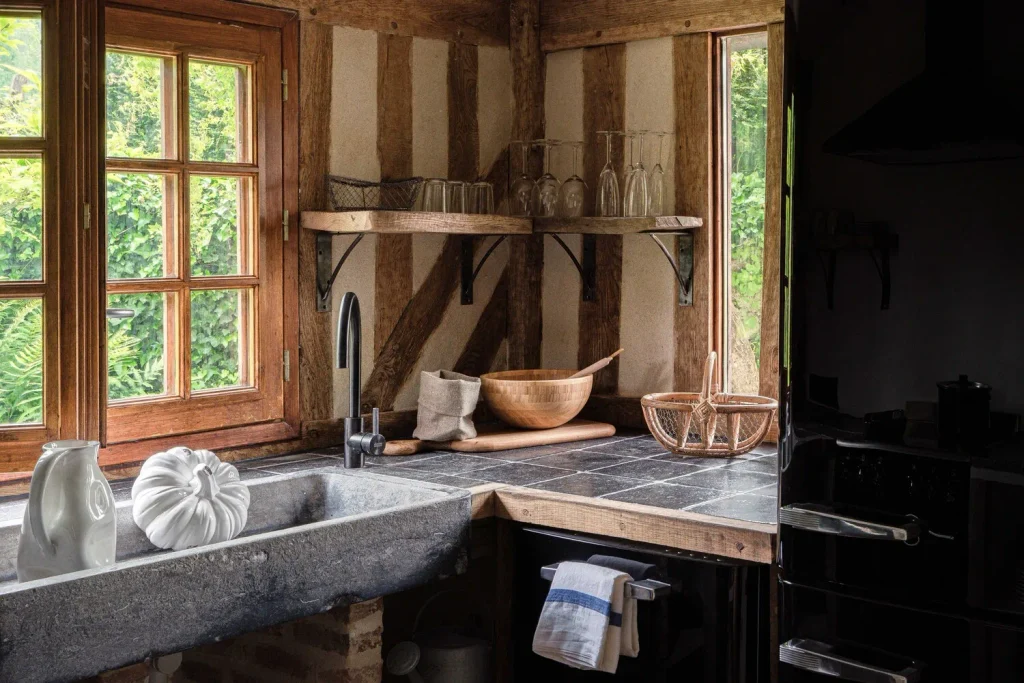
The kitchens, the bar and the concierge
Matthieu Pouleur, executive chef, oversees every restaurant in the group. Raised in a family of butchers in northern France, he worked at Bernard Loiseau, at Emmanuel Renaut’s Flocons de Sel and on the reopening of the Hôtel de Crillon before settling in Normandy in 2019. «Our cuisine focuses on what truly matters: creating a sincere emotion, born from the product itself», Pouleur says. At Les Impressionnistes, the signature restaurant at La Ferme Saint Siméon, the sommelier Emma Roffat builds cider pairings alongside the wine list; at Auberge de la Source the kitchen is headed by Pierre Hanquez under the same direction.
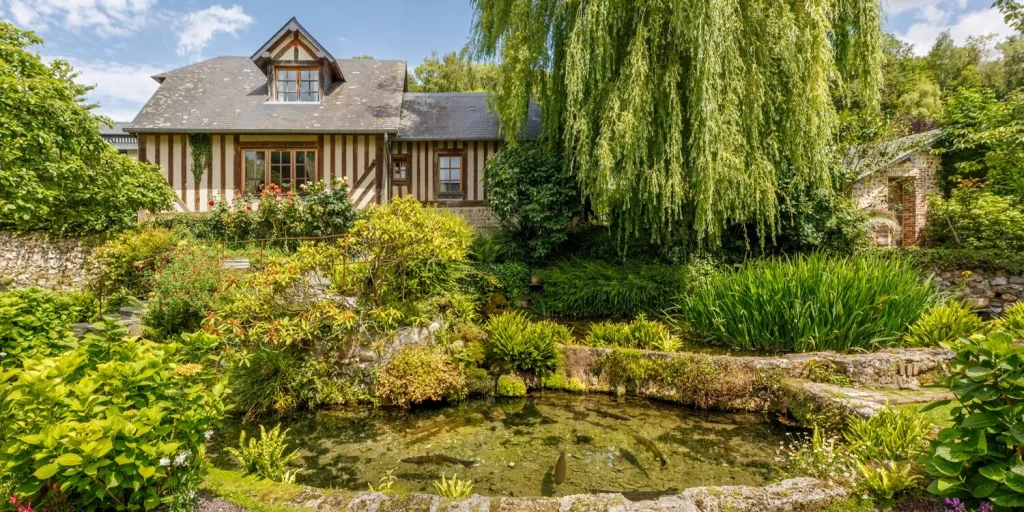
The bar at La Ferme Saint Siméon is run by Fabrice Verdier, French cocktail champion in 2021, with thirty years behind counters from the Élysée Palace to the Westminster in London and the Hôtel de Paris in Monaco. Among his drinks is the Flip Toutain, a nineteenth-century flip rebuilt on intense ice cider and served hot, taken from Boudin’s 1867 watercolour of the house.
Laurent Dauvert, Clefs d’Or concierge, builds the stays. Born in Honfleur, he worked in hotels around the world before returning, and arranges private visits to the D-Day landing beaches, gallery visits, auction evenings and tastings. Horse-drawn carriage rides leave from the properties year-round, led by the master horseman Benoît Farain, French carriage-driving champion in 2019, 2021 and 2023.