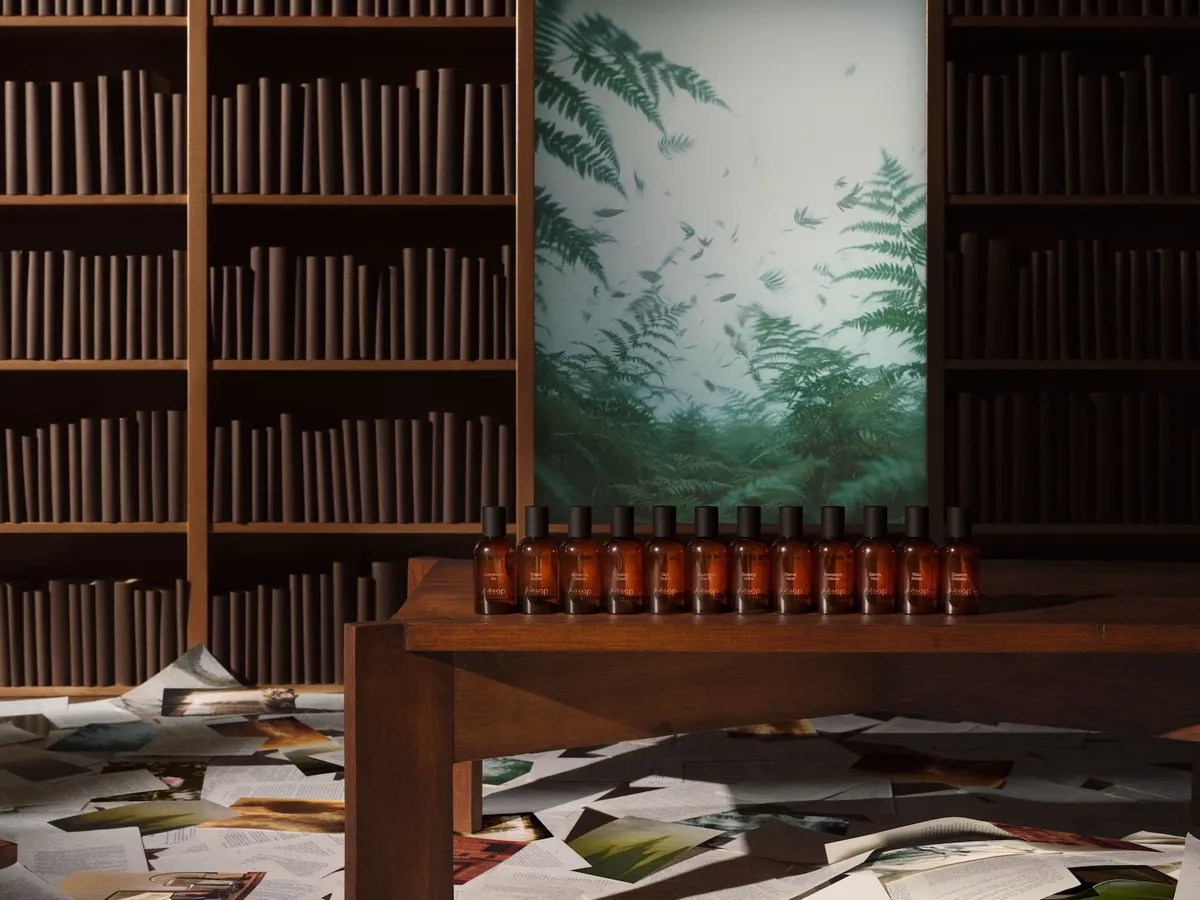
Rimowa brings the two colours to its Essential polycarbonate suitcases and Groove leather bags from 8 October, with a campaign starring the actor Joe Alwyn
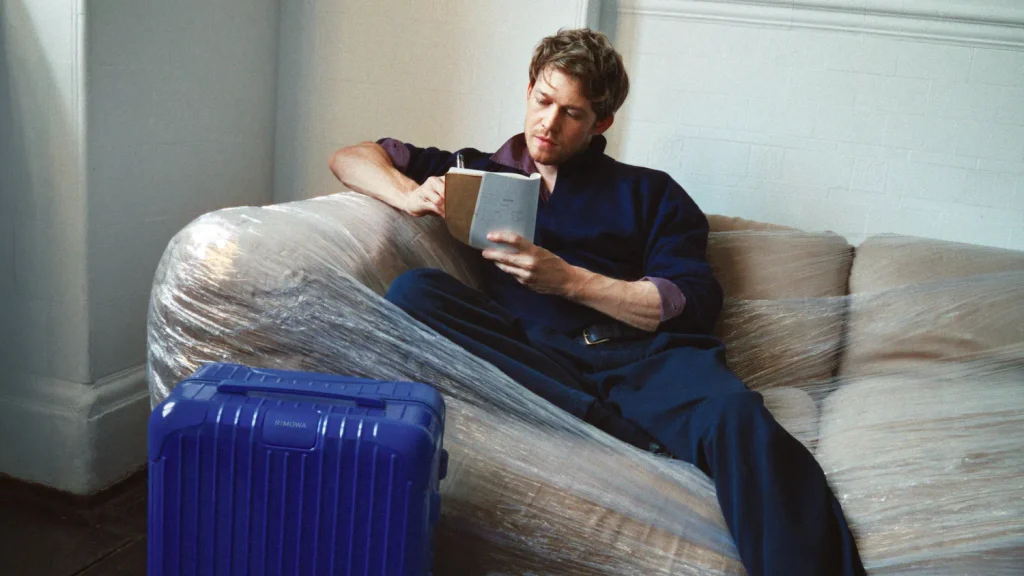
Rimowa has added two colours, Umber and Ultramarine, to its Essential suitcases and Groove bags. The new Rimowa colours go on sale worldwide on 8 October, in stores and at rimowa.com. The campaign follows a young artist, played by the English actor Joe Alwyn, moving into a new studio and working with the same two pigments.
Rimowa Umber: the earth pigment behind the new colour
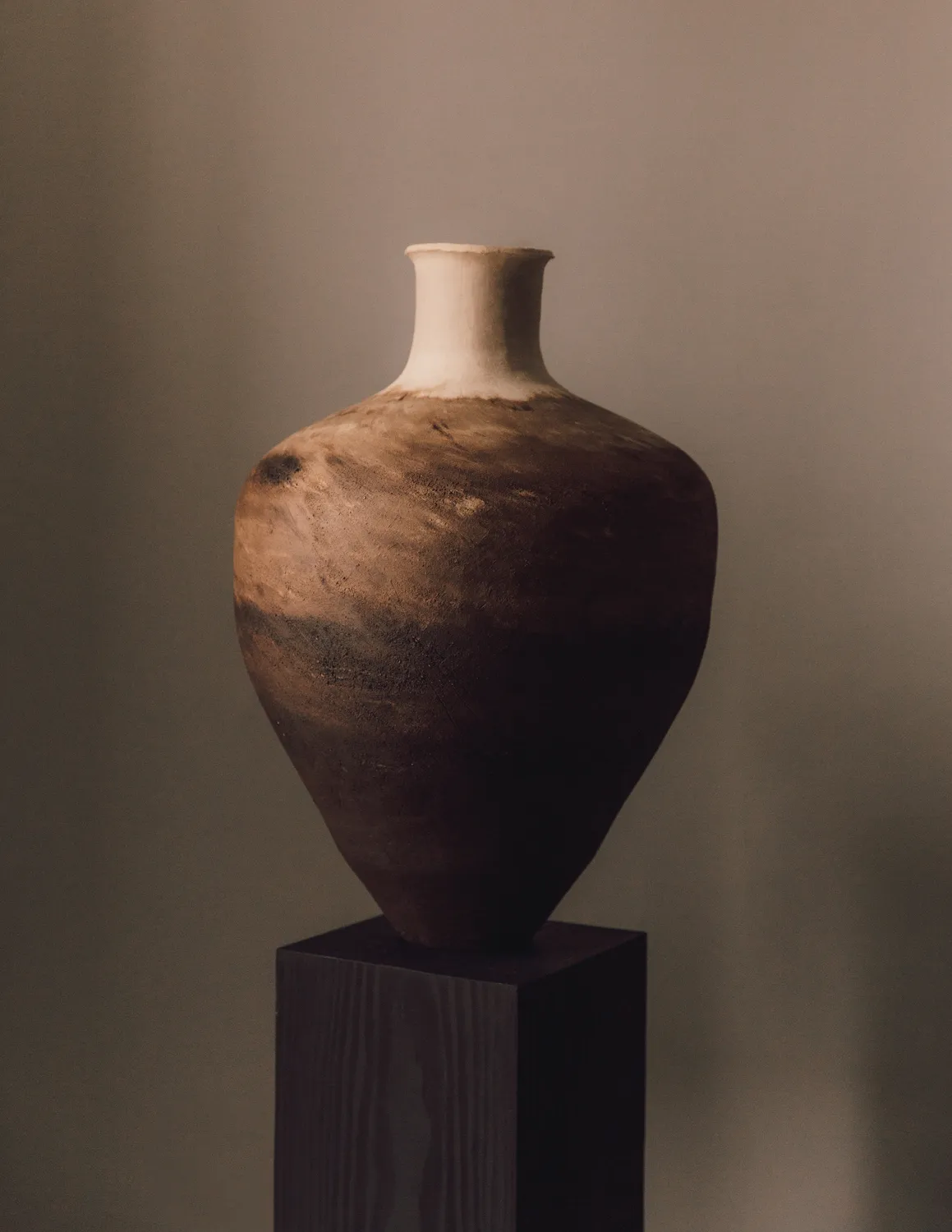
Umber is an earth. It is dug from the ground as a clay coloured by iron oxide and manganese oxide, the manganese giving it the depth that distinguishes it from ochre and sienna. The name comes either from the Latin umbra, shadow, or from Umbria, where it was quarried; roasting it drives off water and shifts it towards red, the difference between raw and burnt umber.
Painters used it where the picture begins. Because it dries quickly and sits well under other layers, umber was the standard pigment for underdrawing and for the first monochrome lay-in of a composition — the stage the finished painting covers.
Rimowa Ultramarine: from lapis lazuli to the new blue
Ultramarine has the opposite history. Until the nineteenth century it was made by grinding lapis lazuli, a stone that came almost entirely from the mines of Sar-e-Sang, in Badakhshan, in what is now Afghanistan, and travelled to Europe by sea — oltremarino, from beyond the sea. The extraction was laborious: the blue mineral had to be separated from the grey matrix, and the yield was small. The pigment cost more than gold, and Renaissance contracts specified how much of it a painter was to use and where, usually on the robe of the Virgin.
That economy ended in a laboratory. In 1826 the French chemist Jean-Baptiste Guimet found a synthetic route to the same compound, and in 1828 he was awarded a prize for the process; he later left his post and set up a factory at Fleurieu-sur-Saône. Synthetic ultramarine has supplied painters, printers and industry ever since, which is why a blue that once worked as a declaration of expenditure is now available by the kilo.
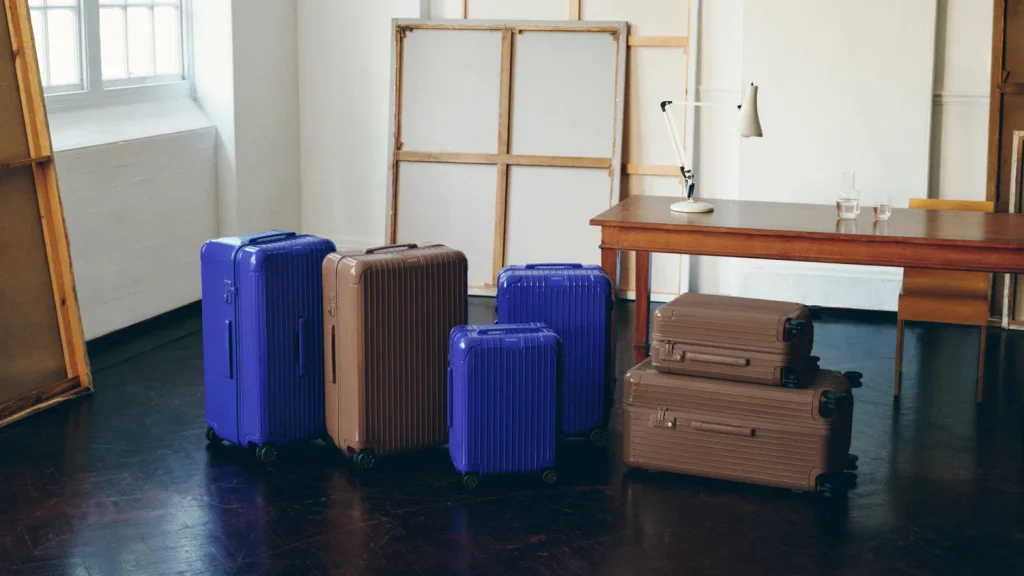
Rimowa Essential suitcases in Umber and Ultramarine
The Essential suitcases are made of polycarbonate, the material Rimowa introduced to luggage in 2000. On the new colours the shade runs across the components: handle, zipper, logo badge and wheel housing are matched to the shell.
Matching those components is the production problem behind a monochrome suitcase. A polycarbonate shell, an aluminium handle, a coated zip and a moulded wheel housing take colour by different routes — pigment in the mass, anodising, coating — and each ages differently in light and against abrasion. The company does not specify which processes it uses for Umber and Ultramarine.
The rest of the specification is unchanged: stage-free telescopic handle, Multiwheel system, TSA-approved locks, a leather address tag, and an interior split between a fully zipped compartment with mesh pocket on one side and an adjustable Flex Divider with compression system on the other. The Essential suitcases carry the lifetime guarantee Rimowa introduced in 2023, which covers all cases bought from 25 July 2022.
Rimowa Groove bags: calfskin, made in Italy
The Groove pieces work in leather. The new Mini Shopping Bag, in both colours, is a smaller version of the original silhouette, made in Italy from smooth calfskin with palladium hardware, a magnetic closure and a removable, adjustable strap. The Cross-Body Bag Small and the Zipped Pouch come in Umber.
Rimowa Umber and Ultramarine: prices and release date
From 8 October: Essential Cabin in Umber or Ultramarine, €770; Essential Check-In M in Ultramarine, €880; Essential Check-In L in Umber, €960; Essential Trunk Plus in Umber or Ultramarine, €1,200. Groove Mini Shopping Bag in either colour, €1,300; Groove Cross-Body Bag Small in Umber, €950; Groove Zipped Pouch in Umber, €420. The Trifold Toiletry Pouch in Ultramarine is €220, and the Packing Cubes in Ultramarine run from €100 to €120 by size.
Rimowa history: from Cologne 1898 to LVMH
Rimowa was founded in Cologne in 1898 by Paul Morszeck with Heinrich Görtz, as Görtz & Morszeck. The present name is an acronym registered in 1931: Richard Morszeck Warenzeichen, after the founder’s son — Warenzeichen meaning trademark.
Aluminium entered the catalogue in the 1930s, and the grooved shell that followed became the identifying feature of the brand. Polycarbonate arrived in 2000. In 2016 LVMH agreed to buy an 80 per cent stake for €640 million, its first German acquisition, with the deal completed the following year. Never Still, the line of bags for daily use, launched in 2020. Production runs across sites in Germany, the Czech Republic and Canada.