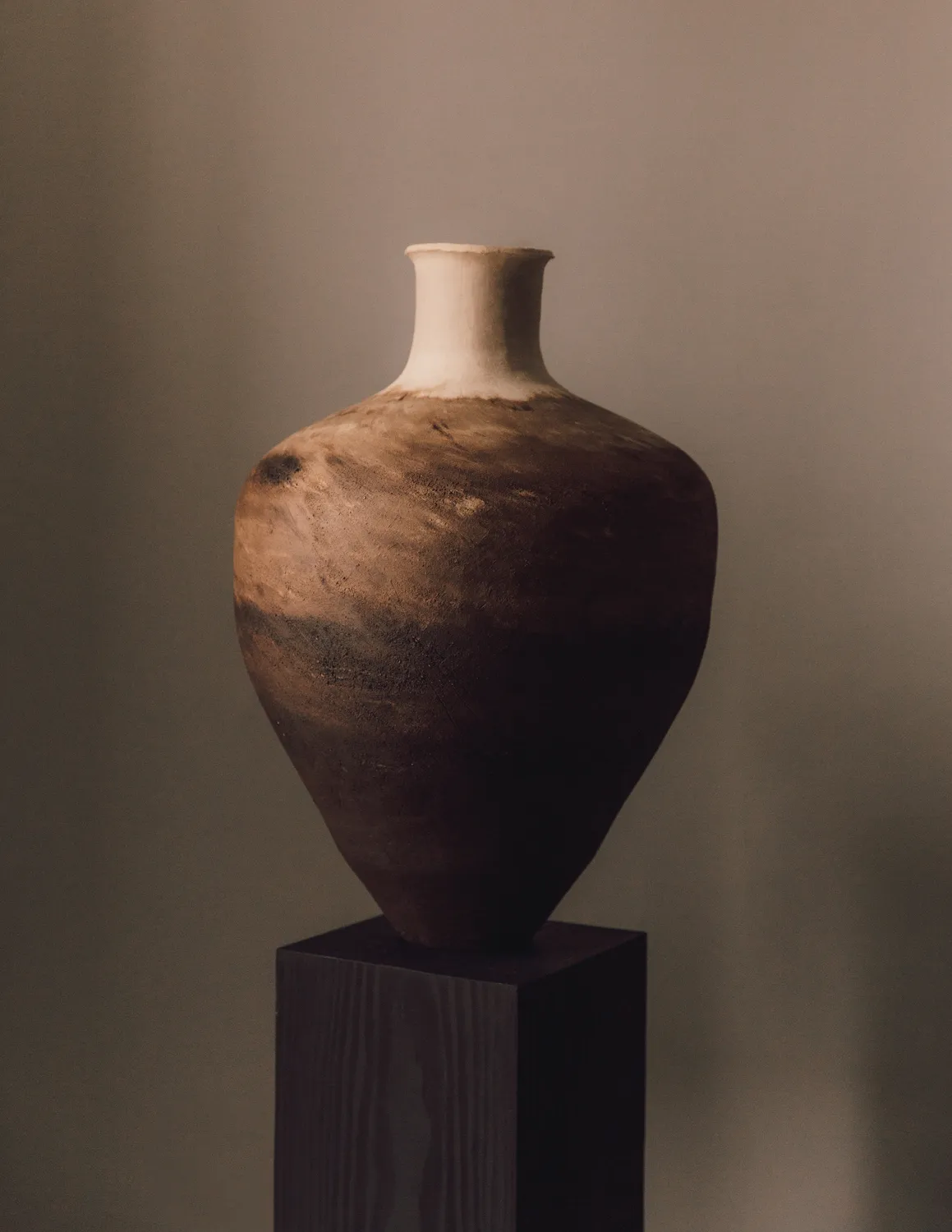
Body, eros and decay in Dialogues – VOENA hangs seven decades of Carol Rama’s work among Rick Owens’s furniture. Rubber, bone, doll’s eyes and alabaster share the rooms on Via della Spiga
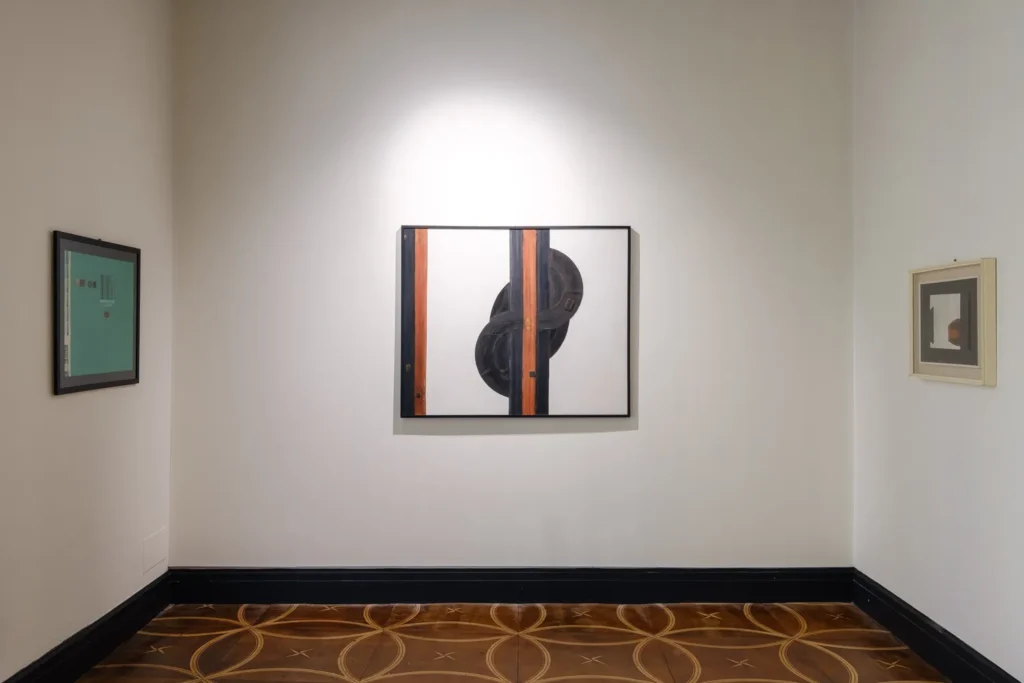
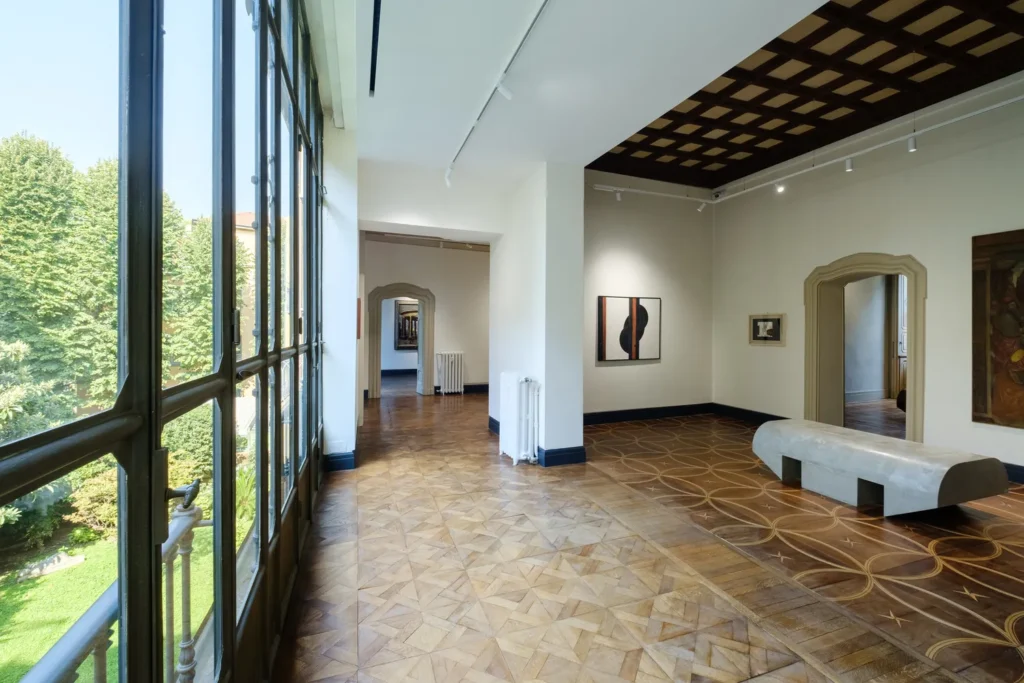
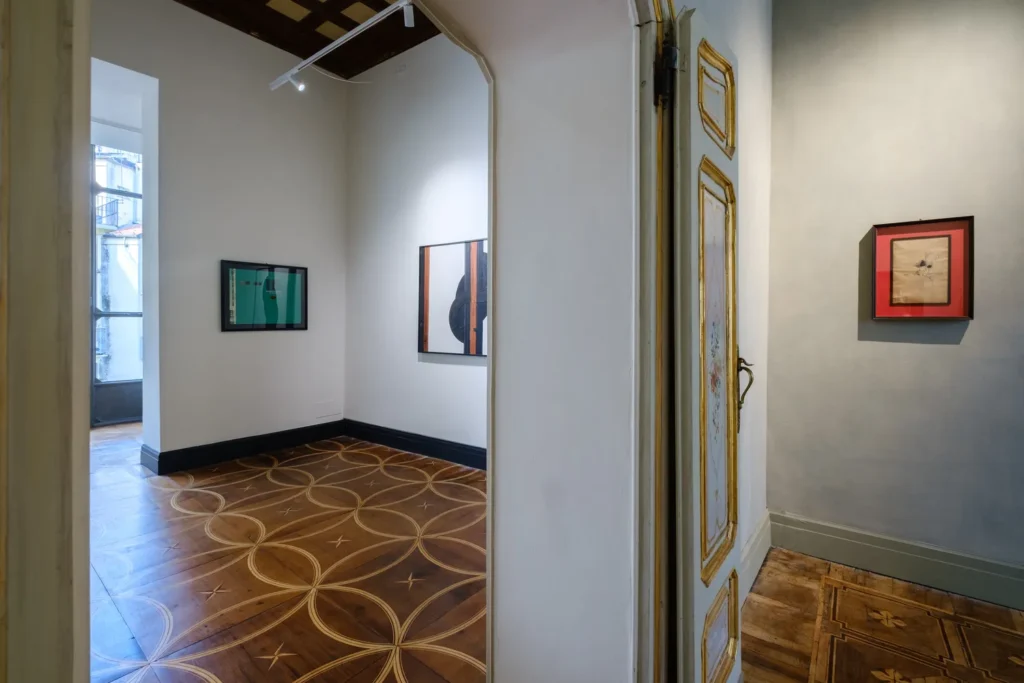
Carol Rama’s first exhibition was set to open in Turin in 1945. The police closed it before it opened. Eighty years later, her work fills VOENA, the gallery at Via della Spiga 1 in Milan, next to the furniture of Rick Owens. The show takes the title Dialogues. Carol Rama with Rick Owens Furniture, and it runs until 20 November 2026.
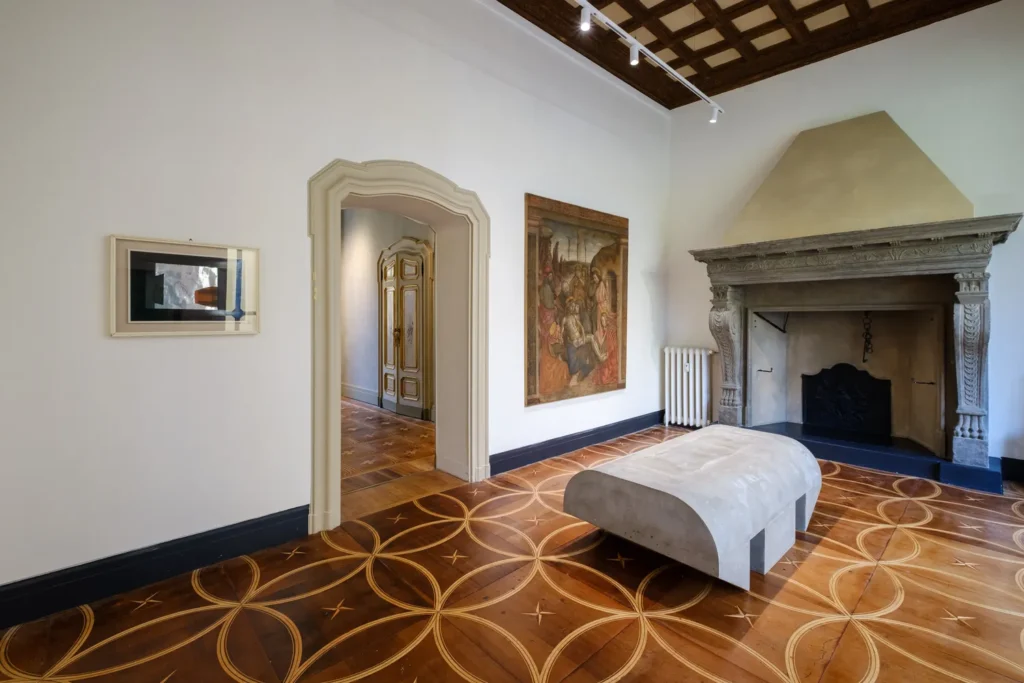
Marco Frignati devised the concept, and Marco Voena curated the exhibition. Michèle Lamy, Owens’s partner and collaborator, chose and arranged the furniture. The selection covers Rama’s whole career, from the watercolours of the late 1930s to the assemblages of the following decades. Throughout, the subject stays the same: the body, desire and decay.
Who was Carol Rama? The Turin artist’s early life
Rama was born Olga Carolina Rama in Turin on 17 April 1918. Her father, Amabile, made cars and bicycles in a small factory. Competition from Fiat, however, drove the business into bankruptcy. In 1933 the family committed her mother to a psychiatric clinic, and in 1939 her father took his own life. Rama never trained formally. She enrolled at the academy, then left it, and started to paint on her own in her late teens.
Appassionata and the 1945 censorship in Turin
Her first series, Appassionata, drew on that history. The watercolours show women with open legs, tongues, prostheses, shoes, chamber pots and snakes. Some of the figures sit in wheelchairs or hospital beds. In 1945, Galleria Faber in Turin prepared a solo show of these works. Before the opening, however, the police shut it down.
From abstraction to bricolage: doll’s eyes, claws and syringes
In the 1950s, Rama turned away from the figure. She joined the Movimento Arte Concreta and worked in geometric abstraction through the decade. Then, in the 1960s, she began to glue objects onto the canvas. She used doll’s eyes, animal claws, syringes, electrical wire and metal spheres. Her friend, the poet Edoardo Sanguineti, took a word from Claude Lévi-Strauss to name these works: bricolage. The term stuck, and it remains the one most associated with her.
The Milan show includes several pieces from this period. Bricolage, from 1964, gives the series its name. An untitled work from 1968 sets glue and metal spheres on black cardboard. La guerra è astratta, from 1971, marks the move into the next phase.
Carol Rama’s rubber works: the Gomme series
In the 1970s, Rama found a new material in her father’s trade. She cut bicycle and car inner tubes into strips and laid them flat on canvas. The series, known as Gomme, looks close to minimal abstraction. Still, the rubber sags, creases and darkens with age, so it reads as skin. Critics have linked it to the factory that failed. Rama herself kept her story and her work close together.
Golden Lion 2003 and The Passion According to Carol Rama
For most of her life, the art world paid Rama little attention. She lived and worked for more than seventy years in the same apartment at Via Napione 15 in Turin, crowded with objects. Among her friends was Man Ray. Recognition came late. In 1980, the critic Lea Vergine included her in L’altra metà dell’avanguardia, a show about women in the historical avant-gardes. Then, in 2003, at 85, Rama received the Golden Lion for lifetime achievement at the Venice Biennale.
Afterwards, the museums followed. In 2014, The Passion According to Carol Rama opened at MACBA in Barcelona, with some 200 works. The retrospective then toured to the Musée d’Art Moderne de Paris, EMMA in Espoo, the Irish Museum of Modern Art in Dublin and GAM in Turin. Rama died in Turin on 25 September 2015, while the show was still travelling. Later, in 2017, the New Museum in New York gave her a first American survey, Antibodies.
Rick Owens furniture and Michèle Lamy
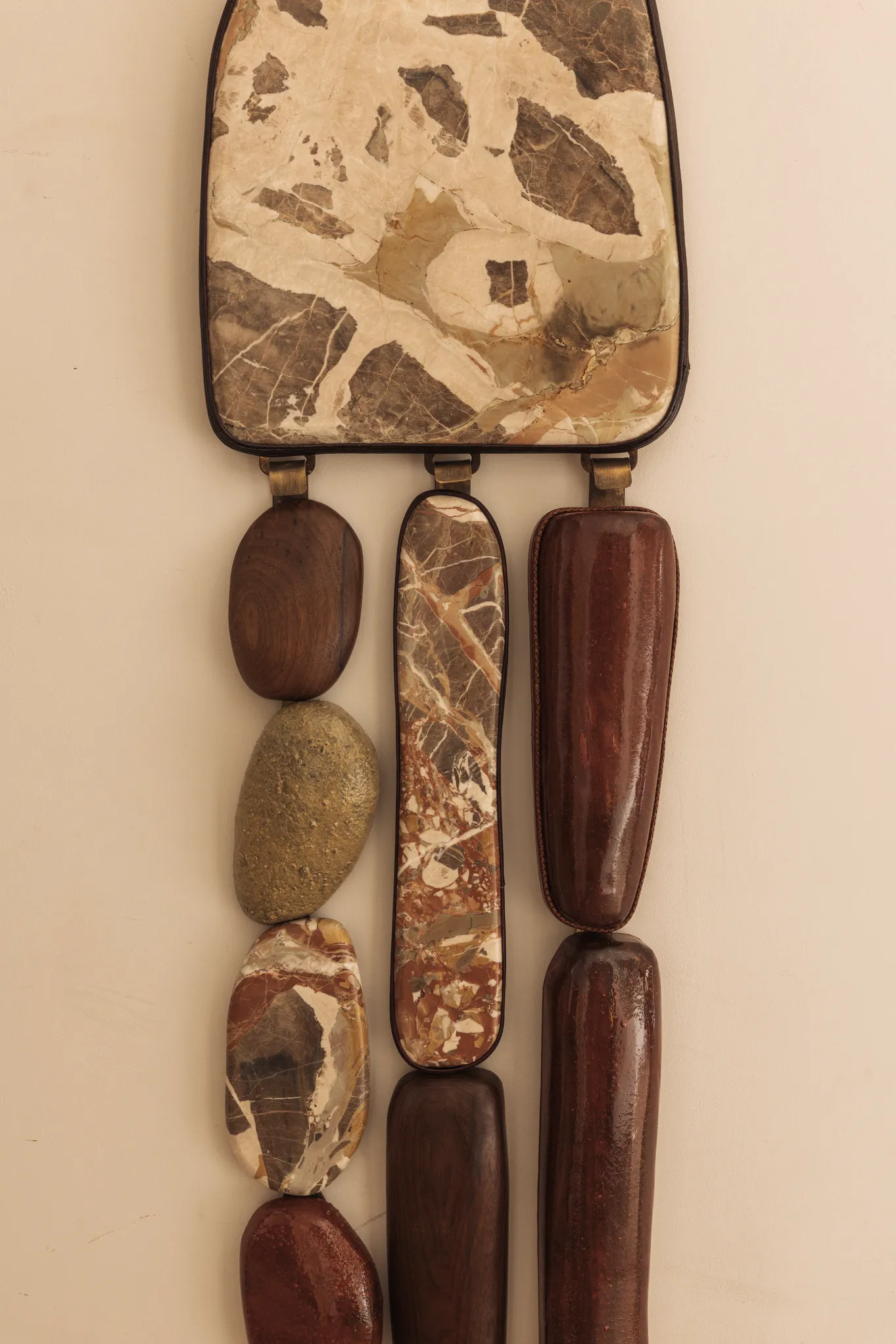
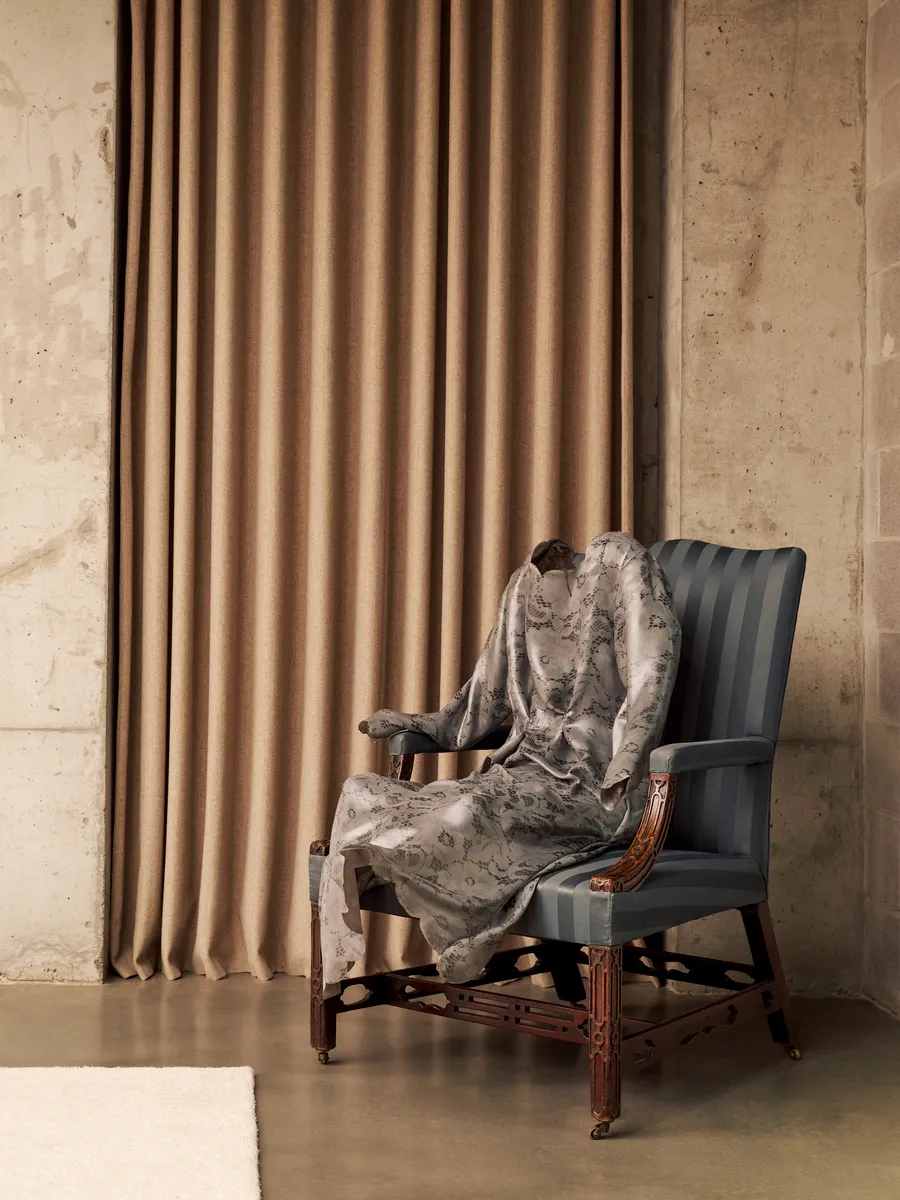
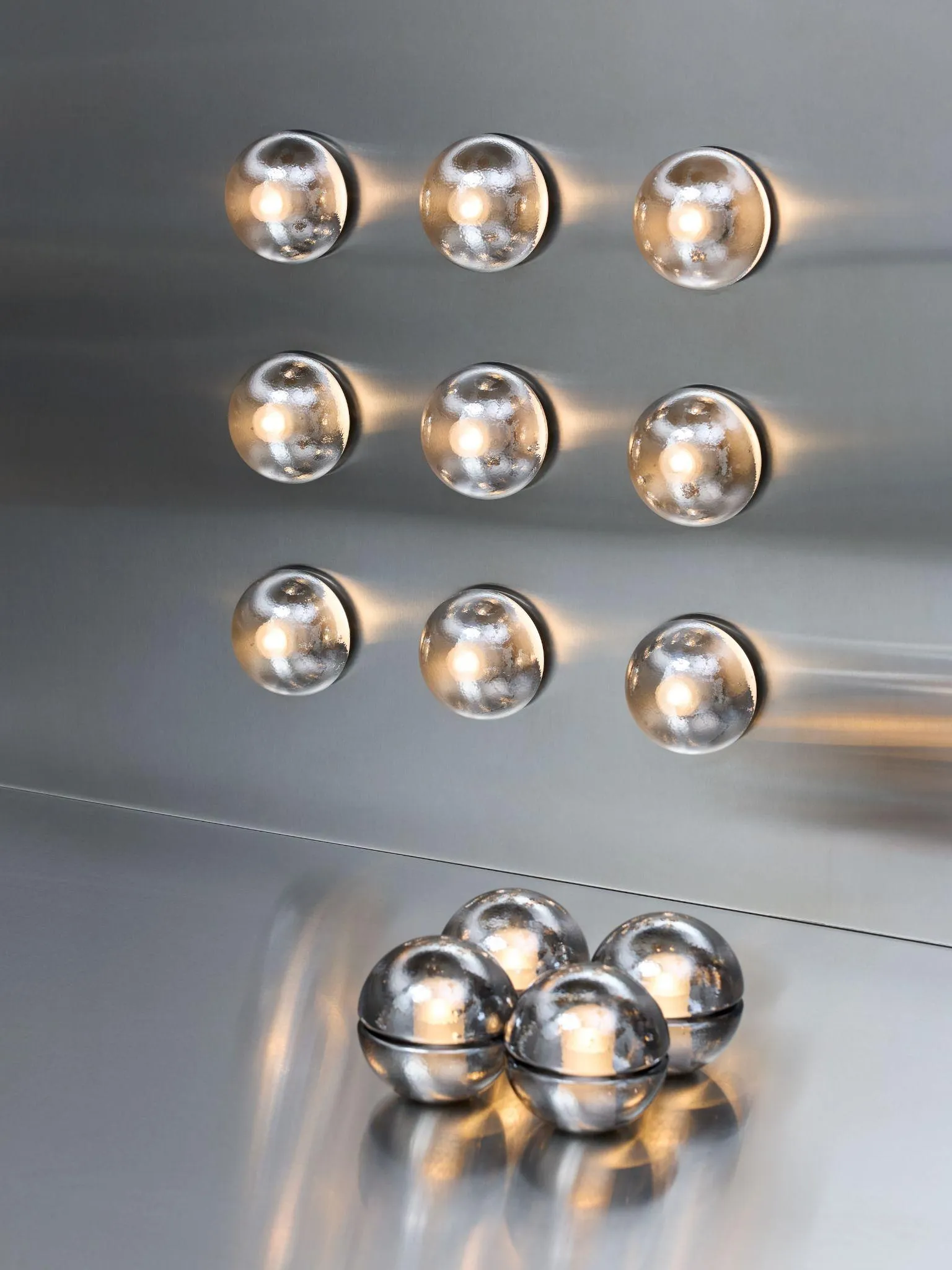
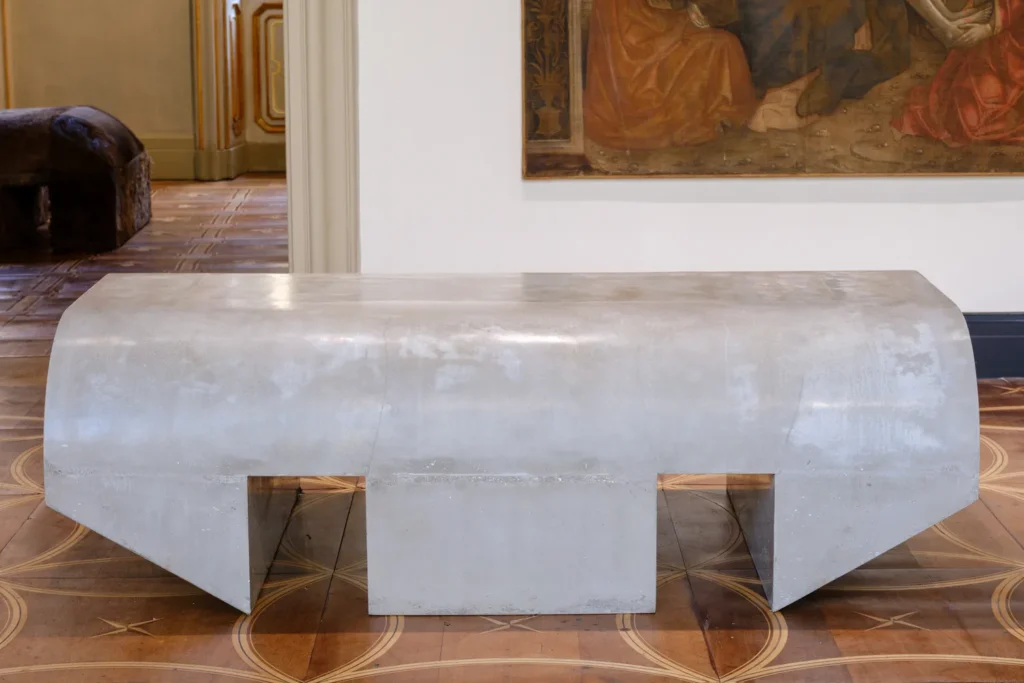
Rick Owens started to design furniture in 2005, at first for his own home in Paris. His references come from brutalism, wartime bunkers, Eileen Gray, Brâncuși and California skate parks. He works in plywood, marble, alabaster, bronze, leather, bone and moose antler. The method involves two people. Owens draws each piece, and Lamy translates the drawing into models and oversees production with the artisans. She also stages the installations, as she does at VOENA.
The pairing is not new. In 2015, Owens’s furniture accompanied the Rama retrospective at the Musée d’Art Moderne de Paris. According to the gallery, the Milan show brings the two together for the first time since then.
Carol Rama and Rick Owens: why the pairing works
The link lies in the materials. Rama used worn rubber as a stand-in for flesh. Owens uses hide and bone for similar reasons, and his surfaces keep the marks of their making. Both work with matter that ages, stains and wears. At VOENA, the furniture does not frame the pictures. Instead, it stands in the rooms as a second set of bodies.
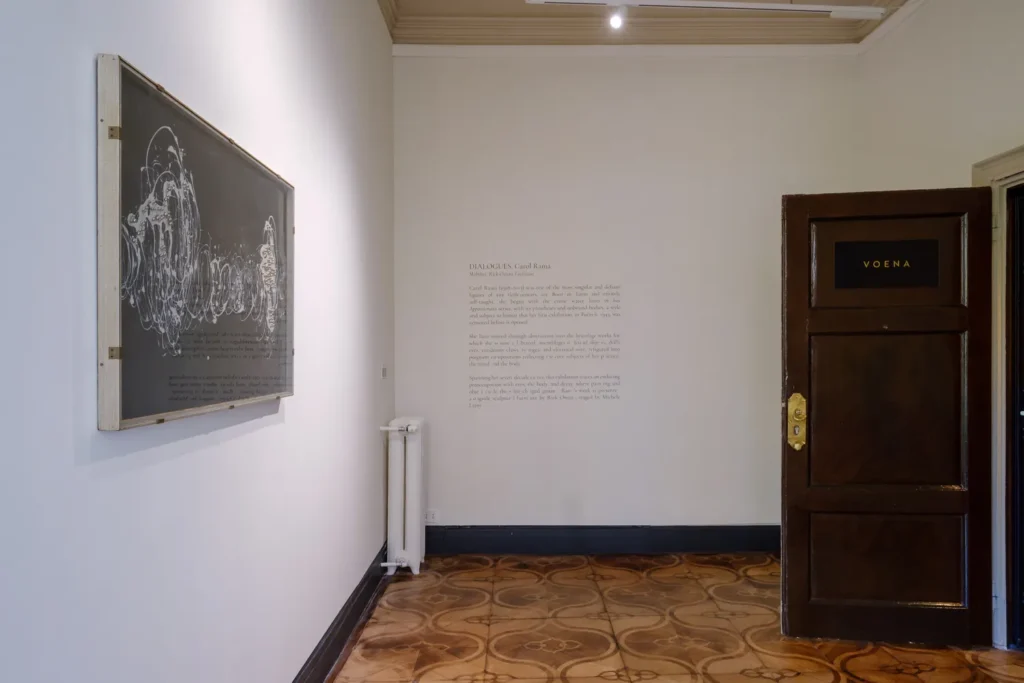
Dialogues. Carol Rama with Rick Owens Furniture is on view at VOENA, Via della Spiga 1, Milan, until 20 November 2026. Open daily from 10am to 6pm.