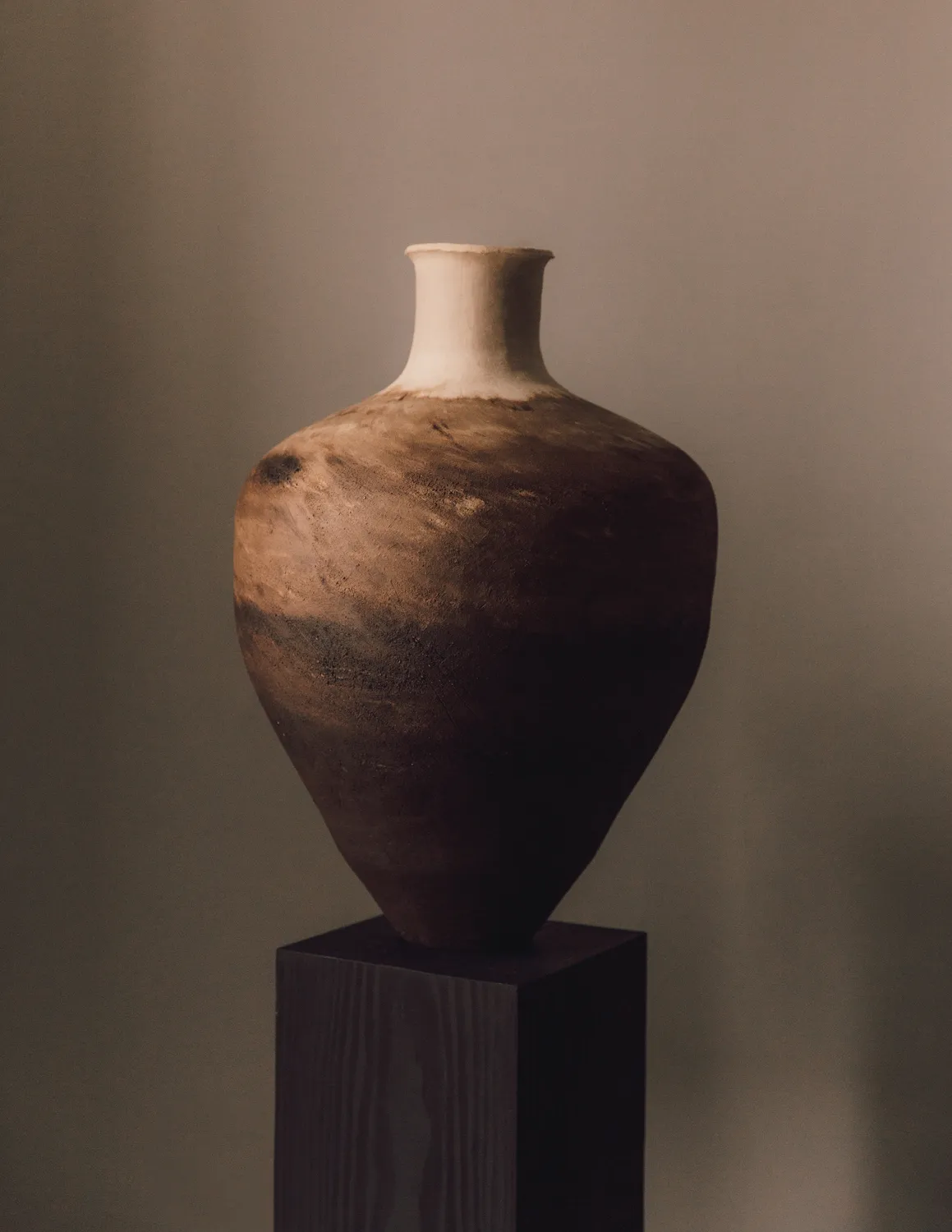
Xavier Cartron draws on Oman’s maritime history and material traditions for the interiors, where contemporary design incorporates references to the Sultanate’s cultural identity
In the lobby of the Mandarin Oriental Muscat hangs a chandelier designed by Xavier Cartron and made by Lasvit. Dozens of hand-blown glass pieces hang in clusters, and their colours come from Omani geography: green for the lush south of Salalah, yellow for luban frankincense resin, red for the warmth of the Omani welcome, brown for the wadis and the mountains.
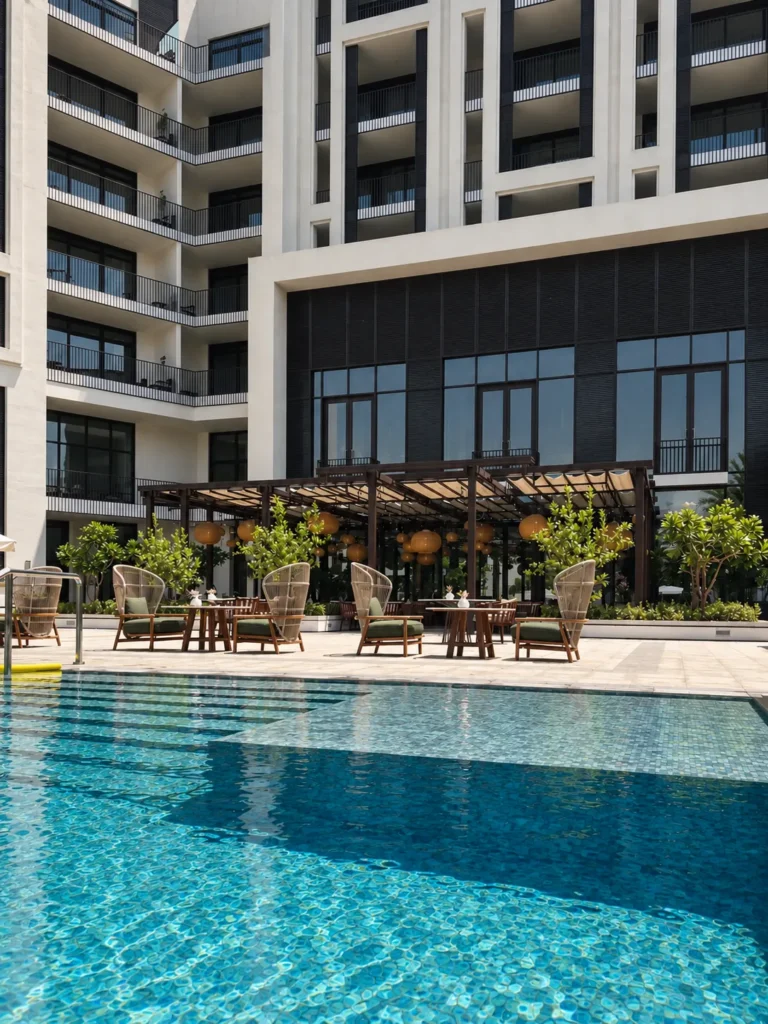
Arranged like a drifting cloud, the installation recalls the movement of goods along the Indian Ocean and Silk Road routes. Light cuts through it differently with each hour, sharp and clear at noon, amber after dark. The hotel stands in Shatti Al Qurum, a coastal district of beaches and diplomatic residences, in an architecture that takes traditional Omani references and rebuilds them at a contemporary scale.
Mandarin Oriental Muscat: the first property in the Sultanate
The hotel opened on 3 June 2024 with 103 rooms and 47 suites. Alongside it stand 156 private residences, developed by Eagle Hills, with their own facilities and access to hotel services. HOK appears among the architects of record, and Maison Cartron, the Paris studio of Xavier Cartron, designed the interiors. It is the first Mandarin Oriental in Oman.
Xavier Cartron’s lobby: the salon of a traveller
Cartron started from a figure instead of a style. He imagined the lobby as the salon of a traveller who had crossed several territories and come home with objects and memories. Oman supports the premise: its ports connected the Arabian Peninsula to India, East Africa and the Mediterranean, moving copper, dates, textiles, spices and resins.
The sequence begins at a set of large wooden doors. Three fountains follow, one each for the Middle East, Africa and Asia. Screens reinterpret the mashrabiya and let one room read into the next. Coconut palms take over at the edge of the building, where the floor meets the beach.
The Lasvit glass in the Sawa Lounge: spice jars in crystal
The glass installation sits in the Sawa Lounge, connected to the main lobby, produced by the Czech glassmaker Lasvit to Cartron’s design. Its units are vessels shaped like spice jars, closed with gold-plated caps and filled with smaller pieces of coloured crystal. Programmed lighting sequences run through them, and a mechanism lets the whole composition rotate, so a symmetrical room acquires movement. Daylight enters from the openings facing the sea and changes the densities and transparencies of the glass; after dark, artificial light takes over.
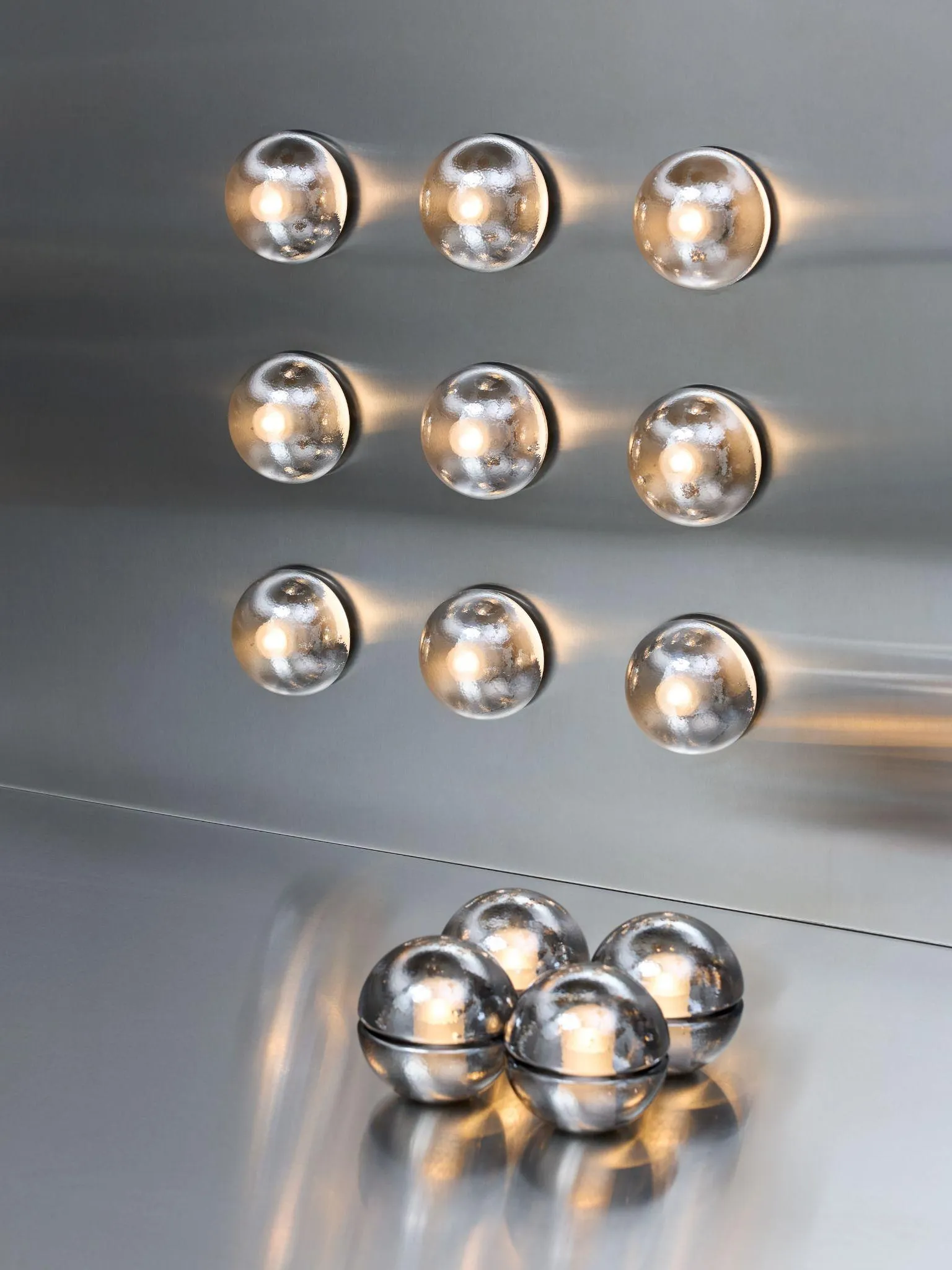
Visual Energy designed the lighting across rooms, restaurants, spa, pools, gardens and external elevations, and the studio counts 3,525 decorative fittings. One motif, drawn from fishing nets, runs from large architectural surfaces down to the brass lanterns in the ground-floor circulation. At night the lighting deepens the geometric reliefs of the facade.
Rooms at Mandarin Oriental Muscat: the kumma, the khanjar and Desert Rose marble
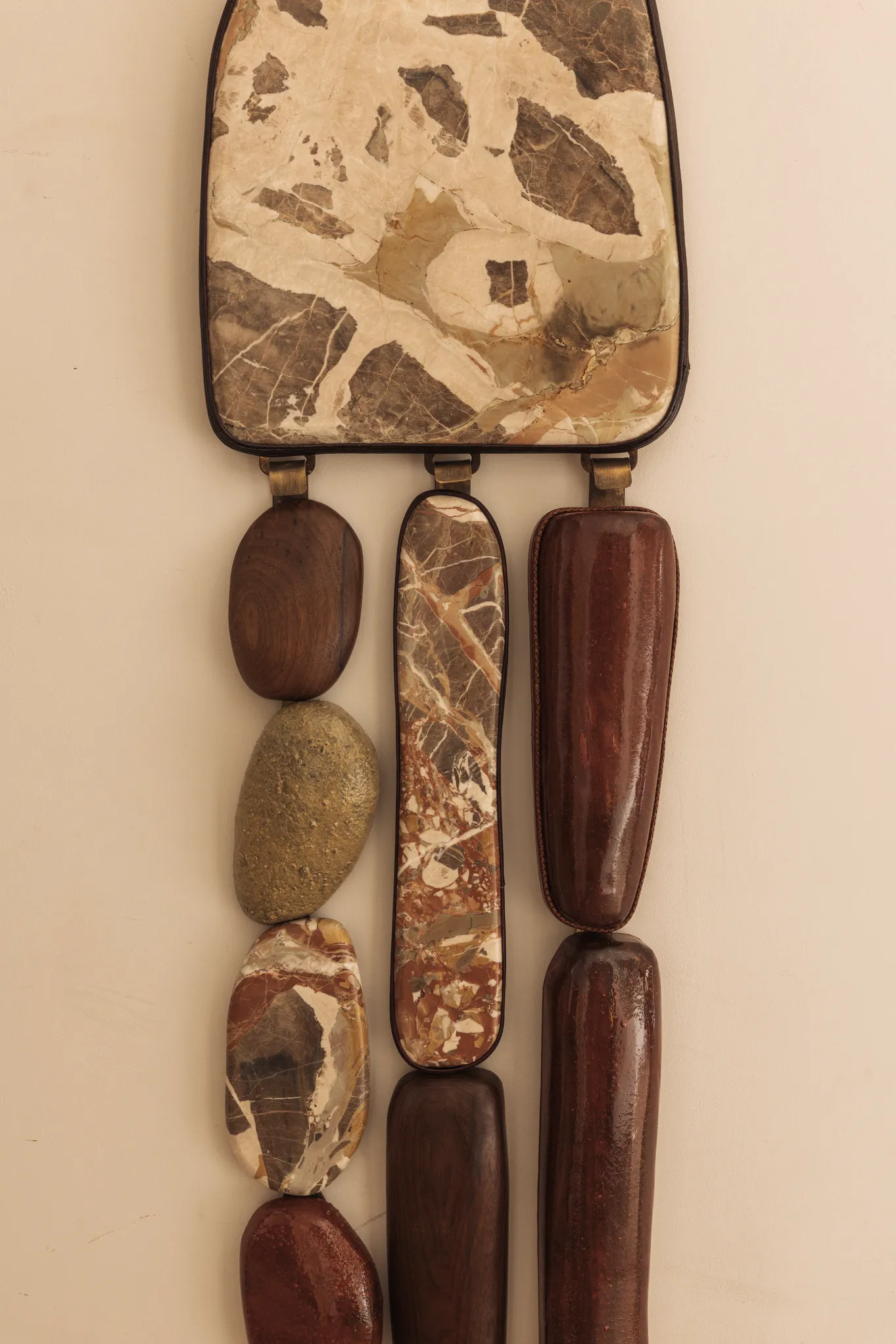
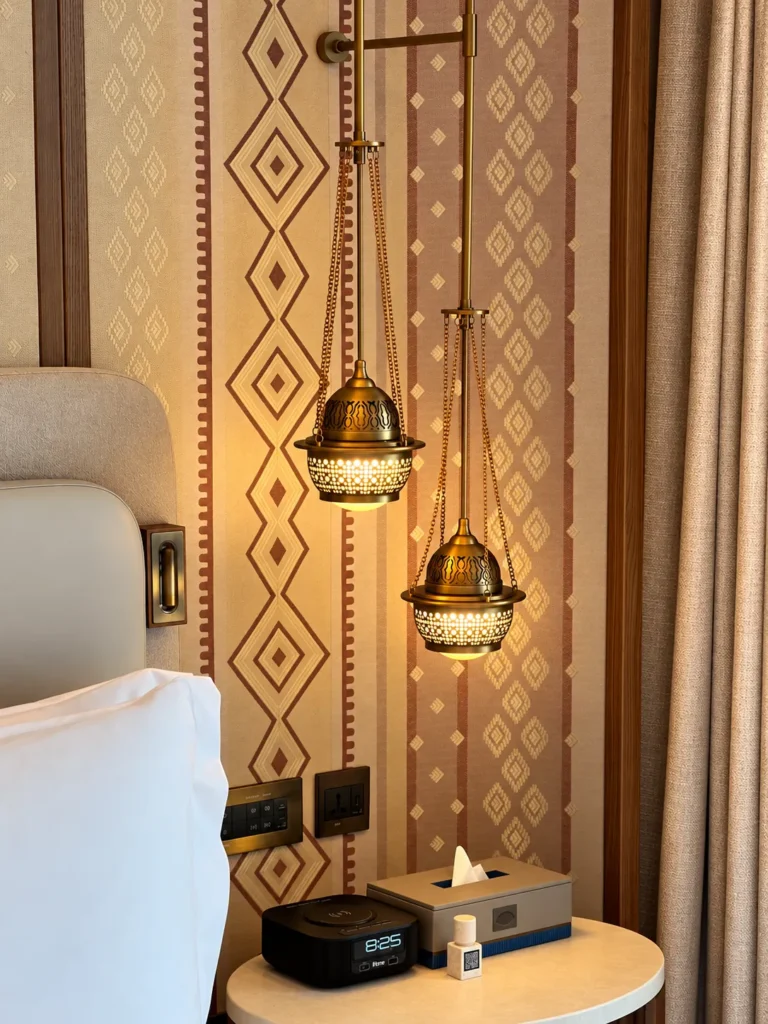
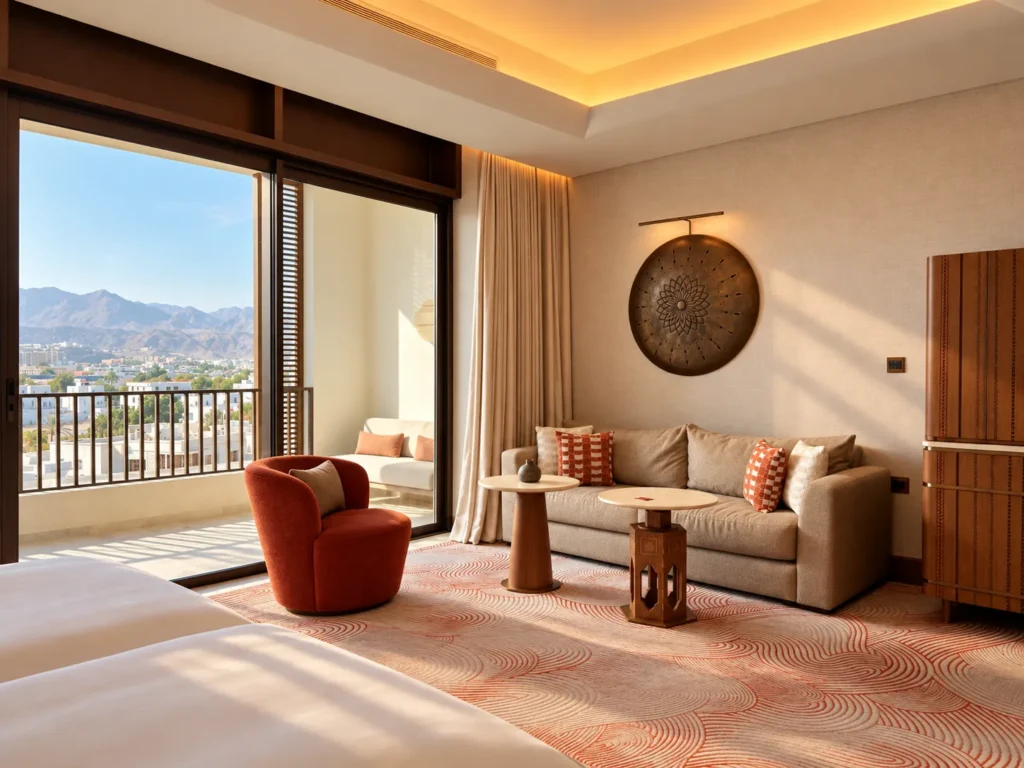
Headboards reinterpret the kumma, the embroidered cap worn by Omani men, and Cartron’s studio adapted the pattern to the proportions and limits of hand weaving. Bespoke brass lanterns take their vocabulary from the khanjar, the curved dagger of the national emblem. Maple, Desert Rose marble, brass and natural stone set the material range, in colours from sand and ochre to bronze and blue. Windows and balconies open on the Gulf of Oman, the mountains and, from some positions, the Royal Opera House.
Maison Cartron specified porcelain stoneware from the Italian manufacturer Atlas Concorde alongside natural stone. The Lims collection, which reproduces limestone, covers floors in bedrooms, bathrooms and balconies in ivory and grey; Kone appears elsewhere, including the Sawa Lounge; Etic Pro, which reproduces oak, appears in the restaurants, chosen for resistance and ease of maintenance in a coastal climate.
Alia Al Farsi’s fan: eleven governorates, the mashwak and the mafraq
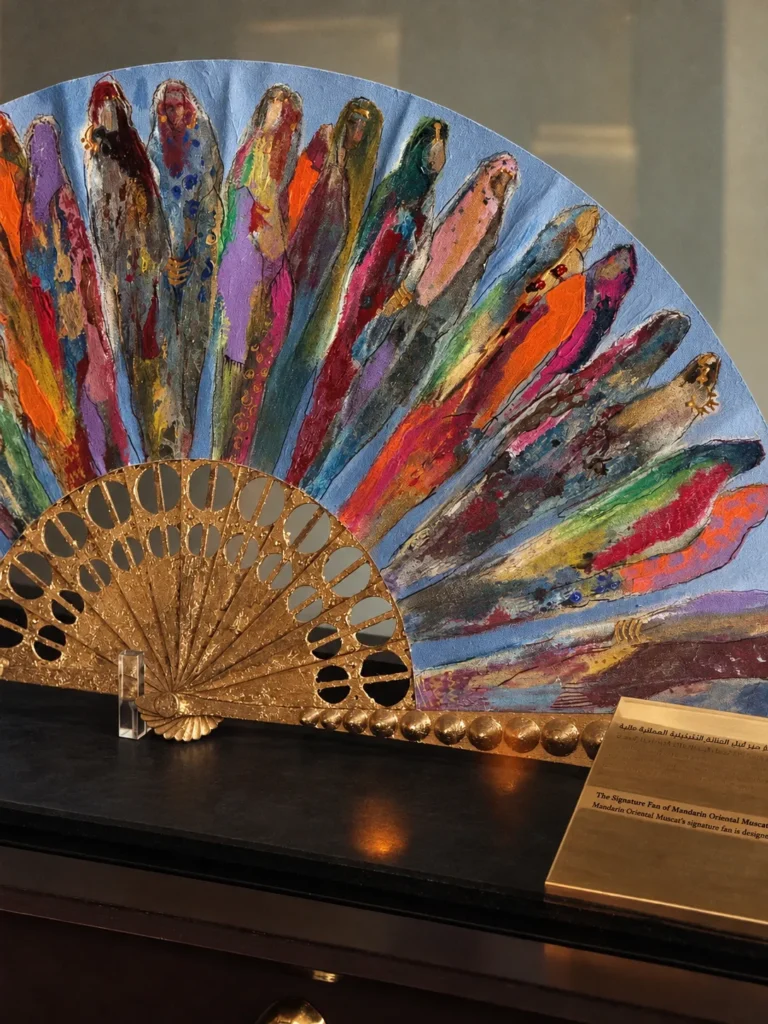
Alia Al Farsi designed and made the hotel’s signature fan, built around eleven groups of women, one for each governorate, with their garments, jewellery and regional traditions. From Musandam in the north to Dhofar in the south, dress communicates provenance in Oman, and the codes shift from valley to valley. Al Farsi gives the eleven groups the same height and the same pictorial space.
The guard stick carries a motif from the mashwak, a piece of local jewellery; circular patterns along the ribbing refer to the mafraq, worn along the hairline. Gold leaf covers parts of the ribbing, and Shirish wood, a species found in Oman, frames the whole.
Al Farsi’s material comes from Muttrah, the historic port district where she grew up, among markets, merchants and the colours of spices and gold. She represented Oman at the Venice Biennale in 2015 and returned in 2024 as curator of the national pavilion.
Gilded Harmony and Al Sadu weaving: the art collection
Dina Hammadi’s Gilded Harmony interweaves strips of brass and bronze, and refers to Al Sadu, the Bedouin weaving technique: the principle of interlacing survives the change from textile to metal. In the corridors, paintings show rose cultivation in the mountains of Jebel Akhdar.
Frankincense, Dhofar and the Land of Frankincense
The yellow in the lobby glass comes from luban. The resin is tapped from Boswellia sacra, which grows in southern Oman, and Dhofar became a centre of its production and distribution. UNESCO inscribed the Land of Frankincense in 2000: four sites — Wadi Dawkah, where the trees still grow, the caravan oasis of Shisr, and the ports of Khor Rori and Al-Baleed — that together map a system running from the interior, across the desert, to the sea.
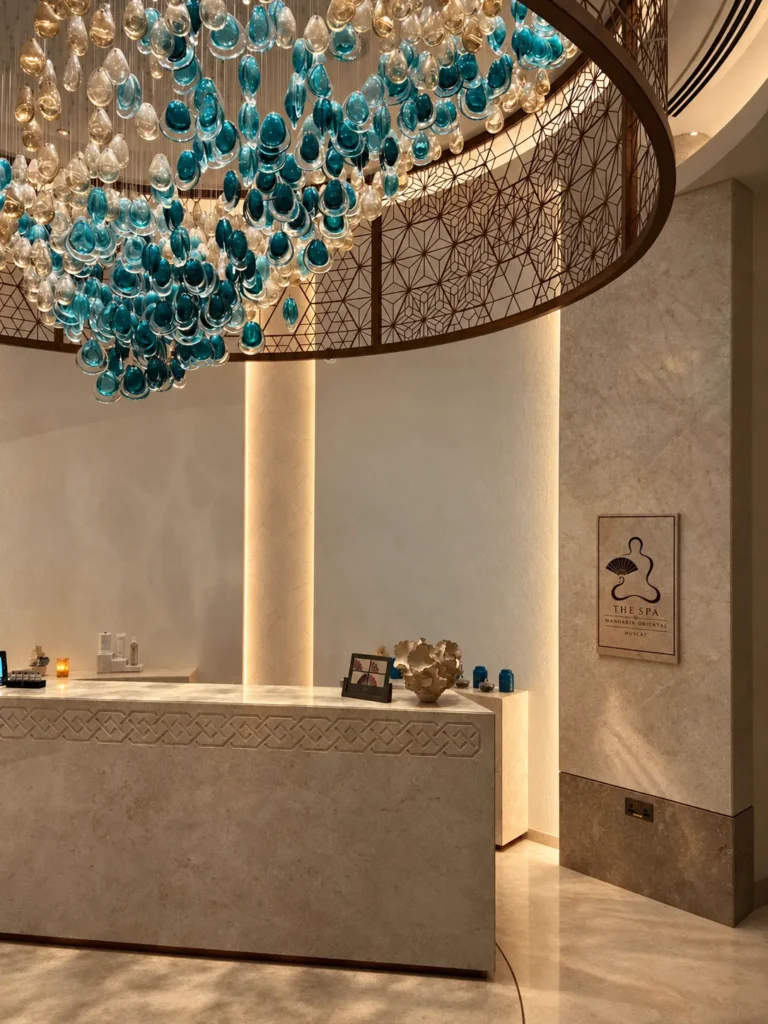
The spa: frankincense oil, Sidr leaves and Jebel Akhdar roses
The Frankincense Restoration lasts two hours and runs from a frankincense foot cleanse to an exfoliation with Sidr leaves and rose water, then a massage with warm frankincense oil, closing with a sound practice. The Rose Quartz Ritual uses Damask roses associated with Jebel Akhdar and a heated bed of rose quartz, with traditional sand bathing as its reference. The hammam works from Moroccan bathing traditions, with mosaics and low light.
Rawya, Essenza and shuwa: the restaurants
Rawya brings Mediterranean cooking to Omani seafood and regional produce, in shared dishes, and takes on shuwa, the Omani method of marinating meat and cooking it slowly underground, extending it to fish. Essenza serves Italian regional cuisine, with temporary menus on single territories: in September 2026 its Essenza in Viaggio series went to Sardinia, with a menu by chef Davide Borin. The Sawa Lounge, under the Lasvit glass, takes afternoon tea and meetings, with the Mandarin Cake Shop beside it. Sì Breeze operates outdoors towards the beach, on a seasonal calendar set by the heat.
Shatti Al Qurum and the Royal Opera House: the hotel in the city
Shatti Al Qurum holds diplomatic residences, housing, cultural institutions and a long public beach. The Royal Opera House, opened in 2011, stands nearby, and in September 2024 Mandarin Oriental announced a collaboration with it for the 2024-25 season, with performances, stays and dinners at Essenza.