In Athens’ Kolonaki district, House of Shila transforms a 1920s residence into a six-suite hotel conceived around a fictional character and an evolving collection of contemporary art
In Athens, Shila occupies a late-1920s neoclassical residence on Mantzarou Street, in Kolonaki. Original terrazzo floors, a marble staircase, wrought iron, aged wood and antique furniture coexist with contemporary artworks and custom-made interiors. The six-suite boutique hotel is the starting point of House of Shila, a hospitality and creative venture whose activities encompass contemporary art, furniture, ceramics, textiles and a second hotel, Mona Athens.
Shila Athens: a fictional character inhabits a residence in Kolonaki
Shila was imagined through the identity of a fictional woman who opens her home to six friends. Each friend inhabits one of the suites, bringing a different personality into the building. The narrative shapes the interiors, the choice of furniture and artworks, and the relationship between private and communal spaces.
Creative director Eftihia Stefanidi describes the concept: “Designing a hotel means thinking about an experiential narrative for the guest where all senses come alive: from the sound to the interior and spatial arrangement.” Together with founder Shai Antebi and interior designer Anna Bonnet, Stefanidi developed an environment conceived as a live movie set, where guests take part in a domestic narrative.
The team imagined an inhabited residence whose identity emerges through furniture, artworks, textiles, culinary products and botanical amenities. “We host our guests the same way we’d host a friend at our house,” Stefanidi says. The approach extends to the hotel’s relationship with Athens, with recommendations drawn from the team’s own experience of the city.
Architecture and adaptive reuse: the original materials of Shila Athens
Before its conversion, the building housed a woodworking enterprise active until the 1990s. That previous function left behind furniture and architectural elements that became part of the new interiors. The renovation preserved the original terrazzo floors, marble staircase, high ceilings and wooden windows.
“Spaces carry history, and it is touching to work on a building with so many layers of time. We do not want to alienate it from its core,” Stefanidi says.
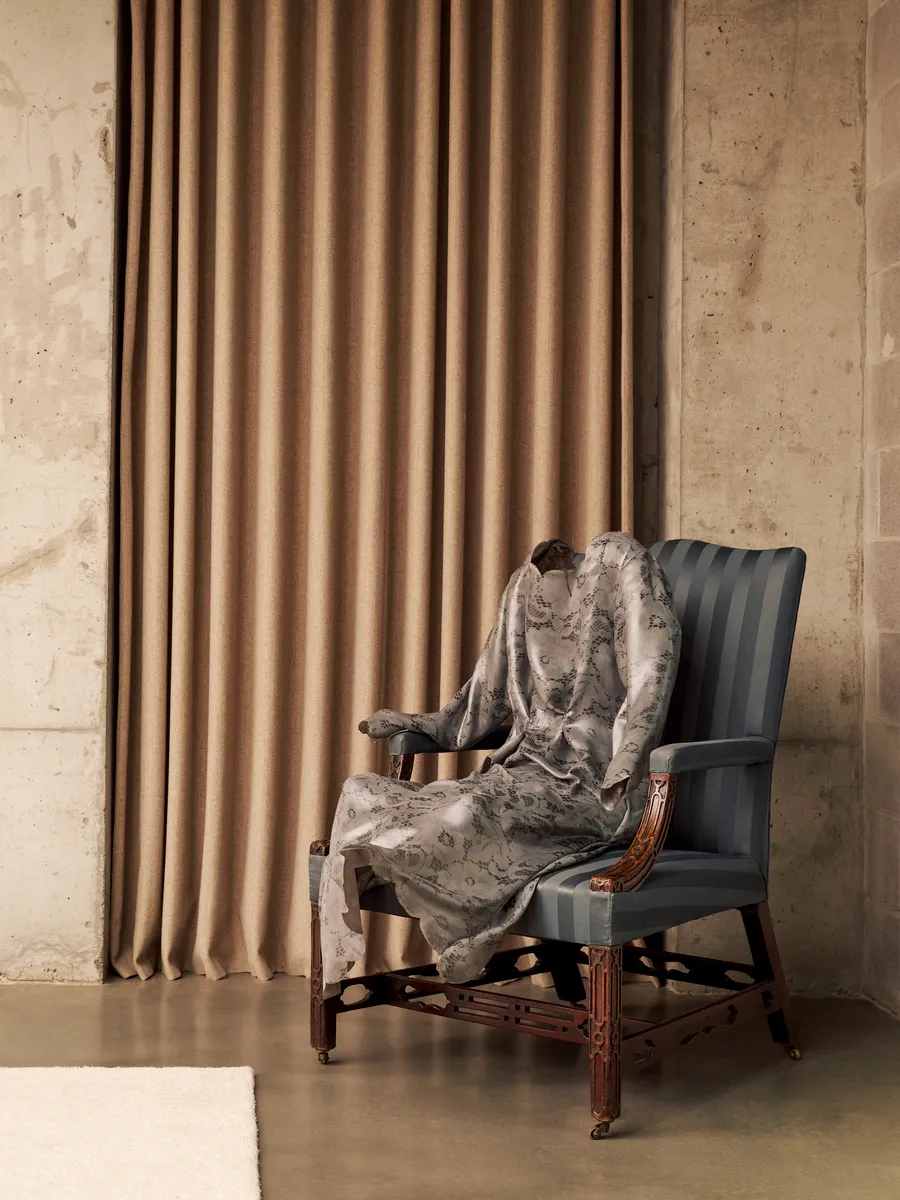
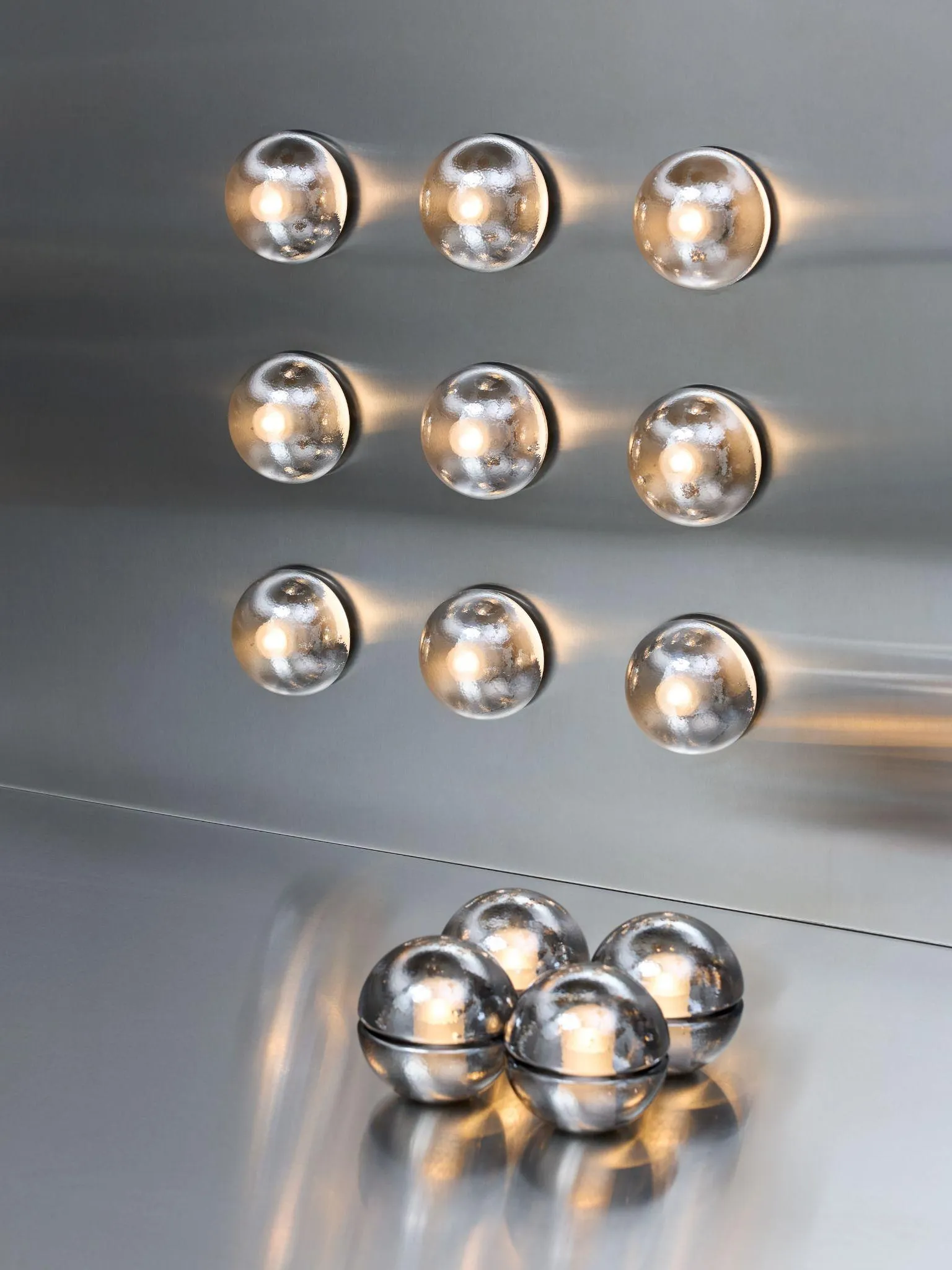
The design team exposed sections of brickwork and introduced metal, cement finishes and smoked mirrors. Existing furniture was recovered and combined with antique pieces sourced across Greece. Anna Bonnet developed custom handmade lamps, cement wall applications and smoked mirrors, and local craftspeople produced metal elements for the beds, sofas, mirrors and library.
The renovation was guided by an intention to intervene as little as possible: additional bathrooms were introduced, while existing elements and finishes were retained. “We want to reveal rather than add,” Stefanidi says. The interiors combine the smooth surfaces of terrazzo and marble with exposed masonry, aged timber, metal structures and velvet upholstery.
The team worked with mood boards, and each room took shape during the renovation according to the fictional personality assigned to it. “We designed on the go. We had mood boards, but the execution was spontaneous. Each room has its narrative, conceived through our shared ideas of the characters.”
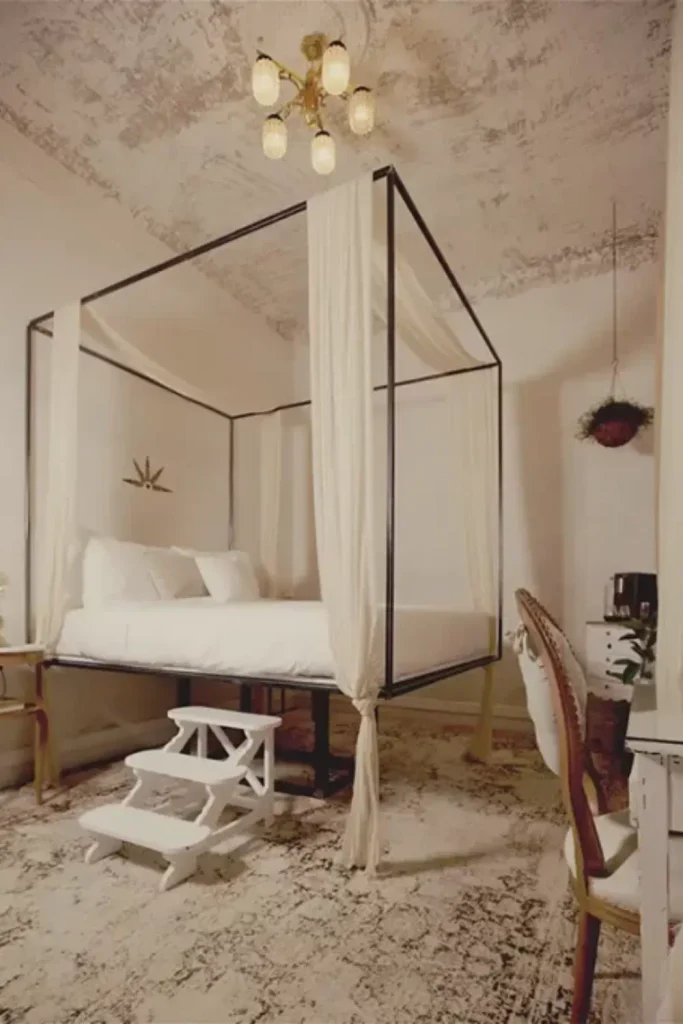
Inside Shila Athens: six suites across three floors
Shila’s six suites are distributed across three floors, from approximately 30 to 60 square meters, with two garden suites on the ground floor and four larger suites on the upper levels.
Garden Retreat measures approximately 30 square meters and opens onto an 11-square-meter private garden. Romantic Dust occupies approximately 35 square meters, with a 15-square-meter garden. The larger suites include La Bohème and Attic Antique, each around 50 square meters, and The Dreamers and Artist Atelier, each around 60 square meters; several accommodate up to four guests.
The interiors draw on different periods and references, from fine-art photography and 1960s interior design to a more bohemian character. Mint, ochre and sienna set the palette, with aged wood, metal, velvet upholstery and antique furniture. Four-poster beds add a theatrical dimension, and individual objects build the fictional identity of each room. One bathroom incorporates a swing. The hotel favors discreet technology, with iPads in place of television screens.
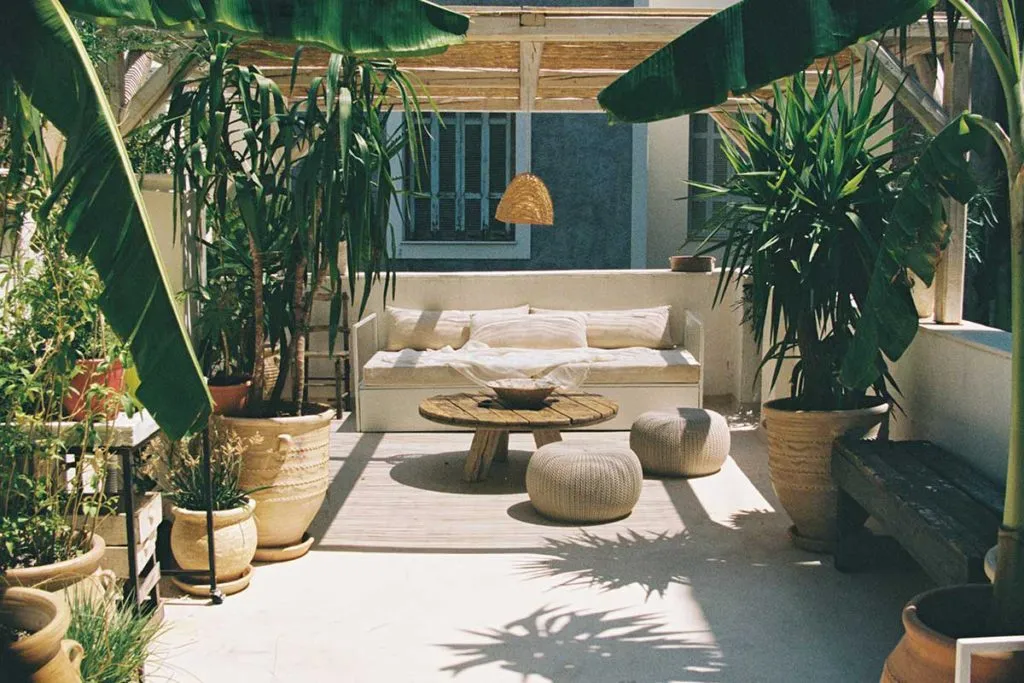
A library serves as a communal sitting room; among its pieces is a chandelier by Bonnet built from books and candles, placed at the entrance. The rooftop garden offers a second communal space, with tropical vegetation, bamboo, banana trees, rattan furniture and shaded seating above Kolonaki.
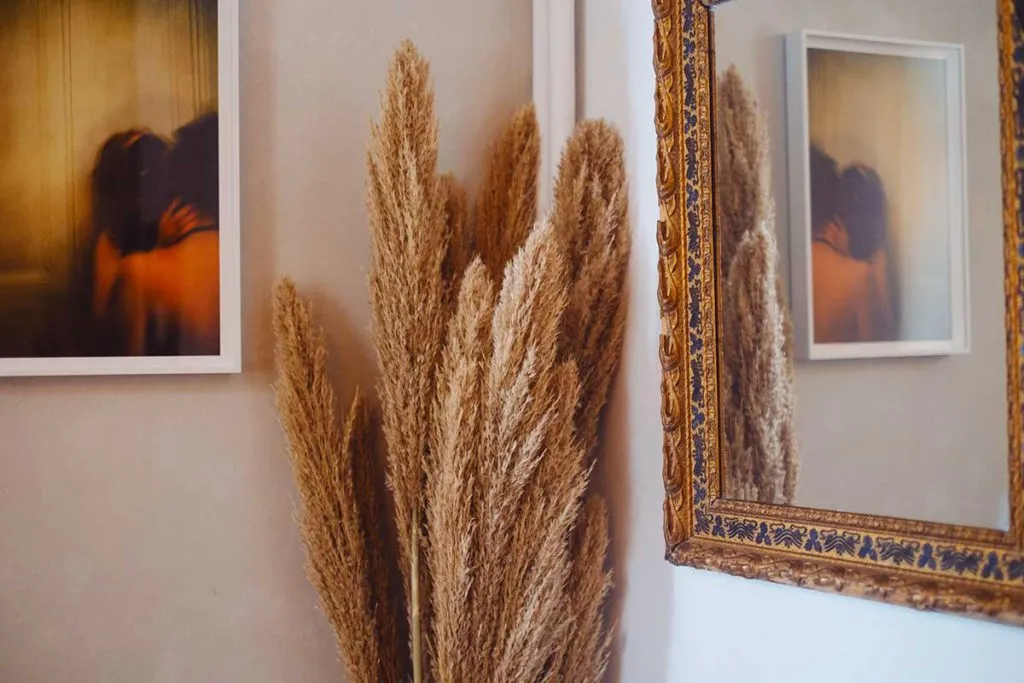
Contemporary art at Shila Athens: exhibiting beyond the white cube
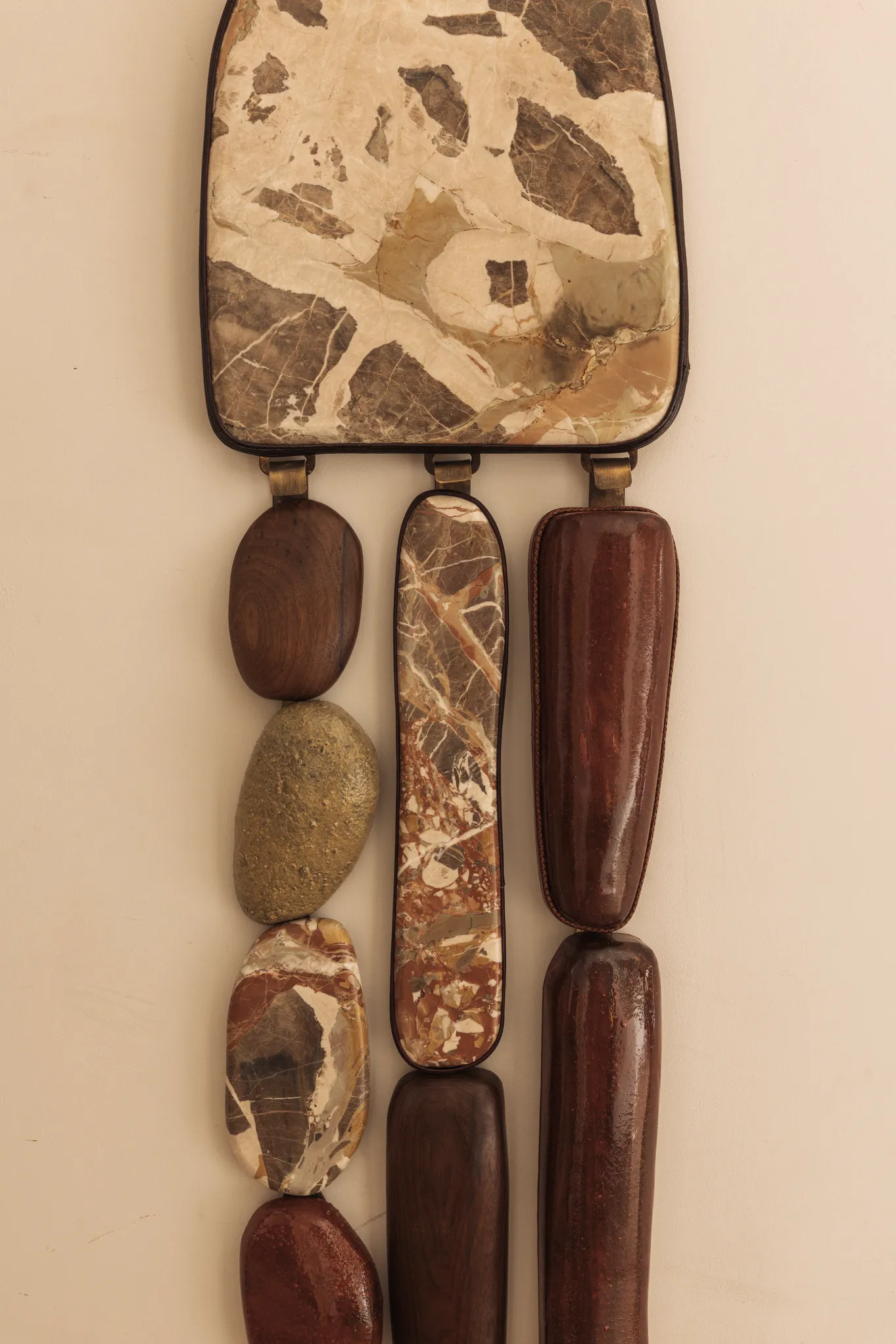
Shila displays contemporary art outside the conventional gallery, within spaces of everyday life. Paintings, photography, ceramics and sculptural objects appear in communal areas, bedrooms and occasionally inside wardrobes, so guests encounter them while inhabiting the property.
The program is a rotating collection, and the selection considers the architecture and atmosphere of each room. “It’s site-specific. We see how the pieces blend into the interior, what conversations we can create between the space and the art, and how we can renew the space. Each room has its energy and interpretation,” Stefanidi says. The collection frequently explores femininity and sensuality, reflecting the character around which the hotel was conceived, and extends across painting, photography, ceramics, fashion and collectible design.
“This is the whole idea of our brand: to create a space to exhibit art and champion local artists. It’s what makes the Shila experience special.” Artworks displayed throughout the hotel are available for purchase, with international shipping when required.
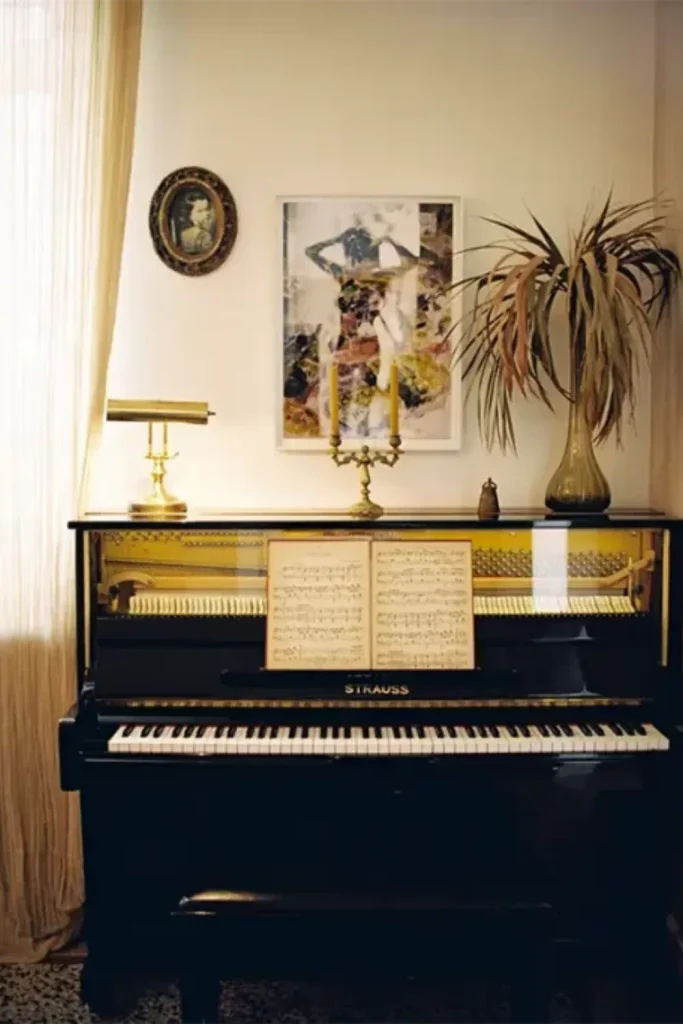
House of Shila: from a boutique hotel to a creative venture
Shila opened in 2020, founded by CEO Shai Antebi. In 2022 House of Shila expanded with Mona Athens, a 20-room boutique hotel inside a former textile factory in Psirri. The two properties work with different architectural typologies: Shila a neoclassical residence in Kolonaki, Mona an industrial building from the 1950s.
Mona’s renovation retained the former factory’s metal staircase, terrazzo floors and industrial windows, with concrete, steel and aged surfaces set against contemporary furniture. Distributed across eight floors, Mona includes guest rooms, communal areas, exhibition spaces and a rooftop overlooking the Acropolis. Each project adapts an existing building and preserves the material evidence of its previous function, alongside contemporary hospitality and an artistic program.
Space Reimagined: artist residencies at Mona Athens
In June 2025 House of Shila introduced Space Reimagined at Mona Athens, inviting artists to transform rooms in which they had previously stayed. Belgian photographer Elise Wouters developed an installation for the Mona Suite, combining photography, hand-painted silver gelatin prints and written material around memory, self-representation and femininity. Greek artist Angeliki Stamatakou worked with the penthouse, introducing sculptural forms, ceramics, light and reflective surfaces.
Both rooms remained available for accommodation, so guests could inhabit the installations. Selected works were available for purchase. The program develops the model established at Shila, inviting artists to reconsider the rooms themselves and making architecture part of the work.
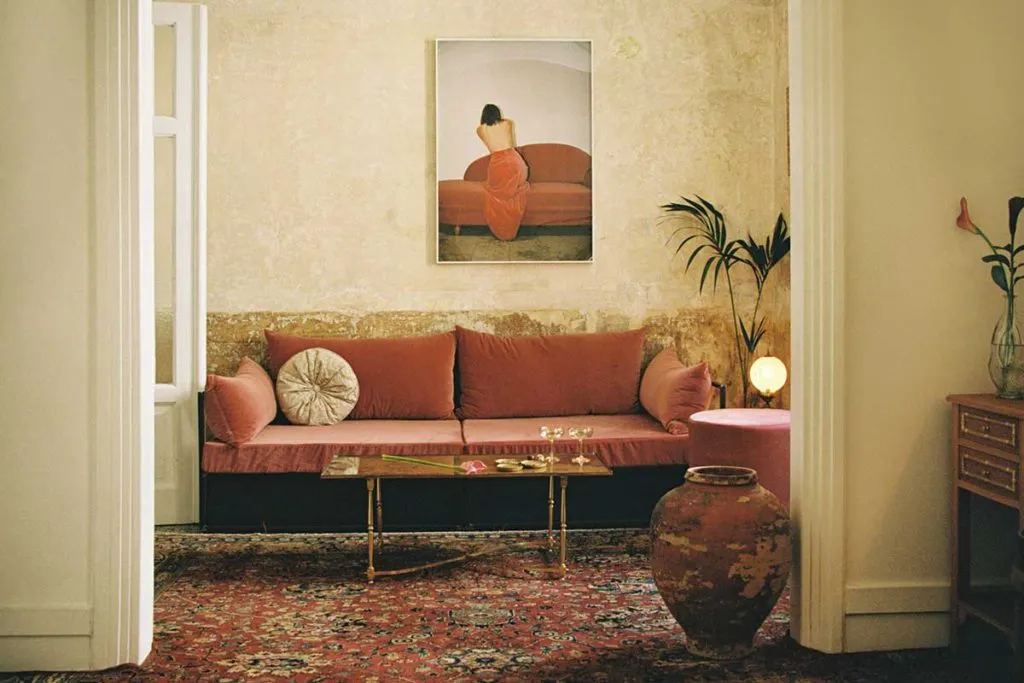
Greek craftsmanship, ceramics and textiles: the House of Shila collection
Custom furniture, decorative objects and collaborations with local craftspeople have developed into House of Shila Shop, a platform for art, furniture, ceramics, textiles, clothing and collectible objects, which can be purchased independently of a stay.
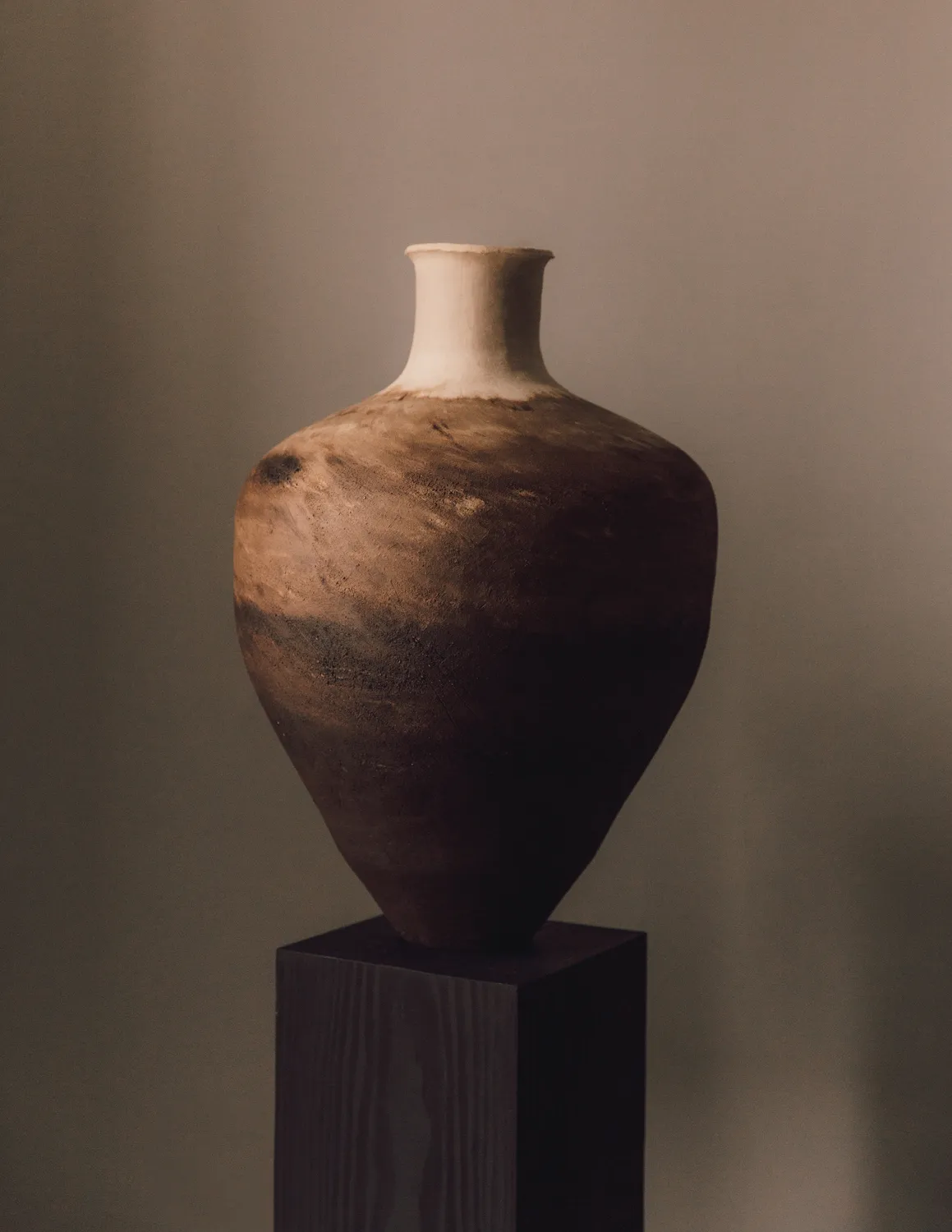
Athens-based ceramicist Anna Karountzou works with hand-building techniques, self-developed glazes and surface textures, and incorporates volcanic materials collected on Santorini; a collection commissioned for Mona included 25 handcrafted tea sets, each with individual forms and finishes. Angeliki Stamatakou works through coiling, wheel throwing and sculptural techniques, between functional design and autonomous object; her ceramic work Terrae is part of the platform, connecting her practice with the installation developed for Space Reimagined.
Textiles are also part of the group’s activities. A collaboration with Lefko includes garments in silk crêpe de Chine sourced from Soufli, a town in northeastern Greece with a long history of silk manufacturing. The garments are made in Athens, with selected editions hand-dyed by artist Christianna Vardakou.
Material reuse and adaptable interiors at Shila Athens
Material reuse shaped the renovation: existing finishes were preserved, furniture from the building’s previous use was incorporated, and antique objects were sourced to complement newly commissioned pieces. The team also introduced movable furniture — sofas and other elements on wheels — so rooms and communal areas can be reorganized for exhibitions, photography and private events. “We host a range of events and exhibitions, which means we need everything to be mobile,” Stefanidi says. The interiors have hosted commercial photography for international fashion houses. The concept also includes measures to reduce disposable plastic and unnecessary linen and towel changes during extended stays.
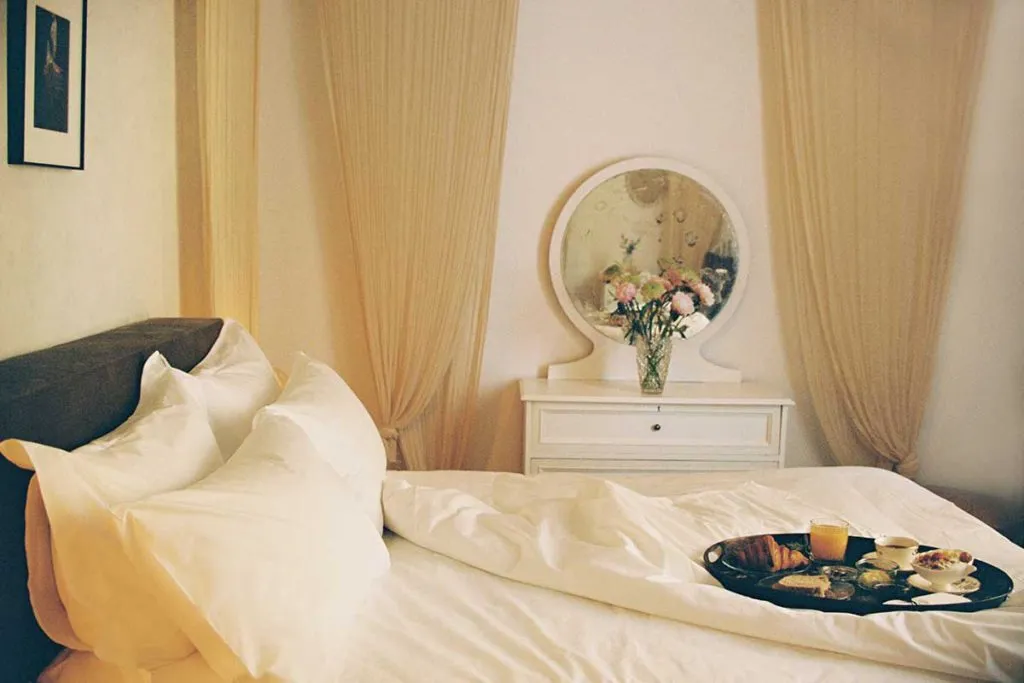
Breakfast at Shila Athens: Greek ingredients, served in the suites
Shila’s food offering is built with local suppliers in Kolonaki. Breakfast is an informal experience served directly in the suites, with Greek ingredients, artisanal products, freshly prepared food and freshly ground coffee.
The residential approach informs the concierge service, with recommendations drawn from the team’s own experience of Athens. For a short visit, Stefanidi recommends the Acropolis and the Acropolis Museum; for a longer excursion, the Temple of Poseidon at Cape Sounion, where the site overlooks the Aegean. “For me, it is the epitome of the Greek landscape, to have the ruins and the water together.”
At Shila, art and hospitality stay at the scale of a private residence. Six suites, preserved architecture, a changing collection and communal spaces make an environment where art is encountered through the experience of inhabiting the building.