The first Premio Tacchini brings the London-based artist to Casa Tacchini in Milan, where ceramics made with clay from Equatorial Guinea explore material memor
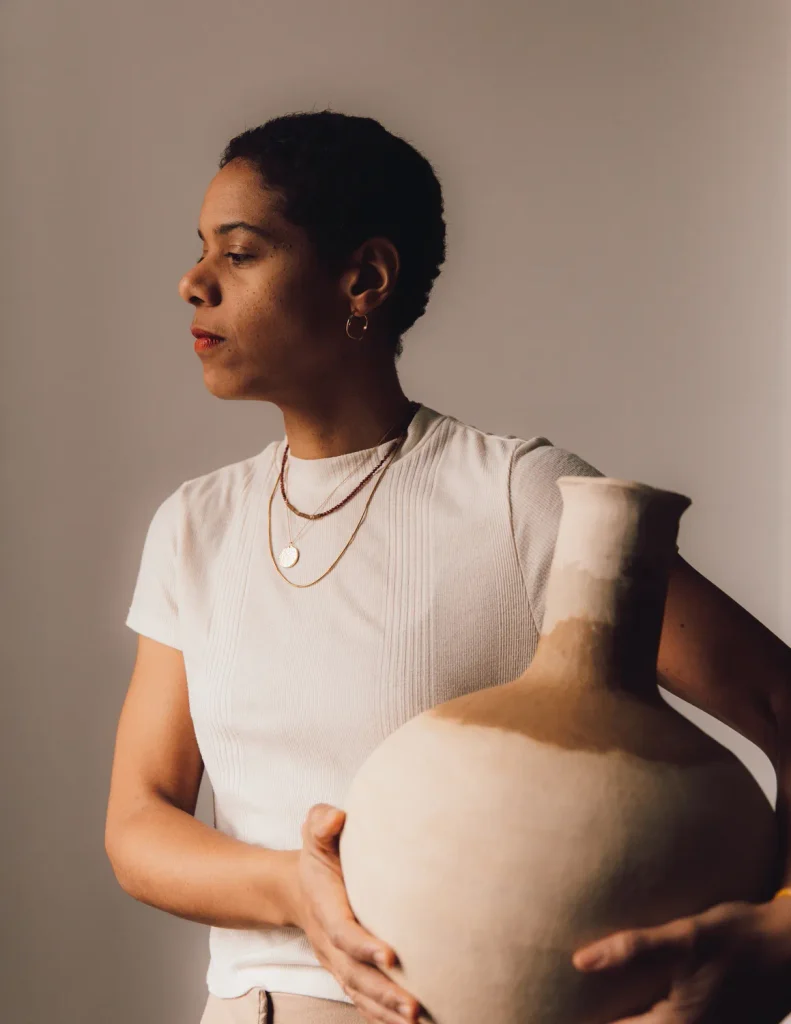
Tacchini has created a prize for contemporary ceramics. The Premio Tacchini, launched with Fondazione Officine Saffi, was announced at the sixth edition of the Officine Saffi Award and carries a concrete reward: an exhibition in the company’s Milan apartment. The first winner is Bisila Noha, a ceramic artist born in Zaragoza in 1988 and based in London. Her works go on show at Casa Tacchini, Largo Treves 5, from 1 October to 13 November 2026.
The selection was made among the finalists of the Officine Saffi Award, the biennial prize the foundation dedicates to contemporary ceramics. Its sixth edition, Forms of Belonging, drew more than 1,000 applications from 41 countries across five continents, from which 28 finalists were chosen. Their work is on view at the foundation, in via Niccolini 35a, from 30 September to 13 November, so the two exhibitions run in parallel across the city.
Officine Saffi Award 6: Forms of Belonging
The call asked artists to work on the need to belong, and on the capacity of material to hold gestures, relationships and memory. The jury includes Laura Borghi, Valentina Ciuffi, Massimo De Carlo, Jennifer Lee, François Mellé, Marco Sammicheli, Patrizia Sandretto Re Rebaudengo and Asad Syrkett. Alongside the first prize, partner institutions award residencies: the Albuquerque Foundation, the Bruckner Foundation, Guldagergaard, the Fondazione Museo della Ceramica di Savona, Taoxichuan Art Center and Ottostumm | Mogs. The award holds the patronage of the Italian Ministry of Culture and the Municipality of Milan.
Fondazione Officine Saffi was founded in 2011 by Ms. Borghi and works across exhibitions, education and publishing, on the premise that ceramics moves between art, craft and design instead of sitting in one of them.
«Tacchini’s collaboration contributes to the mission of the Officine Saffi Award by joining a network of cultural institutions, companies, educational and research centres whose commitment to the project translates into countless opportunities for artists», Ms. Borghi says.
Who is Bisila Noha: from translation to clay
Ms. Noha holds Spanish and Equatoguinean citizenship. Her mother comes from Soria, in Spain; her father from Baney, on the island of Bioko, in Equatorial Guinea, and from the Bubi people. She studied translation and international relations, worked in Madrid, Leipzig, Vienna and San Francisco, and moved to London in 2013 for a job in advertising.
She came to ceramics through evening classes, without formal training in art, and built her technical education by travelling: she learned from potters in Mexico, Italy, Armenia and Morocco. That itinerary matters to the work, because it puts her practice in contact with traditions that the Western division between art and craft tends to leave outside the museum.
Her pieces are held by the Victoria and Albert Museum, National Museums Scotland, the Crafts Council and Nottingham Castle. Outside the studio she is chief executive of the London LGBTQ+ Community Centre, co-directs the art and activist organisation Sheroes Collective, and is a trustee of Women in Tri UK.
Baney Clay: material carried from Bioko
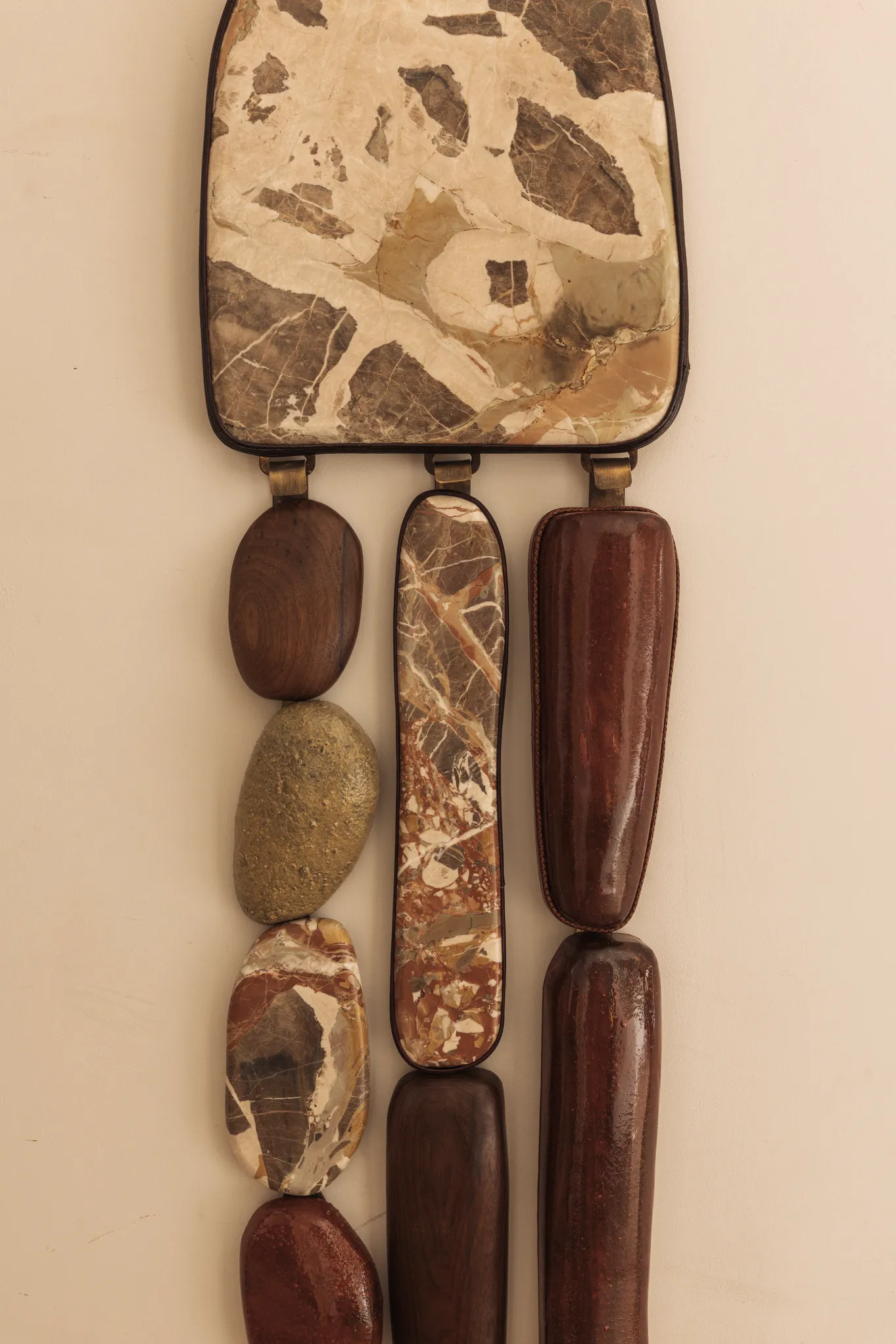
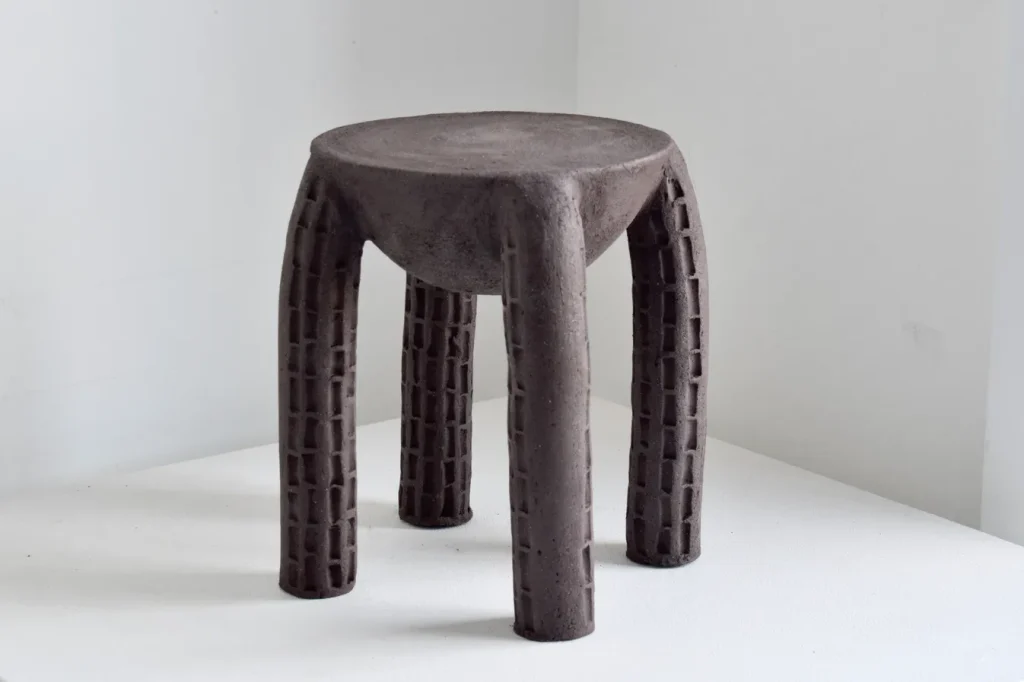
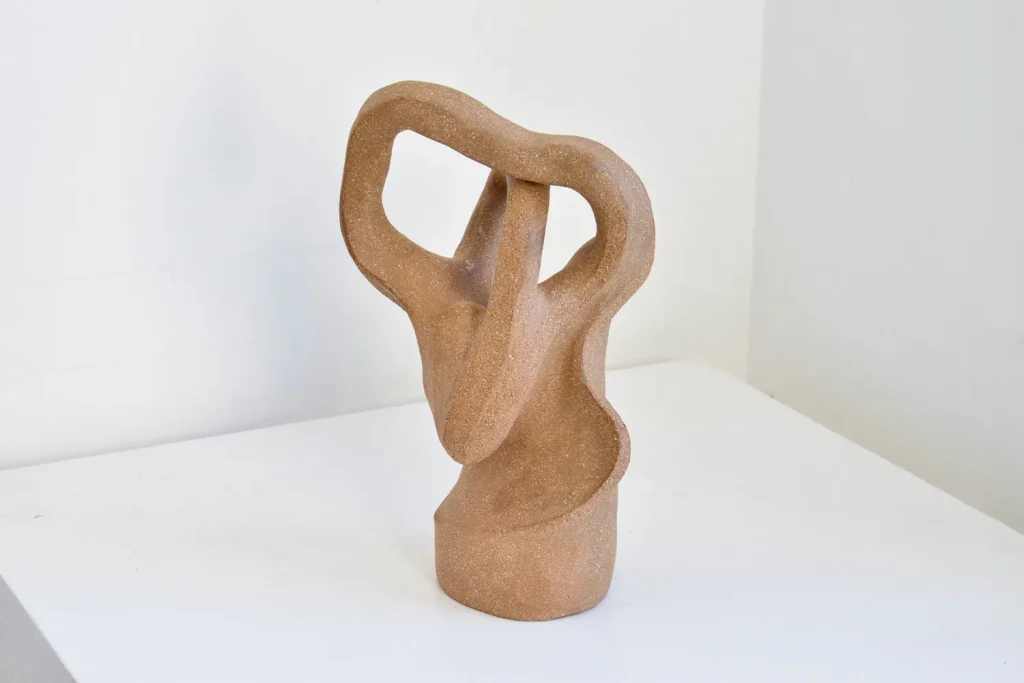
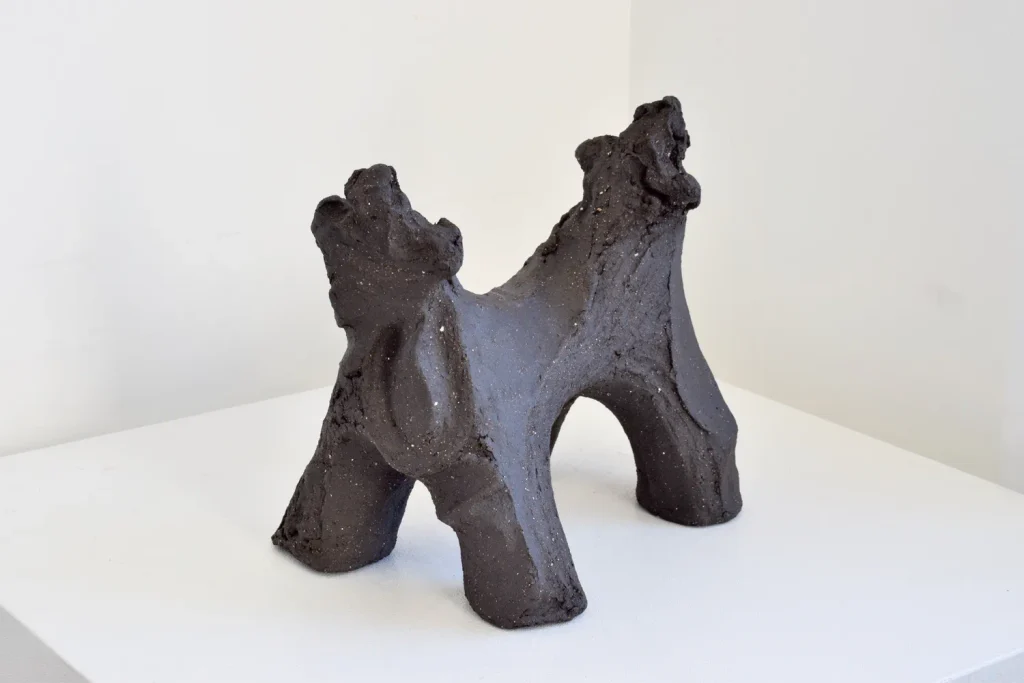
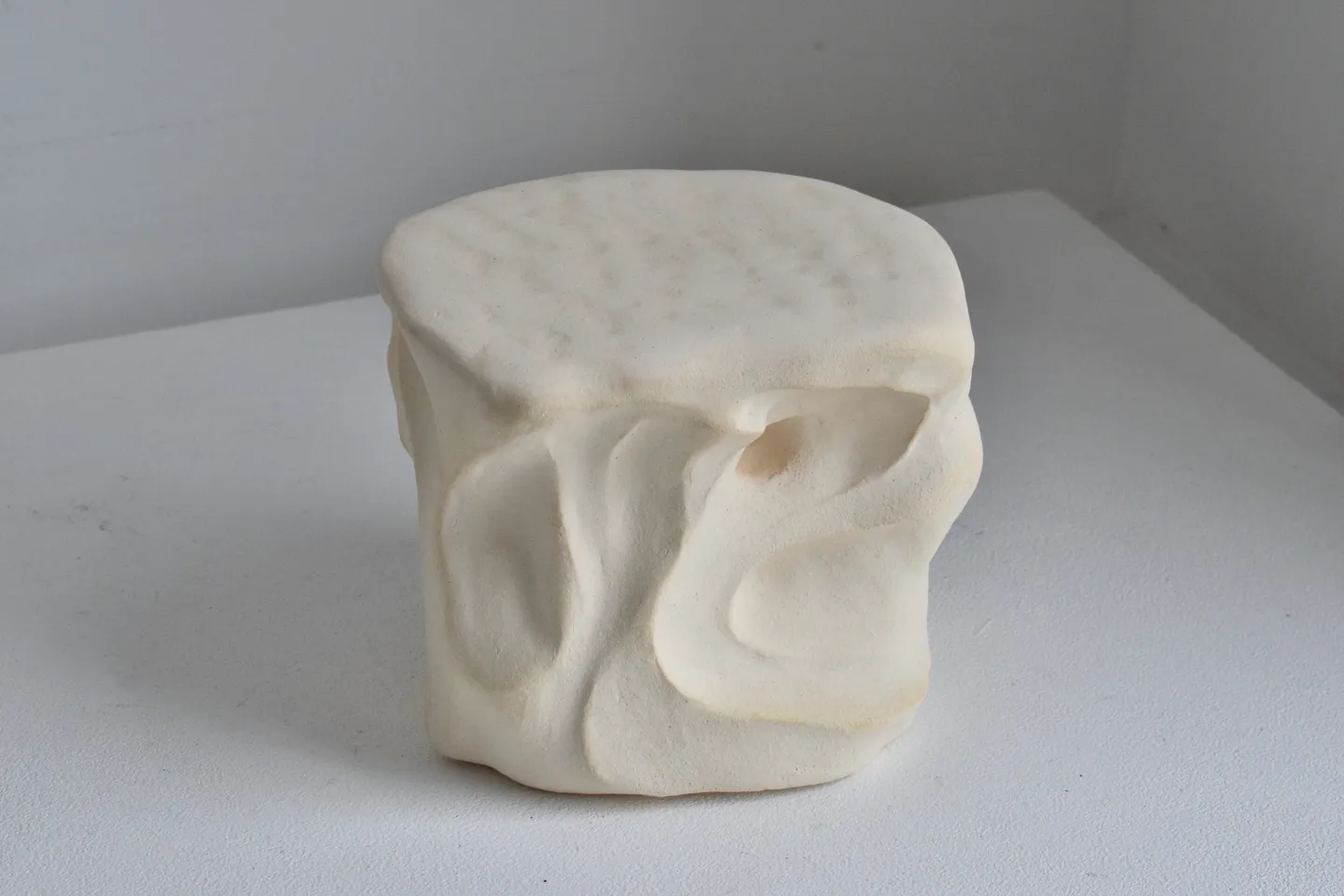
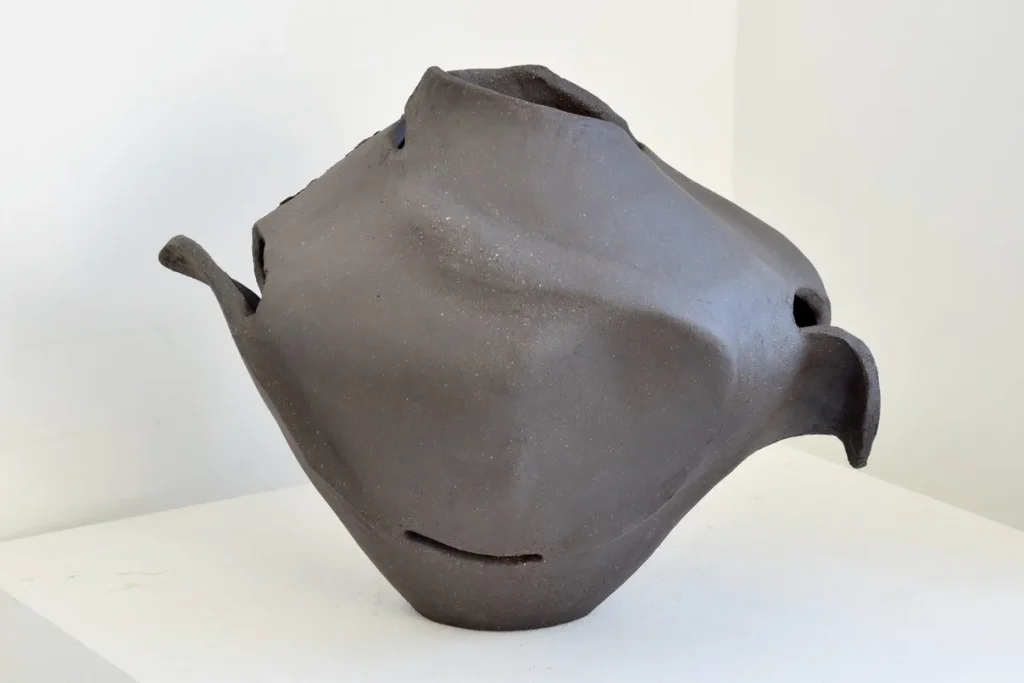
The body of work that explains the choice began in 2020. For Baney Clay, Ms. Noha works with clay from her father’s village, carried to the United Kingdom by her parents. She blends it with Western clay bodies — Draycott stoneware, porcelain — in varying percentages, and in some pieces leaves the two unmixed, so the difference between the materials stays visible in the finished object.
The firing goes up to 1260°C. At that temperature a clay that has not been formulated for industrial use behaves unpredictably, and pieces crack. Ms. Noha keeps them. In a commercial vocabulary a crack is a defect that removes value from a pot; here it is the record of two materials that do not agree, and the argument of the series.
«With Tacchini, I share a deep respect for the essence, beauty and voice of materials», Ms. Noha says. «I create works that, while rooted in the stories and traditions from which they originate, are innovative and deeply personal».
Casa Tacchini: a showroom that works as an apartment
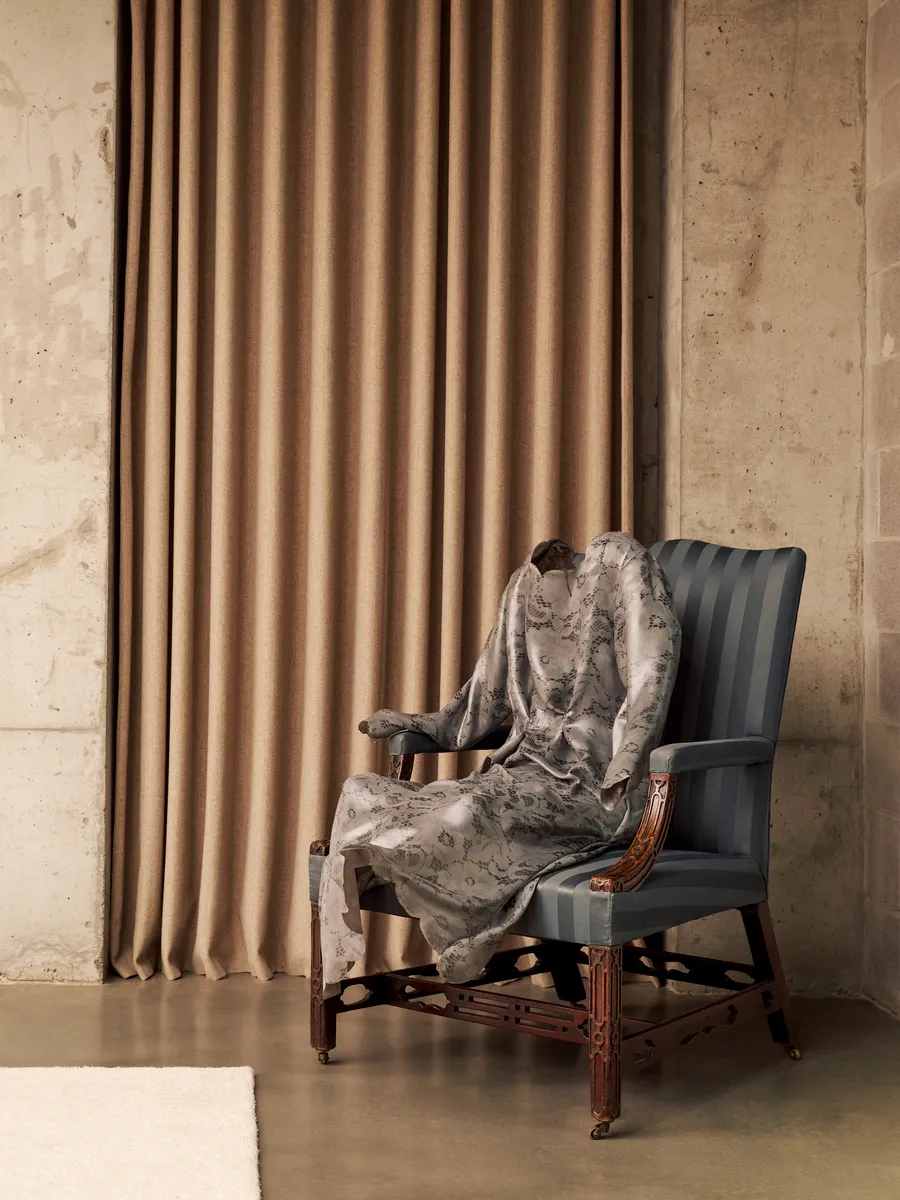
The prize is tied to a specific room. Casa Tacchini opened in April 2025, during Milan design week, in a 300-square-metre apartment from the early twentieth century in Largo Treves, in Brera, run with the Milanese dealer Spotti. The company kept the original plan of the flat, a sequence of rooms with six windows onto Largo Treves and via Solferino, and furnished it as a house instead of a display floor.
That decision is what the award now uses. The works will be shown among furniture, in domestic light and at domestic distances, the condition in which most ceramics were made to be seen and the one that museums remove.
«When we imagined Casa Tacchini, we thought of a place that could go beyond presenting our products: a domestic space capable of welcoming different stories, people and languages», Ms. Tacchini says. «The collaboration with Fondazione Officine Saffi in creating the Premio Tacchini stems precisely from the desire to bring design into dialogue with other forms of creative expression, recognising the material as a common element».
Tacchini: from a carpentry workshop in Seveso to the reissues
Tacchini was founded in Seveso, in the Brianza furniture district north of Milan, in 1967, by Antonio Tacchini, as a carpentry workshop. Giusi Tacchini joined in the early 2000s and is now chief executive and creative director.
The company’s recognisable move is the reissue. In 2010 it brought back the Babela chair, designed in 1958 by Achille and Pier Giacomo Castiglioni, and from there built a programme of reissues that runs alongside new commissions. It is a business built on reading archives — the same operation, in a different material, that Ms. Noha performs on the pottery traditions she studies.
Premio Tacchini — Bisila Noha, Casa Tacchini, Largo Treves 5, Milan, 1 October – 13 November 2026, Monday to Friday 10am–1pm and 2pm–7pm. Officine Saffi Award 6 — Forms of Belonging, Fondazione Officine Saffi, via G.B. Niccolini 35a, 30 September – 13 November 2026.