Fragrant Fables: twelve eaux de parfum, one new scent and a new bottle, each pairing an unfiltered botanical with a three-note accord for amber, sea foam, ash or a mirror
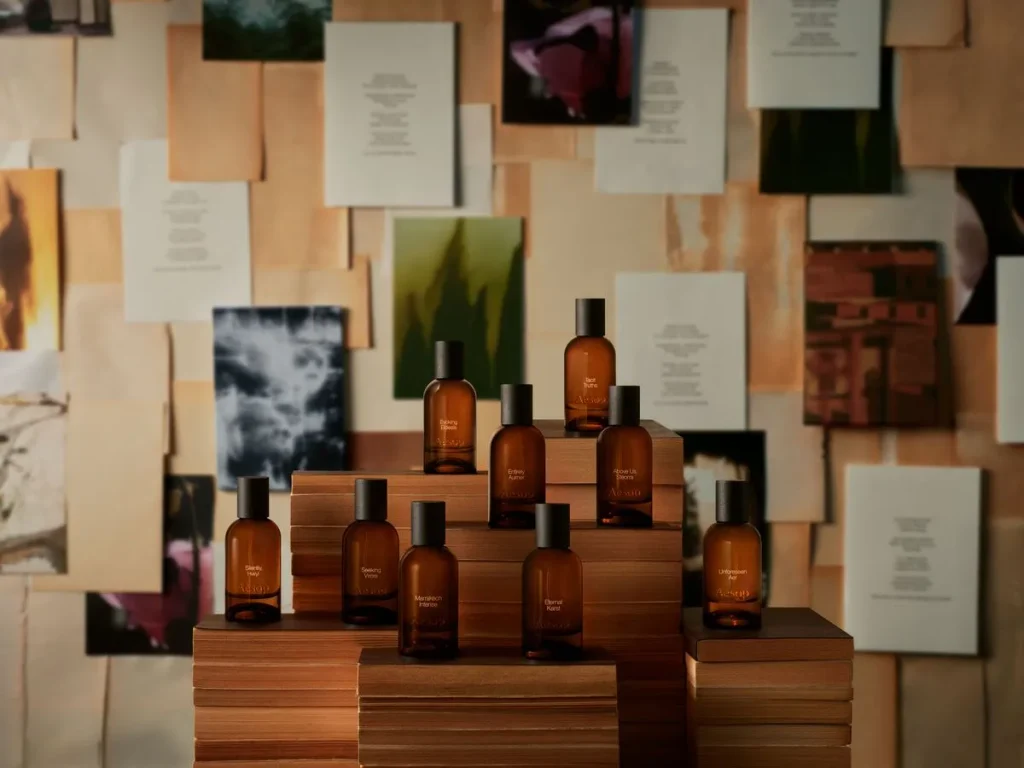
Aesop has restructured its fragrance line under one name, Fragrant Fables. The twelve Aesop eaux de parfum, on sale since 31 August, carry new names, a redesigned bottle and a written fable on the box. One perfume is new: Unforeseen Aer.
The names come from the existing Aesop line, extended. Eidesis became Evoking Eidesis, Karst became Eternal Karst, Rōzu became Rozu Arises, Hwyl became Silently, Hwyl. Marrakech, the first fragrance the company released in 2006, is now Marrakech Intense. Each title names the value its fable attaches to it: trust, resilience, growth, audacity.
Aesop Fragrant Fables: the Radical Ingredient and the Fable Accord
The structure matters more than the renaming. Every Aesop fragrance is now described through two components. The Radical Ingredient is a single botanical extract used unfiltered, so its less convenient facets stay in the composition instead of being edited out: nutmeg in Unforeseen Aer, juniper in Eternal Karst, tomato leaf in Boundless Erémia, magnolia leaf in Entirely Aurner, cypress in Seeking Virere.
The Fable Accord does the opposite job: it builds the smell of something that has no smell, out of three ingredients. Amber, in Above Us, Steorra, is assembled from incense, labdanum and vanilla pod. Sea foam, in Eternal Karst, comes from calone, sage and pink pepper. A mirror, in Evoking Eidesis, is neroli, petitgrain and black pepper. Hot tea, in Seeking Virere, is maté, petitgrain and mastic. Cracks in concrete after rain, in Boundless Erémia, are hay, iris and basil. Ash, in Journey to Ouranon, is myrrh, patchouli and incense. Silver ore, in Entirely Aurner, is patchouli heart, Roman chamomile and pink pepper.
This is the part of the collection that holds up as a method. Amber is a material, but also a convention: perfumery has agreed for a century on what amber smells like, and no single ingredient supplies it. Sea foam, a mirror and the smell of concrete after rain are further out still. Naming them as accords makes explicit what perfumers usually leave implicit, that a large part of the job is constructing references, not extracting them.
“Working with Aesop means engaging in an artistic dialogue,” says Ms. Barel, the perfumer behind Tacit Truths and Entirely Aurner. “It is rare for a brand to bring such strong, elevated and surprising references into a brief.”
Unforeseen Aer: Aesop’s new fougère fragrance with nutmeg
The new Aesop fragrance is built as a fougère, the family that runs on lavender, coumarin and moss and has carried men’s perfumery since the nineteenth century. Here the Fable Accord is Pure Air, made from geranium, lavandin and rosemary; the Radical Ingredient is nutmeg, which brings weight under the sharpness.
The fable behind Unforeseen Aer concerns a wind that fears the disorder it causes and ends up enjoying it. The question printed on the box: how can change enrich us?
The new Aesop bottle: basalt cap and a removable, recyclable sprayer
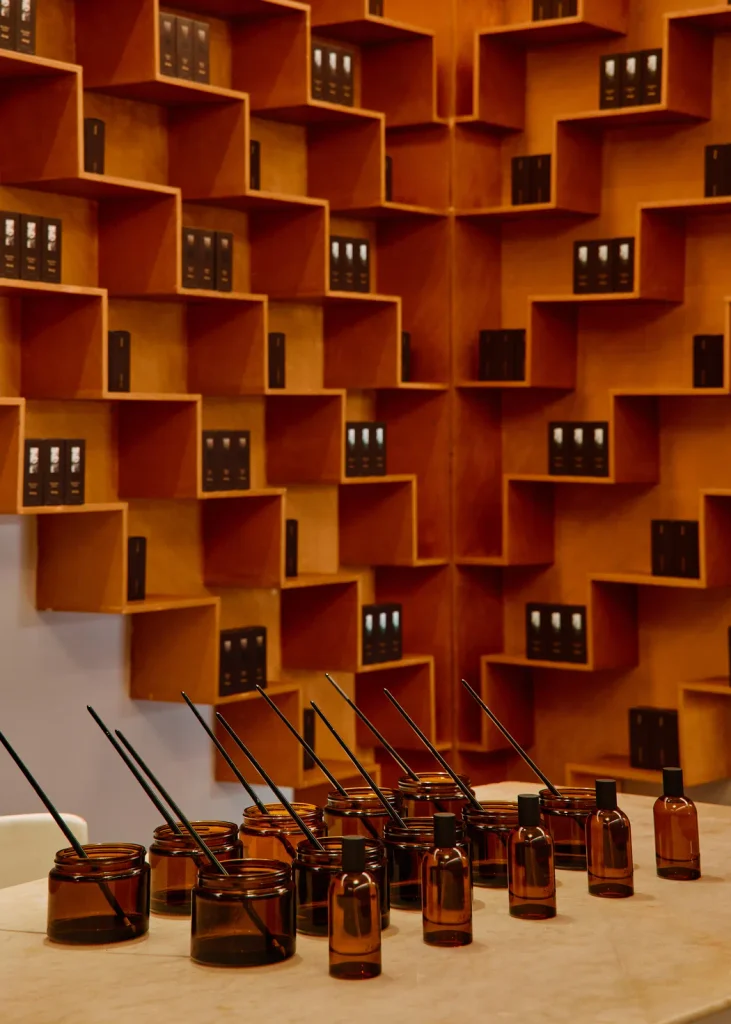
The amber glass stays, with the minimal lines of the previous Aesop bottles, and three things change. The base is domed, the body taller and narrower, and the cap takes its texture from basalt, the volcanic rock widespread around Melbourne, where the company was founded in 1987. The name is printed in metallic amber type, with an emblem embossed on the glass and sunk into the cap.
The functional change is at the neck. The sprayer can now be removed, which makes the bottle easier to recycle: glass, pump and plastic components separate at the end of use instead of going into the waste stream as one mixed object.
Aesop fragrance since Marrakech (2006): the line now at twelve
Aesop released Marrakech in 2006, extending a company built on skin, hair and body formulations into perfume. The fragrance line now stands at twelve.
“Our fragrances have always been an extension of our philosophy,” says Ms. Santos, co-founder and chief customer officer. “They speak to those who value nuance: people whose choices are guided by confident intentions and not by passing trends.”